
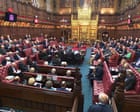
Hereditary peers to lose their seats in the House of Lords
#Hereditary peers #House of Lords #UK Parliament #political reform #governance #Lords reform #inherited titles
📌 Key Takeaways
- Hereditary peers will be removed from the House of Lords.
- This marks a significant reform to the UK's upper parliamentary chamber.
- The change aims to modernize the composition of the Lords.
- It reduces the influence of inherited titles in government.
📖 Full Retelling
🏷️ Themes
Political Reform, Governance
📚 Related People & Topics
Hereditary peer
United Kingdom aristocrats
The hereditary peers in the United Kingdom and the Republic of Ireland form part of the peerage in the United Kingdom. As of October 2025, there are 799 hereditary peers: 29 dukes (including five royal dukes, of which the Duke of Edinburgh is a life peerage, the holder being a hereditary earl), 34 m...

Reform of the House of Lords
Proposed reforming of the upper house of the British Parliament
The reform of the House of Lords, the upper house of the Parliament of the United Kingdom, has been a topic of discussion in UK politics for more than a century. Multiple governments have attempted reform, beginning with the introduction of the Parliament Act 1911 by the incumbent Liberal Government...
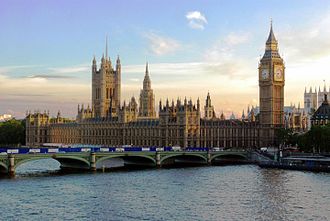
Parliament of the United Kingdom
Supreme legislative body of the United Kingdom
The Parliament of the United Kingdom of Great Britain and Northern Ireland is the supreme legislative body of the United Kingdom, and may also legislate for the Crown Dependencies and the British Overseas Territories. Since 1999, varying degrees of powers have been devolved to the national parliamen...

House of Lords
Upper house of the UK Parliament
The House of Lords is the upper house of the Parliament of the United Kingdom. Like the lower house, the House of Commons, it meets in the Palace of Westminster in London, England. One of the oldest extant institutions in the world, its origins lie in the early 11th century and the emergence of bica...
Entity Intersection Graph
No entity connections available yet for this article.
Mentioned Entities
Deep Analysis
Why It Matters
This reform fundamentally changes the composition of the UK's upper legislative chamber, moving away from a system where political power is inherited through family lineage. It affects the 92 remaining hereditary peers who currently sit in the House of Lords, as well as future generations who would have inherited these positions. The change represents a significant step toward modernizing British democracy by making the Lords more representative and merit-based, potentially altering the balance of power between the two houses of Parliament and how legislation is scrutinized.
Context & Background
- The House of Lords has included hereditary peers since medieval times, with seats passed down through aristocratic families for centuries.
- The House of Lords Act 1999 removed most hereditary peers, leaving only 92 who were elected by their fellow hereditary peers to remain temporarily.
- Previous reform attempts have been made throughout the 20th and 21st centuries, including the Parliament Act 1911 which first limited the Lords' power and the Life Peerages Act 1958 which introduced appointed members.
- The current House of Lords has approximately 800 members, making it one of the largest legislative chambers in the world, with most members being life peers appointed by successive governments.
What Happens Next
The government will need to introduce legislation to implement this change, which will likely face debate in both Houses of Parliament. Once passed, a transition period will be established for the remaining hereditary peers to leave their seats, possibly with compensation or alternative arrangements. This reform may lead to further discussions about broader House of Lords reform, including whether to move toward an elected or fully appointed system, with potential constitutional conventions or commissions established to examine the future of the upper chamber.
Frequently Asked Questions
The remaining 92 hereditary peers will lose their seats in the House of Lords, ending their ability to participate in parliamentary debates, committees, and votes. They will no longer receive the daily allowance (£342 as of 2024) or have parliamentary privileges, though they may retain their titles and social status outside Parliament.
The Lords will become a fully appointed chamber (aside from bishops and law lords), potentially making it more professional but possibly reducing its historical continuity. The change may alter the chamber's dynamic as hereditary peers often brought independent perspectives and expertise not tied to party politics, though critics argue their presence was undemocratic.
No constitutional amendment is required as Parliament can reform itself through ordinary legislation, similar to the 1999 reforms. However, because this affects the fundamental composition of Parliament, it would likely be treated as constitutional legislation requiring careful scrutiny and possibly special procedures, but not a formal amendment to an unwritten constitution.
The 26 Church of England bishops (Lords Spiritual) are not affected by this specific reform as they hold seats by virtue of their ecclesiastical office, not hereditary right. However, their presence may face separate scrutiny in future broader reforms of the Lords' composition.
Vacancies created by departing hereditary peers will not be filled, gradually reducing the size of the Lords. Alternatively, the government might appoint new life peers to maintain numbers, though there is growing pressure to reduce the chamber's overall size as part of broader reform efforts.