

Hospital visit fuels speculation about Samuel Alito’s future on supreme court
📖 Full Retelling
📚 Related People & Topics
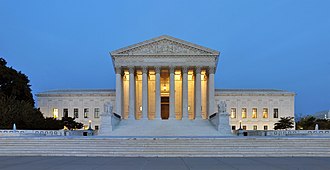
Supreme court
Highest court in a jurisdiction
In most legal jurisdictions, a supreme court, also known as a court of last resort, apex court, high (or final) court of appeal, and court of final appeal, is the highest court within the hierarchy of courts. Broadly speaking, the decisions of a supreme court are binding on all other courts in a nat...

Samuel Alito
US Supreme Court justice since 2006
Samuel Anthony Alito Jr. ( ə-LEE-toh; born April 1, 1950) is an American jurist who serves as an associate justice of the Supreme Court of the United States. He was nominated to the high court by President George W. Bush on October 31, 2005, and has served on it since January 31, 2006.
Entity Intersection Graph
Connections for Supreme court:
Mentioned Entities
Deep Analysis
Why It Matters
This news matters because Supreme Court justices serve lifetime appointments, and any health issue affecting a sitting justice could potentially reshape the ideological balance of the nation's highest court. Justice Alito's hospitalization raises questions about judicial continuity during a period when the Court is deciding critical cases on abortion, gun rights, and presidential immunity. The speculation affects all Americans who care about constitutional interpretation, political leaders who might appoint a successor, and legal scholars monitoring the Court's stability. Health transparency for justices has become increasingly important given recent controversies about Court ethics and longevity.
Context & Background
- Supreme Court justices serve lifetime appointments under Article III of the Constitution, with vacancies occurring only through death, retirement, resignation, or impeachment.
- Justice Samuel Alito, appointed by President George W. Bush in 2006, is considered part of the Court's conservative wing and has authored significant opinions including Dobbs v. Jackson Women's Health Organization (2022) which overturned Roe v. Wade.
- Recent years have seen increased scrutiny of justices' health disclosures following Ruth Bader Ginsburg's death in 2020 and subsequent confirmation of Amy Coney Barrett, which shifted the Court's balance to a 6-3 conservative majority.
- The Supreme Court is currently in its 2023-2024 term deciding major cases including those about presidential immunity, abortion medication access, and social media content moderation.
- There is no formal requirement for Supreme Court justices to disclose health issues, though some voluntarily provide limited information through the Court's public information office.
What Happens Next
Medical updates will likely be released through the Supreme Court's public information office if Justice Alito's condition warrants extended absence. If hospitalization leads to long-term disability, discussions about potential retirement could emerge, though justices historically resist retiring during opposite-party presidencies. The Court may need to temporarily adjust oral argument schedules or decision timelines if Alito cannot participate in pending cases, potentially delaying rulings on major issues. Political observers will monitor whether this incident renews calls for age limits, term limits, or mandatory health disclosures for federal judges.
Frequently Asked Questions
Justices can voluntarily retire, which requires presidential nomination and Senate confirmation of a successor. If a justice becomes incapacitated but doesn't retire, the Court can continue operating with eight members, though tied votes uphold lower court rulings without setting national precedent.
If President Biden appointed a successor, it would shift the Court from a 6-3 conservative majority to 5-4, potentially affecting close decisions on social issues and regulatory matters. However, any nomination would face intense Senate scrutiny given the current divided government.
No federal law or judicial rule mandates health disclosures for Supreme Court justices, unlike requirements for presidential candidates. Some justices voluntarily share limited information, but transparency practices vary widely among individual justices.
Justice Ruth Bader Ginsburg battled cancer multiple times before her 2020 death. Justice Stephen Breyer underwent shoulder surgery in 2022. Justice Clarence Thomas was hospitalized briefly in 2022. These incidents have sparked ongoing debates about judicial health transparency.
If Justice Alito misses oral arguments or deliberations, the Court could proceed with eight justices, potentially resulting in 4-4 ties that leave lower court rulings intact without setting precedent. Major cases might be rescheduled or decided with narrower margins.