
How Bombay went from a fort city to a bustling metropolis
📖 Full Retelling
A new exhibition charts Bombay's passage through the centuries via paintings, photographs and prints.
Entity Intersection Graph
No entity connections available yet for this article.
Original Source
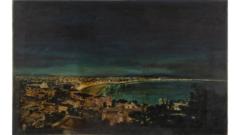
How Bombay went from a fort city to a bustling metropolis 5 minutes ago Share Save Add as preferred on Google Nikhil Inamdar Mumbai From seven islands to a city of 20 million, Bombay (now Mumbai) has been shaped over centuries by political, economic and social forces. From Koli fisherfolk to colonial planners, and from Bollywood stars to textile barons, many have shaped the western Indian city's landscape and identity. The city is ever-evolving, the past giving way to the future, birthing new guises and blurring the old. From fishing nets to ports and mills to malls, Bombay has constantly reinvented itself and remained a city in flux. A new exhibition 'Bombay Framed' charts the city's shape-shifting passage through the centuries using a stunning array of paintings, photographs and multimedia prints. More than 100 images spanning three centuries have an extraordinary range that document the city in its full diversity from the elite worlds of Zoroastrian merchants and cinema stars to working-class lives of ordinary citizens. "Together they invite us to see the city itself as a kind of artwork: layered, complex and made up of many different experiences," Gyan Prakash, curator of the exhibition, told the BBC. According to Prakash there are a few key moments when Bombay really changed - in the 1830s and 40s, when reclamations and bunds joined the seven separate islets into a single island city. Two decades later, in the 1860s, the fort walls came down, paving the way for imperial buildings to come up which gave the city its distinct colonial identity. In the 1920s and 30s the Marine Drive corniche, with its Art Deco buildings was constructed, birthing a uniquely modern architectural style that departed from the earlier Victorian Gothic character. Since the 2000s the city's planners have been preoccupied with building more utilitarian infrastructure, with new sea bridges and coastal roads, radically transforming how the city looks today. Through its history, Bombay has re...
Read full article at source