
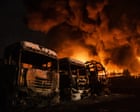
How Iran has used the strait of Hormuz to throttle oil and gas – a visual guide
#Iran #Strait of Hormuz #oil #gas #geopolitical leverage #energy transit #global supply chain
📌 Key Takeaways
- Iran strategically controls the Strait of Hormuz, a critical global oil and gas transit route.
- The strait serves as a geopolitical leverage point for Iran in regional and international conflicts.
- Disruptions in the strait can significantly impact global energy prices and supply chains.
- Iran's actions in the strait highlight tensions with neighboring countries and global powers.
📖 Full Retelling
🏷️ Themes
Geopolitics, Energy Security
📚 Related People & Topics

Iran
Country in West Asia
# Iran **Iran**, officially the **Islamic Republic of Iran** and historically known as **Persia**, is a sovereign country situated in West Asia. It is a major regional power, ranking as the 17th-largest country in the world by both land area and population. Combining a rich historical legacy with a...

Strait of Hormuz
Strait between the Gulf of Oman and the Persian Gulf
The Strait of Hormuz ( Persian: تنگهٔ هُرمُز Tangeh-ye Hormoz , Arabic: مَضيق هُرمُز Maḍīq Hurmuz) is a strait between the Persian Gulf and the Gulf of Oman. It provides the only sea passage from the Persian Gulf to the open ocean and is one of the world's most strategically important choke points. ...
Entity Intersection Graph
Connections for Iran:
Mentioned Entities
Deep Analysis
Why It Matters
This news matters because the Strait of Hormuz is the world's most critical oil transit chokepoint, with about 20% of global oil consumption passing through daily. Iran's ability to disrupt shipping directly impacts global energy prices, economic stability, and geopolitical tensions. This affects consumers worldwide through fuel costs, energy-dependent industries, and international relations between Iran, Gulf states, Western powers, and Asian energy importers.
Context & Background
- The Strait of Hormuz is a narrow waterway between Iran and Oman connecting the Persian Gulf to the Gulf of Oman and Arabian Sea
- Approximately 21 million barrels of oil pass through daily, representing about 21% of global petroleum liquids consumption
- Iran has threatened to close the strait multiple times during tensions with the US and allies, most notably during the 'Tanker War' of the 1980s Iran-Iraq conflict
- The US Fifth Fleet is based in Bahrain to protect shipping lanes, creating ongoing military tensions in the region
- Major oil exporters like Saudi Arabia, Iraq, UAE, Kuwait, and Qatar depend almost entirely on the strait for their exports
What Happens Next
Increased naval patrols and potential confrontations are likely as Western powers reinforce security in the region. Energy markets will remain volatile with price spikes during any incidents. Diplomatic efforts through intermediaries like Oman or Qatar may attempt to de-escalate tensions, while Iran continues using the strait as leverage in nuclear negotiations and regional influence struggles.
Frequently Asked Questions
There are no alternative pipelines with sufficient capacity to handle the volume currently shipped through the strait. While some Gulf states have built limited pipeline alternatives, these bypass only a fraction of the oil, and constructing major new infrastructure would take years and billions of dollars.
The US Fifth Fleet based in Bahrain maintains a significant naval presence, including aircraft carriers and destroyers. Iran's Revolutionary Guard Corps Navy operates fast attack craft and anti-ship missiles along its coastline, creating an asymmetric threat to larger naval vessels.
Asian economies like China, Japan, India and South Korea would be hardest hit as they import most of their Gulf oil through the strait. European countries would face supply disruptions and price spikes, while the US is more insulated due to domestic shale production but would still experience global market impacts.
Iran has never completely closed the strait but significantly disrupted shipping during the 1980s Tanker War, attacking vessels and laying mines. In recent years, Iran has seized tankers and conducted harassment operations that temporarily affected shipping without achieving full closure.
Iran uses the strait as geopolitical leverage to counter sanctions pressure, gain negotiating advantages in nuclear talks, and project regional power. It serves as both a deterrent against attacks on Iranian facilities and a tool to influence global oil prices to Iran's benefit.