
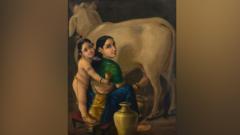
Iconic 19th Century painting sets Indian art record with $17.9m sale
#Raja Ravi Varma #Indian art #auction record #19th century painting #$17.9 million #art sale #iconic artwork
📌 Key Takeaways
- Raja Ravi Varma's 19th-century painting sold for $17.9 million, setting a new record for Indian art
- The sale highlights the growing global market and appreciation for historic Indian artworks
- The painting is considered an iconic piece from the 19th century, reflecting its cultural and artistic significance
- This record-breaking auction price may influence future valuations and interest in classical Indian art
🏷️ Themes
Art Market, Cultural Heritage
📚 Related People & Topics

Raja Ravi Varma
Indian painter (1848–1906)
Raja Ravi Varma (Malayalam: [rajaː ravi varma(ː)ɐ]) (29 April 1848 – 2 October 1906) was an Indian painter. His works are one of the best examples of the fusion of European academic art with a purely Indian sensibility and iconography. He greatly enhanced his reach and influence as a painter and pub...

Indian art
Indian art consists of a variety of art forms, including painting, sculpture, pottery, and textile arts such as woven silk. Geographically, it spans the entire Indian subcontinent, including what is now India, Pakistan, Bangladesh, Sri Lanka, Nepal, Bhutan, and at times Afghanistan, Maldives, and Ti...
Entity Intersection Graph
No entity connections available yet for this article.
Mentioned Entities
Deep Analysis
Why It Matters
This record-breaking sale demonstrates the growing global recognition and market value of Indian art, signaling a shift in the art world's historical Eurocentric focus. It affects Indian artists, collectors, and cultural institutions by potentially increasing the valuation of other significant works and encouraging greater international investment in South Asian art. The sale also highlights the importance of preserving and celebrating India's artistic heritage, which could lead to increased museum acquisitions and scholarly research in this field.
Context & Background
- Indian art has historically been undervalued in global auction markets compared to Western art movements
- The 19th century was a transformative period in Indian art with the emergence of both traditional and colonial-influenced styles
- Previous auction records for Indian art were significantly lower, with the prior record believed to be under $10 million
- Major auction houses like Sotheby's and Christie's have increasingly featured South Asian art in dedicated sales over the past two decades
What Happens Next
Expect increased auction activity for other significant 19th century Indian artworks as collectors and institutions reassess their value. Major museums may seek to acquire comparable works for their collections, potentially driving prices higher. The record could inspire more comprehensive exhibitions of Indian art globally, with possible shows at institutions like the Metropolitan Museum of Art or British Museum within the next 2-3 years.
Frequently Asked Questions
The painting likely represents a masterpiece from a renowned Indian artist of the period, possibly combining exceptional technical skill with historical significance. Its rarity, provenance, and condition would contribute to the record price, along with growing international appreciation for Indian art heritage.
While $17.9 million is substantial, it remains far below records for Western masters like da Vinci or Picasso, whose works have sold for hundreds of millions. This gap reflects historical market biases that are gradually narrowing as global art appreciation expands beyond Eurocentric traditions.
Yes, the record could create a positive ripple effect, increasing attention and valuation for both historical and contemporary Indian artists. Established contemporary Indian artists may see increased demand, while emerging artists could benefit from greater gallery and collector interest in Indian art generally.
Indian museums and cultural institutions may face increased competition for significant works as international buyers enter the market more aggressively. However, the record could also spur greater government and private funding for art preservation and encourage more international loans and exhibitions of Indian art.