
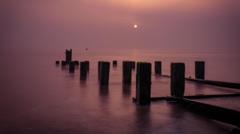
In pictures: Saharan dust casts an eerie glow across parts of southern England
#Saharan dust #southern England #atmospheric phenomenon #eerie glow #dust cloud #weather event #environmental impact
📌 Key Takeaways
- Saharan dust cloud creates unusual atmospheric conditions in southern England
- The phenomenon results in an eerie glow across affected regions
- Visual documentation highlights the striking environmental impact
- Event showcases long-range transport of dust particles from Africa
📖 Full Retelling
🏷️ Themes
Weather, Environment
📚 Related People & Topics

Saharan dust
Wind-borne mineral dust from the Sahara
Saharan dust (also African dust, yellow dust, yellow sand, yellow wind or Sahara dust storms) is an aeolian mineral dust from the Sahara, the largest hot desert in the world. The desert spans slightly more than 9 million square kilometers, from the Atlantic Ocean to the Red Sea, from the Mediterrane...
Entity Intersection Graph
Connections for Saharan dust:
Mentioned Entities
Deep Analysis
Why It Matters
This event matters because it demonstrates how interconnected global weather systems are, with dust from North Africa directly affecting air quality and atmospheric conditions over 2,000 miles away in England. It affects residents with respiratory conditions who may experience worsened symptoms due to particulate matter in the air, while also impacting aviation operations through reduced visibility. The phenomenon serves as a visible reminder of how climate patterns can transport environmental elements across continents, with implications for public health, transportation, and scientific understanding of atmospheric circulation.
Context & Background
- Saharan dust plumes regularly travel across the Atlantic Ocean to the Americas, but reaching northern Europe is less common though not unprecedented
- The Sahara Desert releases approximately 60-200 million tons of mineral dust into the atmosphere annually, making it Earth's largest source of airborne dust
- Previous significant Saharan dust events in the UK occurred in March 2022 and April 2023, often coinciding with specific weather patterns that transport dust northward
- Dust transport involves complex meteorological processes including strong winds over the Sahara, specific pressure systems, and atmospheric circulation patterns that carry particles long distances
- The 'eerie glow' results from sunlight scattering through suspended dust particles, similar to effects seen during volcanic eruptions or severe wildfires
What Happens Next
Meteorologists will continue monitoring air quality indices across affected regions as the dust settles or moves onward. Within days, the dust will likely deposit on surfaces, potentially creating noticeable film on cars and windows, followed by possible 'blood rain' if precipitation occurs while dust remains suspended. Scientists will analyze this event's intensity and trajectory to improve dust transport models, while health agencies may issue updated advisories for vulnerable populations if particulate concentrations remain elevated.
Frequently Asked Questions
For most healthy people, short-term exposure poses minimal risk beyond possible minor irritation. However, individuals with respiratory conditions like asthma or COPD may experience worsened symptoms and should limit outdoor activity during peak dust concentrations.
The unusual coloration occurs because dust particles scatter shorter wavelength blue light while allowing longer wavelength red and orange light to pass through more easily. This same scattering phenomenon creates colorful sunrises and sunsets under normal conditions, but is amplified by high dust concentrations.
Significant dust events reaching the UK occur several times per year on average, typically during spring and autumn when specific weather patterns align. However, most events are less dramatic than this one, with dust often remaining at higher altitudes rather than creating visible atmospheric effects at ground level.
Yes, dust particles can influence weather by absorbing and scattering sunlight, potentially affecting temperature patterns. The particles also serve as cloud condensation nuclei, potentially altering cloud formation and precipitation processes downwind of dust plumes.
Research suggests climate change may increase Saharan dust transport in some scenarios due to potential changes in desertification patterns, wind regimes, and atmospheric circulation. However, projections remain uncertain as climate models show complex, sometimes contradictory effects on dust emission and transport mechanisms.