
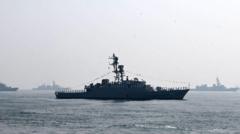
India offered sanctuary to Iranian ship three days before US sank it
#India #Iran #US #sanctuary #ship #sank #diplomacy
📌 Key Takeaways
- India offered sanctuary to an Iranian ship three days before the US sank it.
- The incident highlights diplomatic tensions between India, Iran, and the US.
- The US action suggests a strategic move against Iranian maritime activities.
- India's offer indicates its independent foreign policy stance in the region.
📖 Full Retelling
🏷️ Themes
Diplomatic Tensions, Maritime Security
📚 Related People & Topics

India
Country in South Asia
India, officially the Republic of India, is a country in South Asia. It is the seventh-largest country by area; the most populous country since 2023; and, since its independence in 1947, the world's most populous democracy. Bounded by the Indian Ocean on the south, the Arabian Sea on the southwest,...

Iran
Country in West Asia
# Iran **Iran**, officially the **Islamic Republic of Iran** and historically known as **Persia**, is a sovereign country situated in West Asia. It is a major regional power, ranking as the 17th-largest country in the world by both land area and population. Combining a rich historical legacy with a...

United States
Country primarily in North America
The United States of America (USA), also known as the United States (U.S.) or America, is a country primarily located in North America. It is a federal republic of 50 states and a federal capital district, Washington, D.C. The 48 contiguous states border Canada to the north and Mexico to the south, ...
Entity Intersection Graph
Connections for India:
Mentioned Entities
Deep Analysis
Why It Matters
This news reveals India's delicate diplomatic balancing act between Iran and the United States, highlighting the complex geopolitical tensions in the Middle East and Indian Ocean region. It affects India's strategic relationships with both nations, potentially straining ties with the US while strengthening cooperation with Iran. The incident also impacts global maritime security and demonstrates how regional powers navigate conflicting alliances amid escalating tensions.
Context & Background
- India has maintained historically close ties with Iran, particularly regarding energy imports and the Chabahar port development project
- The United States has maintained strict sanctions against Iran since withdrawing from the JCPOA nuclear deal in 2018
- India has sought to balance relationships with both Middle Eastern powers and Western allies while maintaining strategic autonomy in foreign policy
- Maritime incidents in the Persian Gulf and surrounding waters have increased amid regional tensions between Iran and Western powers
What Happens Next
India will likely face diplomatic pressure from the US regarding its relationship with Iran, potentially affecting upcoming bilateral talks. The incident may lead to increased scrutiny of maritime traffic in the region and could influence India's participation in regional security initiatives. Future developments may include formal diplomatic exchanges between India, Iran, and the US to clarify positions and prevent escalation.
Frequently Asked Questions
India maintains strategic ties with Iran, particularly regarding energy security and the Chabahar port project, which provides India access to Afghanistan and Central Asia while bypassing Pakistan. This reflects India's balanced foreign policy approach in the region.
This incident may strain the growing US-India strategic partnership, particularly regarding alignment on Middle East policy. The US may pressure India to align more closely with its Iran sanctions regime, testing the limits of their defense and economic cooperation.
The incident highlights competing interests in the Indian Ocean and Persian Gulf regions, potentially complicating maritime security cooperation. It demonstrates how regional powers like India navigate between conflicting alliances, which could influence future naval deployments and security arrangements.
While not specified in this article, the US typically cites international sanctions violations, weapons smuggling concerns, or threats to maritime security as justifications for such actions against Iranian vessels. Previous incidents have involved allegations of arms transfers to regional proxies.