
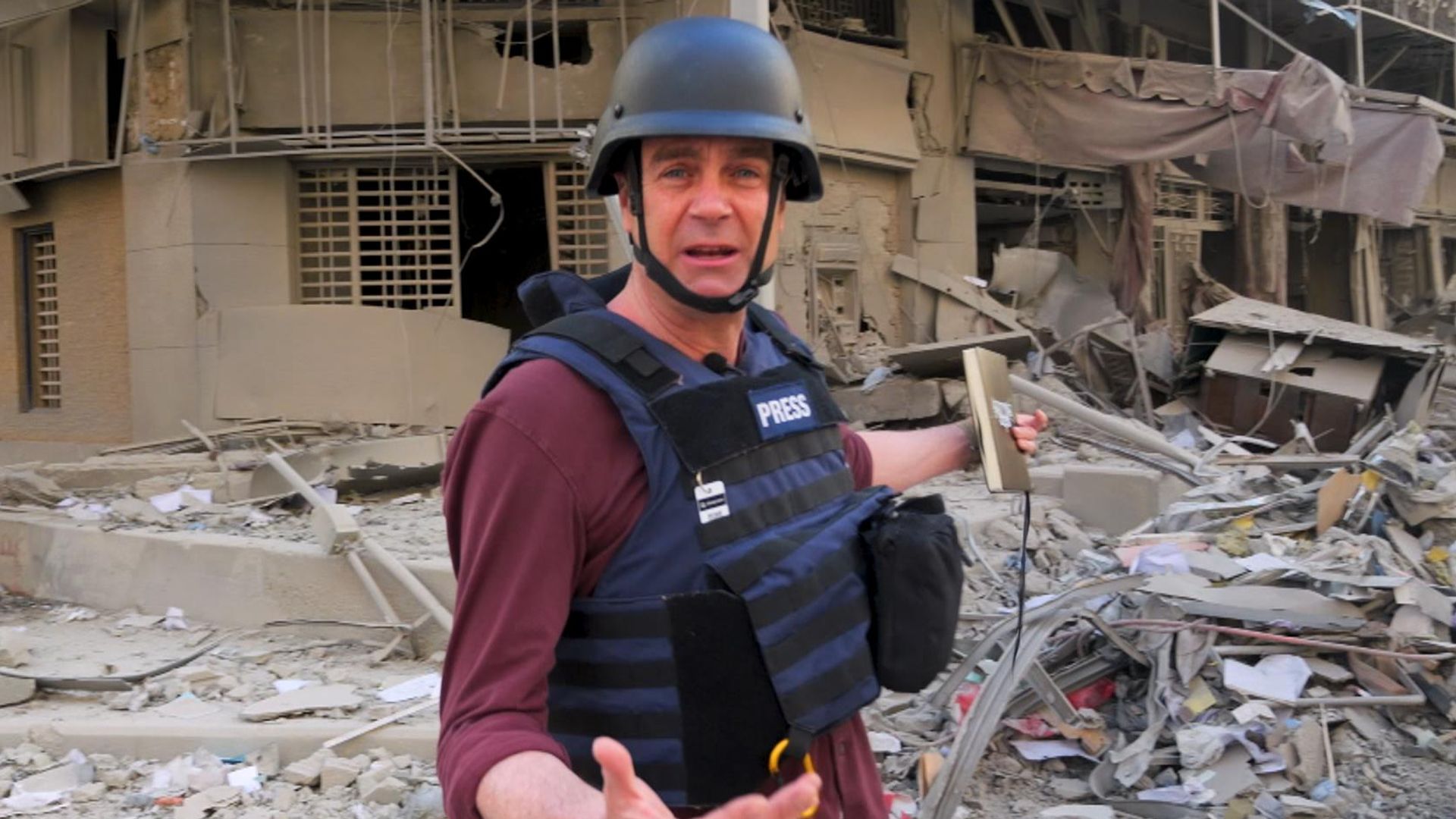
Inside bombed-out Beirut - where Hezbollah makes the rules
#Hezbollah #Beirut #bombed-out #rules #control #conflict #neighborhoods #authority
📌 Key Takeaways
- Hezbollah holds significant influence in Beirut's bombed-out areas, effectively setting local rules.
- The article explores the power dynamics and control exerted by Hezbollah in these devastated neighborhoods.
- Residents navigate daily life under Hezbollah's authority amid ongoing conflict and destruction.
- The situation highlights the group's role as a de facto governing force in parts of Beirut.
📖 Full Retelling
🏷️ Themes
Conflict, Governance
📚 Related People & Topics
Hezbollah
Islamist movement and militant group based in Lebanon
Hezbollah is a Shia Islamist Lebanese political party and paramilitary group. Hezbollah's paramilitary wing is the Jihad Council, and its political wing is the Loyalty to the Resistance Bloc party in the Lebanese Parliament. Its armed strength was assessed to be equivalent to that of a medium-sized ...

Beirut
Capital and largest city of Lebanon
Beirut ( bay-ROOT; Arabic: بيروت, romanised: ) is the capital and largest city of Lebanon. As of 2025 Greater Beirut has a population of 2.4 million, just under half of Lebanon's population, which makes it the twelfth-largest city in the Levant region and the sixteenth-largest in the Arab world. Th...
Entity Intersection Graph
Connections for Hezbollah:
View full profileMentioned Entities
Deep Analysis
Why It Matters
This news matters because it reveals how Hezbollah's control over Beirut's bombed-out areas reflects the group's growing political and military influence in Lebanon, which directly affects Lebanese citizens living under their authority and has regional implications for Middle East stability. It highlights the power vacuum in parts of Lebanon where state institutions have collapsed, allowing non-state actors to establish parallel governance systems. The situation impacts international relations as Hezbollah is designated a terrorist organization by many Western countries while maintaining significant popular support in Lebanon.
Context & Background
- Hezbollah emerged in the 1980s as a Shiite political and military organization during Lebanon's civil war, with backing from Iran
- The group has maintained an armed militia separate from the Lebanese military since the 1990 Taif Agreement that ended the civil war
- Hezbollah gained significant political power after the 2005 assassination of former Prime Minister Rafik Hariri and subsequent political realignments
- The 2006 war between Hezbollah and Israel demonstrated the group's military capabilities and further solidified its position in Lebanese politics
- The 2020 Beirut port explosion devastated large parts of the city and exposed government failures, creating conditions for Hezbollah to expand its influence in affected areas
What Happens Next
Hezbollah will likely continue consolidating control over devastated Beirut neighborhoods while facing increased international pressure and potential sanctions. The Lebanese government may attempt to reassert authority in these areas but will face significant resistance. Regional tensions could escalate if Hezbollah's activities provoke Israeli responses, particularly along the Lebanon-Israel border. Reconstruction efforts will become politicized battlegrounds between Hezbollah and rival political factions.
Frequently Asked Questions
Hezbollah gained power through a combination of military strength, political organization, and social services that filled voids left by Lebanon's weak central government. The group's resistance narrative against Israel and substantial Iranian support have helped maintain its popular base, particularly among Lebanon's Shiite population.
Citizens in Hezbollah-controlled areas receive social services and security from the group but live under its rules rather than state laws. This creates parallel governance systems that can complicate daily life and limit personal freedoms while providing stability in otherwise chaotic environments.
Most Western countries designate Hezbollah as a terrorist organization and oppose its growing influence, while regional powers like Iran and Syria support the group. This creates diplomatic challenges for Lebanon's government and affects international aid and reconstruction funding.
Tensions could escalate if Hezbollah's expansion provokes responses from rival Lebanese factions or Israel. However, most actors currently prefer avoiding full-scale conflict given Lebanon's economic collapse and regional instability.
Hezbollah's parallel governance systems operate alongside Lebanon's collapsing state institutions, creating competing power centers that hinder coordinated economic recovery. The group's international sanctions also complicate Lebanon's access to foreign aid and investment.