
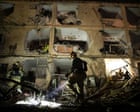
Iran hits Israeli town near nuclear facility in retaliation for Natanz strike
#Iran #Israel #nuclear facility #Natanz #retaliation #military strike #escalation
📌 Key Takeaways
- Iran launched a retaliatory strike targeting an Israeli town near a nuclear facility
- The attack was in response to Israel's previous strike on Iran's Natanz nuclear site
- The incident represents a direct military confrontation between Iran and Israel
- The location near an Israeli nuclear facility raises concerns about escalation
📖 Full Retelling
🏷️ Themes
Military retaliation, Nuclear tensions
📚 Related People & Topics

Natanz
City in Isfahan province, Iran
Natanz (Persian: نطنز) is a city in the Central District of Natanz County, Isfahan province, Iran, serving as capital of both the county and the district. It is 70 kilometres (43 mi) south-east of Kashan.

Iran
Country in West Asia
# Iran **Iran**, officially the **Islamic Republic of Iran** and historically known as **Persia**, is a sovereign country situated in West Asia. It is a major regional power, ranking as the 17th-largest country in the world by both land area and population. Combining a rich historical legacy with a...

Israel
Country in West Asia
Israel, officially the State of Israel, is a country in the Southern Levant region of West Asia. It is bordered by Lebanon to the north, Syria to the northeast, Jordan to the east, and Egypt to the southwest. Israel occupies the West Bank and the Gaza Strip of the Palestinian territories, as well as...
Entity Intersection Graph
Connections for Natanz:
Mentioned Entities
Deep Analysis
Why It Matters
This escalation directly threatens regional stability by bringing Iran-Israel hostilities into open military confrontation, risking broader Middle East conflict. It affects Israeli and Iranian civilians living near targeted areas, global energy markets due to potential Strait of Hormuz disruptions, and international nuclear non-proliferation efforts. The attack near an Israeli nuclear facility raises unprecedented risks of nuclear escalation in a region already facing multiple crises.
Context & Background
- Iran's Natanz nuclear facility has been targeted multiple times in recent years, including a major sabotage attack in 2021 widely attributed to Israel
- Israel has conducted numerous strikes against Iranian targets in Syria and elsewhere as part of its 'war between wars' campaign against Iranian military entrenchment
- The two nations have maintained a shadow war for over a decade, avoiding direct military confrontation until recent escalations
- Iran maintains a policy of 'strategic patience' but has vowed retaliation for attacks on its nuclear scientists and facilities
- Israel considers preventing Iranian nuclear capability an existential priority and has threatened military action if diplomacy fails
What Happens Next
Israel will likely respond with further strikes against Iranian targets, potentially in Syria or elsewhere. The UN Security Council will convene emergency sessions within 48 hours. Regional tensions will spike with increased US naval deployments to Persian Gulf expected within the week. Indirect negotiations in Vienna regarding Iran's nuclear program will likely be suspended indefinitely.
Frequently Asked Questions
Natanz is Iran's main uranium enrichment center, housing thousands of centrifuges. It's crucial to Iran's nuclear program and has been repeatedly targeted, making it a flashpoint in international non-proliferation efforts.
This attack severely undermines ongoing Vienna talks about reviving the 2015 nuclear deal. Both sides will likely harden positions, making diplomatic resolution significantly more difficult in the near term.
Dimona is Israel's nuclear research center, widely believed to house the country's undeclared nuclear weapons program. Its location makes any nearby attack particularly sensitive.
Yes, the risk of broader conflict has increased substantially. Hezbollah in Lebanon and Iranian proxies in Syria could join hostilities, potentially drawing in US forces and creating multi-front confrontation.
Major powers typically call for restraint while positioning military assets. The US has increased Gulf deployments during past crises, while Russia and China generally urge diplomatic solutions favoring Iran's position.