
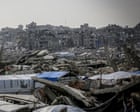
Israeli-backed Palestinian militias step up operations against Hamas in Gaza
#Israeli-backed #Palestinian militias #Hamas #Gaza #operations #security #conflict escalation
📌 Key Takeaways
- Israeli-backed Palestinian militias are increasing their activities in Gaza against Hamas.
- The operations signify a strategic shift in local counter-Hamas efforts.
- These militias are likely receiving support and coordination from Israeli forces.
- The escalation could impact the internal dynamics and security situation in Gaza.
📖 Full Retelling
🏷️ Themes
Conflict, Security
📚 Related People & Topics
Hamas
Islamist Palestinian political and paramilitary organization
The Islamic Resistance Movement, abbreviated Hamas (an acronym from the Arabic: حركة المقاومة الإسلامية, romanized: Ḥarakat al-Muqāwamah al-ʾIslāmiyyah), is a Sunni Islamist Palestinian nationalist political organisation with a military wing known as the al-Qassam Brigades. It has governed the Israe...
Entity Intersection Graph
Connections for Gaza:
Mentioned Entities
Deep Analysis
Why It Matters
This development is significant because it represents a shift in Israel's strategy in Gaza, potentially aiming to create local Palestinian forces to counter Hamas and manage security post-conflict. It affects the Palestinian population in Gaza by introducing new armed actors, which could lead to increased internal violence and fragmentation. The move also impacts regional stability by altering the power dynamics within Gaza and could influence future governance and reconstruction efforts.
Context & Background
- Israel has historically supported or tolerated certain Palestinian factions in Gaza as a counterbalance to Hamas, which has governed the strip since 2007.
- Hamas is designated as a terrorist organization by Israel, the U.S., and others, and has been in conflict with Israel, including the recent war that began in October 2023.
- Previous attempts to build Palestinian security forces in Gaza, such as those loyal to the Palestinian Authority, have faced challenges due to Hamas's dominance and internal Palestinian divisions.
What Happens Next
In the short term, expect increased clashes between these militias and Hamas, potentially escalating violence in Gaza. Over the coming months, Israel may expand support for these groups, leading to shifts in local control and possible negotiations for post-war governance. International reactions, including from the U.S. and Arab states, will likely influence the legitimacy and effectiveness of this strategy.
Frequently Asked Questions
They are likely local Palestinian groups or clans in Gaza that oppose Hamas and have received Israeli support, possibly including weapons, training, or intelligence. Their exact composition and leadership may not be publicly detailed to protect operational security.
Israel aims to weaken Hamas's control in Gaza and create alternative security forces to prevent Hamas's resurgence after the war. This strategy could reduce the need for prolonged Israeli military presence and address governance challenges in post-conflict Gaza.
Civilians may face increased risks from internal fighting, displacement, and humanitarian crises as militias and Hamas clash. It could also complicate aid delivery and reconstruction efforts, prolonging suffering in the war-torn region.
International reactions are mixed; some countries may view it as a pragmatic step to stabilize Gaza, while others, including Palestinian factions, might criticize it as undermining Palestinian unity and self-determination. The U.S. and regional actors will likely monitor human rights implications closely.