
It is small, stable and a European success story. So why is Slovenia turning its back on liberalism? | Ana Schnabl
#Slovenia #liberalism #political change #European Union #Ana Schnabl #ideology #success story
📌 Key Takeaways
- Slovenia, a small and stable European success story, is shifting away from liberal values.
- The article explores the reasons behind this political and ideological shift.
- Author Ana Schnabl analyzes the factors driving this change in Slovenia.
- The piece highlights the broader implications for European liberalism.
📖 Full Retelling
🏷️ Themes
Political Shift, European Liberalism
📚 Related People & Topics

Slovenia
Country in Central and Southeast Europe
Slovenia, officially the Republic of Slovenia, is a country in Central and Southeast Europe. It borders Italy to the west, Austria to the north, Hungary to the northeast, and Croatia to the south and southeast; its southwestern boundary consists of a 46.6 km (29.0 mi) coastline on the Adriatic Sea. ...
Ana Schnabl
Slovenian author and writer (born 1985)
Ana Schnabl (born 1985 in Ljubljana) is a Slovenian author and journalist.

European Union
Supranational political and economic union
The European Union (EU) is a supranational political and economic union of 27 member states that are located primarily in Europe. The union has a total area of 4,233,255 km2 (1,634,469 sq mi) and an estimated population of more than 450 million as of 2025. The EU is often described as a sui generis ...
Entity Intersection Graph
Connections for Slovenia:
Mentioned Entities
Deep Analysis
Why It Matters
This news matters because Slovenia's political shift away from liberalism represents a broader trend of democratic backsliding within the European Union, challenging the bloc's foundational values. It affects Slovenian citizens through potential erosion of press freedom, judicial independence, and minority rights. The development concerns EU institutions and neighboring countries as it tests the resilience of democratic norms in post-communist Central Europe. International observers are watching whether Slovenia's economic success can be maintained alongside this political transformation.
Context & Background
- Slovenia gained independence from Yugoslavia in 1991 and joined the EU in 2004, becoming one of the most successful post-communist transitions to democracy
- The country has been governed by liberal democratic parties for most of its independence, with strong alignment with Western European political values
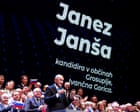
- Recent years have seen the rise of right-wing populist leader Janez Janša and his Slovenian Democratic Party, who served multiple terms as prime minister
- Slovenia maintained economic stability through the 2008 financial crisis and COVID-19 pandemic, outperforming many EU counterparts
- The country faces demographic challenges including aging population and brain drain of young professionals to Western Europe
- Slovenia's political landscape has become increasingly polarized between urban liberal centers and conservative rural areas
What Happens Next
Upcoming local and European Parliament elections in 2024 will test the strength of anti-liberal forces versus traditional democratic parties. The European Commission may increase monitoring of Slovenia's adherence to rule of law principles if democratic backsliding continues. Civil society organizations are likely to mobilize more actively to protect liberal institutions, potentially leading to increased political protests. Slovenia's upcoming EU presidency in 2025 will put international spotlight on its domestic political developments.
Frequently Asked Questions
Recent governments have attempted to exert control over public media, undermine judicial independence, and restrict civil society organizations. There have been efforts to limit press freedom and concentrate power in the executive branch, mirroring patterns seen in Hungary and Poland.
Slovenia follows similar patterns to Hungary and Poland's democratic backsliding but from a stronger democratic foundation. Unlike those countries, Slovenia maintained stronger liberal institutions until recently, making its shift more surprising to European observers.
Factors include rising nationalism, dissatisfaction with traditional parties, economic anxieties despite overall success, and influence from neighboring illiberal democracies. Migration concerns and cultural backlash against progressive social policies have also fueled conservative mobilization.
Continued illiberal trends could strain Slovenia's EU relations, potentially affecting access to EU funds and cooperation programs. The country might face increased scrutiny under the EU's rule of law mechanism, though its small size may limit Brussels' willingness to confront it directly.
Janša has been the primary figure driving Slovenia's rightward turn through his Slovenian Democratic Party, serving multiple terms as prime minister. His confrontational style, media attacks, and alliances with other European populists have fundamentally altered Slovenia's political landscape.
Yes, strong civil society organizations, independent media outlets, academic institutions, and urban populations continue defending liberal values. The country's history of successful EU integration and economic openness provides institutional barriers against complete democratic erosion.