
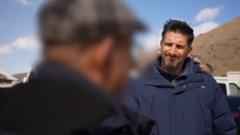
'Kill the regime but not people': BBC speaks to Iranians crossing into Turkey
#Iran #Turkey #regime #protest #border crossing #BBC #dissent #migration
📌 Key Takeaways
- Iranians crossing into Turkey express opposition to the Iranian regime while emphasizing they do not wish harm to ordinary people
- The BBC interviews Iranians who have recently crossed the border into Turkey
- The phrase 'Kill the regime but not people' captures the sentiment of the interviewed Iranians
- The movement reflects ongoing political dissent and migration from Iran
📖 Full Retelling
🏷️ Themes
Political dissent, Migration, Iran-Turkey relations
📚 Related People & Topics

Iran
Country in West Asia
# Iran **Iran**, officially the **Islamic Republic of Iran** and historically known as **Persia**, is a sovereign country situated in West Asia. It is a major regional power, ranking as the 17th-largest country in the world by both land area and population. Combining a rich historical legacy with a...
BBC
British public service broadcaster
# British Broadcasting Corporation (BBC) The **British Broadcasting Corporation (BBC)** is the national broadcaster of the United Kingdom. Headquartered at **Broadcasting House** in London, it holds the distinction of being the world's oldest national broadcasting organization and the largest broad...

Turkey
Country in West Asia and Southeast Europe
Turkey, officially the Republic of Türkiye, is a country mainly located in Anatolia in West Asia, with a smaller part called East Thrace in Southeast Europe. It borders the Black Sea to the north; Georgia, Armenia, Azerbaijan, and Iran to the east; Iraq, Syria, and the Mediterranean Sea to the south...
Entity Intersection Graph
Connections for Iran:
Mentioned Entities
Deep Analysis
Why It Matters
This news matters because it reveals the depth of opposition to Iran's government among citizens willing to flee the country, highlighting ongoing human rights concerns and political instability. It affects Iranian citizens facing repression, regional neighbors like Turkey managing refugee flows, and international policymakers monitoring Iran's internal dynamics. The story provides firsthand accounts that challenge official narratives from Tehran, offering insight into potential future unrest.
Context & Background
- Iran has experienced periodic anti-government protests since 2009, with significant unrest in 2019-2020 and the 2022 Mahsa Amini protests
- Turkey hosts approximately 3.6 million Syrian refugees and has become a transit route for Iranians seeking asylum in Europe
- Iran's government maintains strict control over media and internet access, making firsthand accounts from fleeing citizens particularly valuable
- US-Iran tensions have persisted since the 1979 revolution, with sanctions impacting Iran's economy and contributing to emigration
What Happens Next
Turkey may face increased pressure to manage Iranian refugee flows while balancing diplomatic relations with Tehran. International human rights organizations will likely use these accounts to advocate for stronger actions against Iran. The Iranian government may tighten border controls or increase propaganda efforts to counter negative narratives.
Frequently Asked Questions
Iranians are crossing into Turkey primarily to escape political repression, economic hardship exacerbated by sanctions, and to seek asylum opportunities in Europe. Turkey serves as a geographical gateway and has relatively accessible border regions compared to other neighboring countries.
This slogan reflects opposition to Iran's government institutions while distinguishing between the ruling system and ordinary citizens. It suggests protesters want political change without violence against the general population, though it indicates deep hostility toward current leadership.
Turkey generally allows Iranians temporary stay while their asylum applications are processed, though policies fluctuate based on diplomatic relations. Many Iranians use Turkey as a transit point to reach Europe, where they seek permanent refugee status in countries like Germany or Sweden.
Iranians face dangers from border guards, smugglers, and harsh terrain during escape. If caught by Iranian authorities, they risk imprisonment, torture, or execution. Even after crossing, they face uncertainty in Turkey's asylum system and potential deportation.
While refugee accounts provide valuable firsthand perspectives, they represent a self-selected group with strong grievances. Their stories should be considered alongside other sources, though consistent patterns across multiple accounts suggest systemic issues in Iran.