
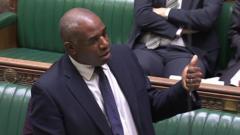
Lammy urges Labour MPs to back jury trial cuts
#David Lammy #Labour MPs #jury trials #judicial reform #court efficiency #legal system #political debate
📌 Key Takeaways
- David Lammy is urging Labour MPs to support reductions in jury trials.
- The proposal aims to streamline the judicial process and reduce court backlogs.
- This move is part of broader legal reforms to improve efficiency in the justice system.
- The initiative has sparked debate within the Labour Party regarding its impact on fair trial rights.
📖 Full Retelling
🏷️ Themes
Legal Reform, Political Advocacy
📚 Related People & Topics
List of Labour Party (UK) MPs
This is a list of United Kingdom Labour Party MPs. It includes all members of Parliament (MPs) elected to the House of Commons representing the Labour Party from 1900 to 1923 and since 1992. Members of the Scottish Parliament, the Senedd or the European Parliament are not listed.

David Lammy
Deputy Prime Minister of the United Kingdom since 2025
David Lindon Lammy (born 19 July 1972) is a British politician who has served as Deputy Prime Minister of the United Kingdom, Secretary of State for Justice and Lord Chancellor since September 2025. He previously served as Foreign Secretary from July 2024 to September 2025. A member of the Labour Pa...
Entity Intersection Graph
No entity connections available yet for this article.
Mentioned Entities
Deep Analysis
Why It Matters
This news matters because it involves a fundamental change to the UK's justice system that could affect defendants' rights and trial procedures. It impacts criminal defendants who might face different trial formats, legal professionals who must adapt to new procedures, and taxpayers who fund the justice system. The proposal represents a significant policy shift within the Labour Party that could signal broader changes to criminal justice approaches if implemented.
Context & Background
- The UK has traditionally used jury trials for serious criminal cases since the Magna Carta in 1215 established basic legal rights
- Jury trials are currently used for indictable offenses in Crown Courts, while magistrates' courts handle summary offenses without juries
- Previous debates about jury trial reform have occurred periodically, often focusing on cost, efficiency, and complexity of modern cases
- David Lammy is Shadow Foreign Secretary and a former barrister with expertise in legal reform
What Happens Next
Labour MPs will likely debate the proposal internally before any formal party position is established. If Labour forms the next government, this could become part of their justice reform agenda, potentially leading to parliamentary legislation. The proposal may face legal challenges and require consultation with judiciary and legal professionals before implementation.
Frequently Asked Questions
The article doesn't specify which cases might be affected, but typically such proposals target either less serious criminal cases or complex fraud/trials where juries might struggle with technical evidence. Previous reform discussions have focused on middle-tier offenses that currently go to Crown Court.
Proponents typically argue for efficiency, cost savings, and potentially fairer outcomes in complex cases where juries might misunderstand evidence. Lammy may believe certain cases would be better decided by judges alone or through alternative dispute resolution methods.
Jury trials represent a small percentage of total criminal cases (about 1-2%), as most minor offenses are handled in magistrates' courts without juries. However, they remain crucial for serious offenses like murder, rape, and robbery that carry significant prison sentences.
Opponents argue jury trials provide democratic participation in justice, protect against state overreach, and bring community perspectives to legal decisions. Critics also worry about concentrating power in judges and reducing transparency in the justice system.
Yes, some reductions have occurred historically, such as moving certain driving offenses to magistrates' courts. The most significant recent change was during COVID-19 with temporary adjustments, but fundamental jury trial rights have remained largely protected despite periodic reform debates.