
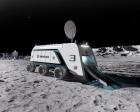
Lunar prospectors: the businesses looking to mine the moon
#moon mining #lunar resources #water ice #space industry #in-situ resource utilization #space law #private spaceflight #lunar base
📌 Key Takeaways
- Private companies are actively developing plans to extract resources from the moon.
- The primary target is water ice, which can be converted into rocket fuel and life support.
- This activity is driven by the goal of supporting long-term lunar bases and deep-space missions.
- Legal and regulatory frameworks for off-Earth mining remain underdeveloped and contentious.
📖 Full Retelling
🏷️ Themes
Space Commerce, Resource Extraction
Entity Intersection Graph
No entity connections available yet for this article.
Deep Analysis
Why It Matters
This news matters because it represents a fundamental shift in space exploration from government-led missions to commercial ventures, potentially creating a new trillion-dollar space economy. It affects space agencies like NASA and ESA, which are now customers rather than sole operators, and could disrupt terrestrial mining industries if lunar resources become economically viable. The development also raises urgent questions about international space law and property rights, as current treaties don't address commercial resource extraction. Successful lunar mining could enable sustainable human presence in space by providing water, oxygen, and construction materials without Earth-launch costs.
Context & Background
- The 1967 Outer Space Treaty established that celestial bodies cannot be claimed by nations, but left ambiguity about commercial resource extraction
- NASA's Artemis program aims to return humans to the Moon by 2026, creating infrastructure that commercial ventures could utilize
- Recent technological advances in robotics, 3D printing, and launch cost reduction (SpaceX's reusable rockets) have made lunar operations more feasible
- China's Chang'e missions and India's Chandrayaan program have demonstrated renewed global interest in lunar exploration
- The 2015 U.S. Commercial Space Launch Competitiveness Act gave American companies rights to resources they extract in space, setting a precedent
What Happens Next
Expect the first commercial lunar lander missions with prospecting equipment within 2-3 years, followed by demonstration missions of resource extraction technologies by 2028. Key upcoming milestones include NASA's Commercial Lunar Payload Services (CLPS) missions in 2024-2025 and the planned Artemis III crewed landing in 2026. International regulatory discussions will intensify at UN Committee on Peaceful Uses of Outer Space meetings, with potential new treaties or agreements by 2027-2028. The first commercially viable resource extraction (likely water ice) could begin by the early 2030s if technological and economic hurdles are overcome.
Frequently Asked Questions
The primary targets are water ice in permanently shadowed craters at the poles, which can be split into hydrogen and oxygen for rocket fuel and life support. Other valuable resources include helium-3 for potential fusion energy, rare earth elements for electronics, and regolith (lunar soil) for construction materials and radiation shielding.
Current international space law is ambiguous. The 1967 Outer Space Treaty prohibits national appropriation but doesn't explicitly forbid commercial resource extraction. The U.S., Luxembourg, UAE, and Japan have passed national laws allowing their companies to extract space resources, while other nations argue this violates the treaty's spirit. This legal uncertainty will likely require new international agreements.
Initial use will be 'in-situ resource utilization' (ISRU) - using materials on the Moon to support lunar operations rather than transporting everything from Earth. Water can become drinking water, oxygen for breathing, and rocket propellant. Regolith can be 3D-printed into habitats and landing pads. Eventually, some rare materials might be transported back to Earth if economically viable.
Extreme temperature variations (-173°C to 127°C), abrasive lunar dust that damages equipment, two-week long nights without solar power, and low gravity (1/6 Earth's) that affects mining processes. Developing autonomous systems that can operate for years with minimal maintenance is crucial, as human presence will initially be limited.
Key players include U.S.-based companies like Intuitive Machines (successful 2024 lunar landing), Astrobotic, and SpaceX (transportation); European ventures like ispace; and startups developing specific technologies like extraction systems (TransAstra) and lunar construction (ICON). Established mining companies are beginning to invest in space mining research and partnerships.
Successful lunar mining could eventually reduce the environmental impact of terrestrial mining for rare minerals and enable space-based solar power that doesn't require Earth resources. However, critics argue resources should be directed toward solving Earth's problems first, and warn of potential space debris issues and the 'tragedy of the commons' if lunar resources are exploited without regulation.