
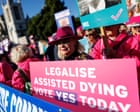
More than 100 Labour MPs call on PM to stop assisted dying bill being blocked
#Labour MPs #assisted dying #bill #Prime Minister #parliament #legislation #end-of-life #debate
📌 Key Takeaways
- Over 100 Labour MPs urge the Prime Minister to prevent the blocking of an assisted dying bill.
- The MPs are advocating for parliamentary debate and a vote on the legislation.
- The bill addresses legalizing assisted dying under specific conditions.
- This move reflects growing cross-party pressure to address end-of-life choices.
📖 Full Retelling
🏷️ Themes
Assisted Dying, Political Advocacy
Entity Intersection Graph
No entity connections available yet for this article.
Deep Analysis
Why It Matters
This news matters because it represents a significant political push to advance assisted dying legislation in the UK, which could fundamentally change end-of-life care and personal autonomy for terminally ill patients. It affects MPs across party lines, healthcare professionals, religious groups, disability rights advocates, and families facing terminal illness decisions. The large number of Labour MPs involved signals growing parliamentary momentum that could pressure the government to allow parliamentary time for this controversial but widely supported public issue.
Context & Background
- Assisted dying remains illegal in England, Wales, and Northern Ireland under the Suicide Act 1961, with only limited exceptions in specific circumstances.
- Multiple attempts to legalize assisted dying have failed in Parliament since 1997, including a 2015 bill that was defeated in the House of Commons by 330 votes to 118.
- Several UK jurisdictions have considered or are considering changes, with Scotland currently debating its own assisted dying bill and Jersey having voted in principle to legalize it in 2021.
- Public opinion has consistently shown strong support for assisted dying reforms, with recent polls indicating 70-80% of British adults support legalization for terminally ill patients.
- The current parliamentary system allows government control over which bills get debated, meaning controversial legislation often requires government support to progress.
What Happens Next
The Prime Minister will likely face increased pressure to respond to the Labour MPs' request, potentially leading to government discussions about allocating parliamentary time for debate. If the bill proceeds, it would go through standard parliamentary readings and committee stages, with votes expected in both Commons and Lords. The issue may become more prominent in the lead-up to the next general election, with parties potentially including positions on assisted dying in their manifestos. Medical and ethical consultations would intensify as the legislative process advances.
Frequently Asked Questions
The Labour MPs are calling on the Prime Minister to prevent the assisted dying bill from being blocked, specifically by ensuring it receives parliamentary time for proper debate and voting. They want the government to allow the legislative process to proceed rather than using procedural methods to stop it from being considered by Parliament.
Governments sometimes block controversial bills due to divided party opinions, concerns about unintended consequences, or pressure from influential groups like religious organizations. There may also be strategic political considerations about managing parliamentary time and avoiding divisive votes that could split coalition or party unity.
Supporters argue it provides dignity, autonomy, and relief from unbearable suffering for terminally ill patients, while opponents raise concerns about potential coercion, slippery slopes toward euthanasia, and the sanctity of life. Medical ethics, disability rights, and religious beliefs form the core of this ongoing debate.
The UK lags behind many Western nations, including Canada, New Zealand, several US states, and multiple European countries that have legalized some form of assisted dying. However, the UK maintains stricter laws than these jurisdictions, allowing only passive measures like withdrawing treatment rather than active assistance.
If the bill receives parliamentary time, it would undergo multiple readings, committee scrutiny, and amendments in both the House of Commons and House of Lords. The process would include expert testimony, public consultation elements, and ultimately require majority votes in both chambers before potentially becoming law.