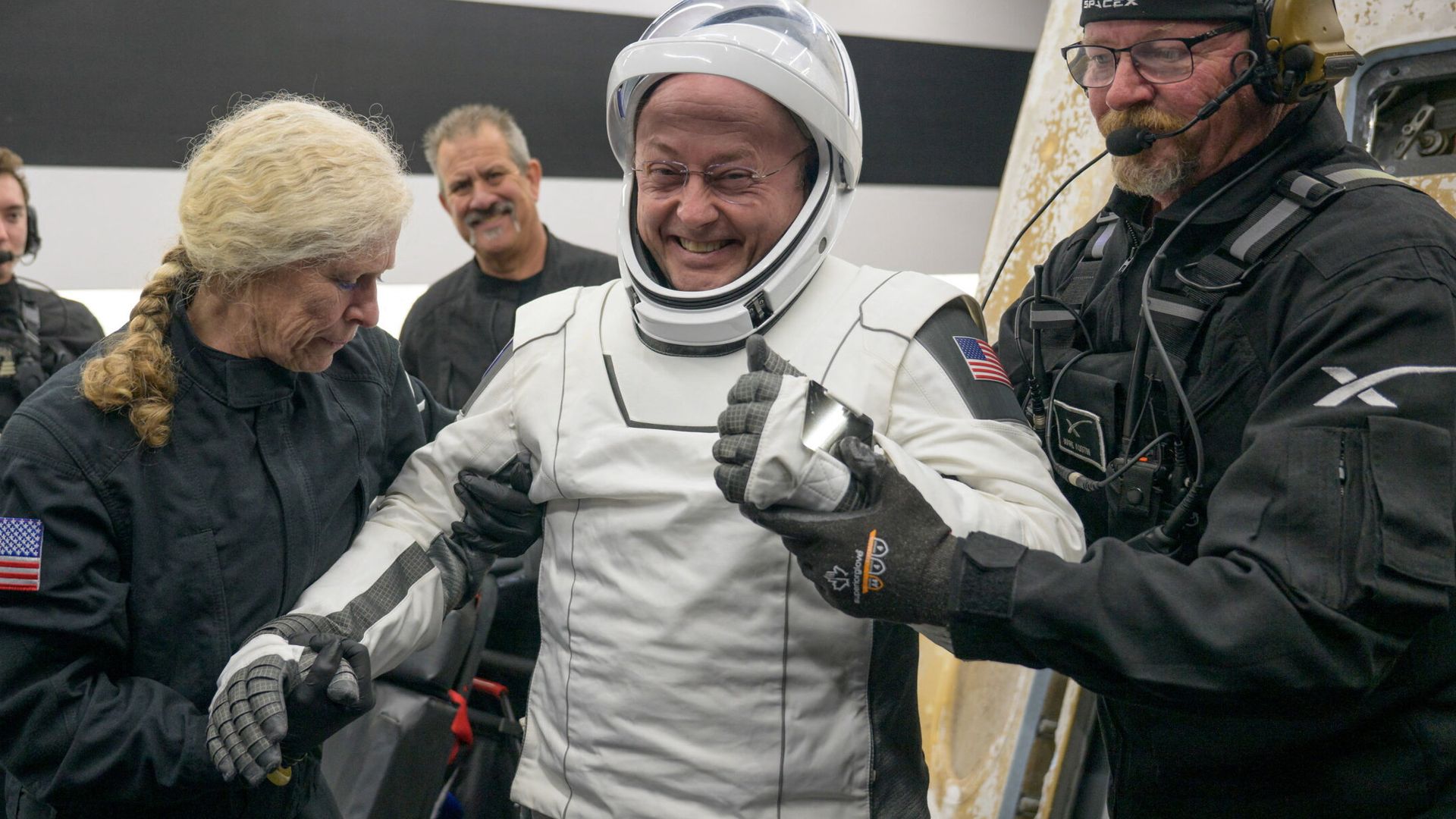
NASA revealed details of the first medical evacuation in ISS history
Astronaut Mike Fincke experienced a medical event requiring immediate attention on January 7, 2026
The Crew-11 team returned to Earth on January 15, 2026 for advanced medical imaging
The evacuation temporarily reduced research capacity on the ISS
📖 Full Retelling
NASA revealed details on February 26, 2026, of a medical incident involving astronaut Mike Fincke aboard the International Space Station that prompted the first medical evacuation in the space station's 25-year history, as the agency determined Fincke required advanced medical imaging not available on the ISS following a medical event on January 7. Crew-11, which included NASA astronauts Mike Fincke and Zena Cardman, Japanese astronaut Kimiya Yui, and Russian cosmonaut Oleg Platonov, splashed down on January 15 after spending five and a half months on the space station. Fincke stated in a NASA-shared statement that he 'experienced a medical event that required immediate attention from my incredible crewmates' and that 'thanks to their quick response and the guidance of our NASA flight surgeons, my status quickly stabilised,' emphasizing that the evacuation was 'not an emergency but a carefully coordinated plan.' After returning to Earth, Fincke mentioned he is 'doing very well and continuing standard post-flight reconditioning' at NASA's base in Houston, while NASA administrator Jared Isaacman had previously described the situation as 'serious' but confirmed the crew member had been 'safe and stable' since the incident. The evacuation left only three crew members on the ISS, causing NASA to pause space walks and reduce research output, though normal operations resumed after four new astronauts joined the station in February.
🏷️ Themes
Space Medicine, International Cooperation, Risk Management
Medical evacuation, often shortened to medevac or medivac, is the timely and efficient movement and en route care provided by medical personnel to patients requiring evacuation or transport using medically equipped air ambulances, helicopters and other means of emergency transport including ground a...
A space station (or orbital station) is a spacecraft which remains in orbit and hosts humans for extended periods of time. It is therefore an artificial satellite featuring habitation facilities. The purpose of maintaining a space station varies depending on the program.
The National Aeronautics and Space Administration (NASA ) is an independent agency of the U.S. federal government responsible for the United States' civil space program and for research in aeronautics and space exploration. Headquartered in Washington, D.C., NASA operates ten field centers across th...
The International Space Station (ISS) is a large space station that was assembled and is maintained in low Earth orbit by a collaboration of five space agencies and their contractors: NASA (United States), Roscosmos (Russia), ESA (Europe), JAXA (Japan), and CSA (Canada). As the largest space station...
NASA reveals details of medical incident that led to historic evacuation from ISS "Spaceflight is an incredible privilege and sometimes it reminds us just how human we are," said astronaut Mike Fincke. Mickey Carroll Science and technology reporter Thursday 26 February 2026 13:12, UK 0:51 Share Astronauts evacuate International Space Station Why you can trust Sky News NASA has revealed details of an incident aboard the ISS that prompted the first medical evacuation in the space station's 25-year history. On 7 January, astronaut Mike Fincke "experienced a medical event that required immediate attention from my incredible crewmates", according to a statement by him, which NASA shared online. "Thanks to their quick response and the guidance of our NASA flight surgeons, my status quickly stabilised", wrote the astronaut. NASA decided the safest course of action was to bring him and the other three members of Crew-11 back from the International Space Station so Mr Fincke could have advanced medical imaging, that was not available on the ISS. "[It was] not an emergency but a carefully coordinated plan," said Mr Fincke. The crew, which also included fellow NASA astronaut Zena Cardman, Japanese astronaut Kimiya Yui and Russian cosmonaut Oleg Platonov, splashed down on 15 January after spending five and a half months on the space station. As well as thanking his crew, NASA and SpaceX's team and his doctors, Mr Fincke said he is doing "very well and continuing standard post-flight reconditioning" at NASA's base in Houston. More on International Space Station NASA astronauts were 'stranded' in space by life-threatening mishap, report finds International Space Station astronauts back after first ever emergency return International Space Station astronauts begin evacuation due to 'serious medical condition' Related Topics: International Space Station NASA Space "Spaceflight is an incredible privilege and sometimes it reminds us just how human we are," he said. After the crew ret...