
SP
BravenNow
Nasa to launch historic Artemis II moon mission on 6 March after delays
| United Kingdom | politics | ✓ Verified - theguardian.com

Nasa to launch historic Artemis II moon mission on 6 March after delays

#Artemis II #NASA #Moon mission #Space launch #Boeing Starliner #Jared Isaacman #Cape Canaveral #Liquid hydrogen leak

📌 Key Takeaways

  • NASA plans to launch Artemis II moon mission on March 6, 2025
  • The mission will send four astronauts on a 10-day journey around the moon
  • NASA recently faced criticism for Boeing Starliner failures that left astronauts stranded
  • The Artemis II crew is in quarantine preparing for the launch
  • Boeing has acknowledged the need for improvements following the damning report

📖 Full Retelling

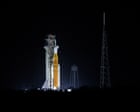
NASA announced on Friday that it would launch its delayed Artemis II moon mission on March 6, 2025, from Cape Canaveral, Florida, following successful completion of a fueling test that had revealed liquid hydrogen leaks in the space launch system rocket earlier this month. Administrator Jared Isaacman cited 'major progress' since the original wet dress rehearsal where engineers discovered the technical issues that had forced the space agency to stand down the mission. The mission's four astronauts—three Americans and one Canadian—entered a second period of quarantine on Friday in anticipation of the new target launch date, which NASA announced 'with caveats' due to significant preparatory work still remaining after Thursday's successful fueling test. The Artemis II mission will conduct a 10-day trip around the moon without landing, taking humans approximately 4,700 miles beyond the far side of the moon and surpassing the distance record set by Apollo 13 in 1970. This flight serves as a critical test for future deep-space exploration systems in preparation for Artemis III, scheduled for 2028, which will be the first human lunar landing since the final Apollo program flight in December 1972. The announcement comes amid significant challenges for NASA, which faced criticism in a damning report released on Thursday detailing failures on Boeing's Starliner capsule that left two astronauts stranded on the International Space Station for nine months. Administrator Isaacman acknowledged that NASA had been overly eager to secure an alternative to SpaceX for crew transportation, stating that 'the agency failed them' and that NASA 'will not fly another crew on Starliner until technical causes are understood and corrected.'

🏷️ Themes

Space exploration, Technical challenges, Government oversight, International cooperation

📚 Related People & Topics

NASA

NASA

American space and aeronautics agency

The National Aeronautics and Space Administration (NASA ) is an independent agency of the U.S. federal government responsible for the United States' civil space program and for research in aeronautics and space exploration. Headquartered in Washington, D.C., NASA operates ten field centers across th...

View Profile → Wikipedia ↗
Artemis II

Artemis II

Artemis program's second lunar flight

Artemis II is a planned lunar spaceflight mission under the Artemis program, led by NASA. It is intended to be the second flight of the Space Launch System (SLS), and the first crewed mission of the Orion spacecraft. It is the first crewed mission around the Moon, and beyond low Earth orbit, since A...

View Profile → Wikipedia ↗
Space launch

Space launch

Earliest phase of a flight that reaches space

A space launch is the phase of a spaceflight mission during which a launch vehicle reaches space. The launch may be sub-orbital or the launch may continue until the vehicle reaches orbit. A space launch begins at a launch pad, which may be on land or at sea, or when the launch vehicle is released mi...

View Profile → Wikipedia ↗
Boeing Starliner

Boeing Starliner

Class of partially reusable crew capsules

The Boeing Starliner (or CST-100) is a spacecraft designed to transport crew to and from the International Space Station (ISS) and other low-Earth-orbit destinations. Developed by Boeing under NASA's Commercial Crew Program (CCP), it consists of a reusable crew capsule and an expendable service modu...

View Profile → Wikipedia ↗

Entity Intersection Graph

Connections for NASA:

🌐 Artemis II 10 shared
🏢 Boeing 7 shared
🌐 Starliner 7 shared
👤 Kennedy Space Center 7 shared
👤 Space Launch System 6 shared
View full profile
Original Source
Nasa to launch historic Artemis II moon mission on 6 March after delays Administrator Jared Isaacman cites ‘major progress’ since earlier discovery of liquid hydrogen leaking from rocket Nasa said on Friday it was planning to launch its delayed Artemis II moon mission on 6 March after successfully completing a fueling test that had caused it to stand down earlier this month. Jared Isaacman, the space agency’s newly confirmed administrator, cited “major progress” since the original so-called wet dress rehearsal in which engineers discovered liquid hydrogen leaking from the space launch system rocket on its Florida launchpad at Cape Canaveral. The mission’s four astronauts, three Americans and one Canadian, were entering a second period of quarantine on Friday in anticipation of the new target launch date, which Nasa announced “with caveats” because it said there was still much preparatory work to do after Thursday’s fueling test. “I felt like last night was a big step in us earning our right to fly. So, felt really good. Very proud of the team,” the Artemis launch director, Charlie Blackwell-Thompson, told a Friday early afternoon press conference. Nasa has several dates available in early March to launch Artemis, which will conduct a 10-day trip around the moon, but not land. The flight will take humans further into space then ever before and, according to Nasa, the mission will fly about 4,700 miles (7,600km) beyond the far side of the moon, surpassing the distance record set by Apollo 13 in 1970. The mission will test systems for future deep-space exploration. The mission is in preparation for Artemis III, scheduled for 2028, which will be the first human landing on the moon since the final Apollo program flight in December 1972. The successful fueling test was a welcome bright spot for Nasa, which acknowledged in a damning report published on Thursday a succession of failures on Boeing’s ill-fated Starliner capsule that left two astronauts stuck on the Internatio...
Read full article at source

Source

theguardian.com

More from United Kingdom

News from Other Countries

🇺🇸 USA

🇺🇦 Ukraine