
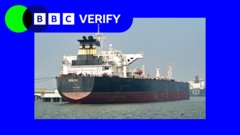
Nearly 100 ships pass the Hormuz Strait - who is getting through?
#Hormuz Strait #shipping #maritime traffic #chokepoint #geopolitical tension
📌 Key Takeaways
- Nearly 100 ships have navigated the Hormuz Strait recently, indicating continued maritime activity.
- The article examines which vessels are successfully transiting this strategic chokepoint.
- It highlights the geopolitical and security factors influencing access and passage.
- The focus is on identifying the types of ships and entities managing to operate in the region.
📖 Full Retelling
🏷️ Themes
Maritime Security, Geopolitics
📚 Related People & Topics

Strait of Hormuz
Strait between the Gulf of Oman and the Persian Gulf
The Strait of Hormuz ( Persian: تنگهٔ هُرمُز Tangeh-ye Hormoz , Arabic: مَضيق هُرمُز Maḍīq Hurmuz) is a strait between the Persian Gulf and the Gulf of Oman. It provides the only sea passage from the Persian Gulf to the open ocean and is one of the world's most strategically important choke points. ...
Entity Intersection Graph
Connections for Strait of Hormuz:
Mentioned Entities
Deep Analysis
Why It Matters
The Strait of Hormuz is a critical global energy chokepoint through which about 21% of global petroleum liquids consumption passes. Any disruption to shipping through this narrow waterway would immediately impact global oil prices, energy security, and economic stability worldwide. This matters to energy-importing nations, shipping companies, and consumers who would face higher fuel costs, while regional powers like Iran and Gulf states use control over the strait as geopolitical leverage.
Context & Background
- The Strait of Hormuz is a 21-mile wide channel between Oman and Iran connecting the Persian Gulf with the Gulf of Oman and Arabian Sea
- Approximately 20-30% of the world's oil supply passes through the strait daily, making it the world's most important oil transit chokepoint
- Iran has repeatedly threatened to close the strait during regional tensions, particularly in response to sanctions or military threats
- The U.S. Fifth Fleet based in Bahrain patrols the area to ensure freedom of navigation, creating potential for U.S.-Iran confrontation
- Recent years have seen attacks on tankers and seizures of vessels in the area, raising insurance costs and security concerns
What Happens Next
Increased naval patrols and security measures by regional and international powers are likely in response to shipping patterns. Insurance premiums for vessels transiting the strait may adjust based on perceived risk levels. Diplomatic efforts will intensify to prevent escalation, while energy markets will closely monitor any signs of disruption that could trigger price volatility.
Frequently Asked Questions
It's the only sea passage from the Persian Gulf to the open ocean, making it essential for oil exports from Saudi Arabia, Iraq, UAE, Kuwait, Qatar, and Iran. Closure would force tankers to take much longer alternative routes, dramatically increasing costs and reducing global oil supply.
The strait lies within the territorial waters of Oman and Iran, with Iran controlling the northern side. While international law guarantees transit passage, Iran has demonstrated it can disrupt shipping through military means or by supporting proxy attacks.
Global oil prices would spike immediately, potentially triggering economic recession in energy-dependent nations. The U.S. and allies would likely respond militarily to reopen the waterway, risking broader regional conflict that could involve multiple Middle Eastern powers.
Commercial vessels often travel in convoys with naval escorts from various nations, particularly the U.S. Fifth Fleet. Many ships also employ private security teams and follow specific routing recommendations to minimize risks in the contested waters.
Limited alternatives include Saudi Arabia's East-West Pipeline to the Red Sea, UAE's pipeline bypassing the strait, and expanded use of Iraq's pipeline through Turkey. However, these alternatives have limited capacity and cannot replace Hormuz's massive daily oil flow.