

Netanyahu claims that victory over Iran would bring peace to Israel. He should look closer to home | Dahlia Scheindlin
#Netanyahu #Iran #Israel #peace #domestic issues #Dahlia Scheindlin #conflict
📌 Key Takeaways
- Netanyahu asserts defeating Iran would secure peace for Israel.
- Criticism suggests domestic issues are more pressing for Israeli stability.
- Author implies internal conflicts and policies are overlooked.
- The article questions the focus on external threats over internal peace.
📖 Full Retelling
🏷️ Themes
Israeli Politics, Peace Strategy
📚 Related People & Topics

Iran
Country in West Asia
# Iran **Iran**, officially the **Islamic Republic of Iran** and historically known as **Persia**, is a sovereign country situated in West Asia. It is a major regional power, ranking as the 17th-largest country in the world by both land area and population. Combining a rich historical legacy with a...
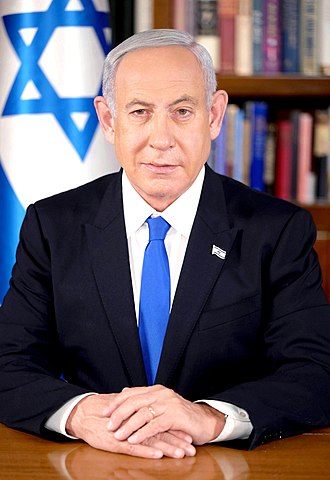
Benjamin Netanyahu
Prime Minister of Israel (1996–1999; 2009–2021; since 2022)
Benjamin "Bibi" Netanyahu (born 21 October 1949) is an Israeli politician and diplomat who has served as Prime Minister of Israel since 2022. Having previously held office from 1996 to 1999 and from 2009 to 2021, Netanyahu is Israel's longest-serving prime minister. Born in Tel Aviv, Netanyahu was r...

Israel
Country in West Asia
Israel, officially the State of Israel, is a country in the Southern Levant region of West Asia. It is bordered by Lebanon to the north, Syria to the northeast, Jordan to the east, and Egypt to the southwest. Israel occupies the West Bank and the Gaza Strip of the Palestinian territories, as well as...
Dahlia Scheindlin
American-Israeli journalist
Dahlia Scheindlin (Hebrew: דליה שיינדלין) is an American-Israeli political consultant, pollster, and journalist; she is the author of The Crooked Timber of Democracy in Israel, Promise Unfulfilled. She supports liberal causes and is an advocate of a confederation of two states as a solution to the I...
Entity Intersection Graph
Connections for Iran:
Mentioned Entities
Deep Analysis
Why It Matters
This analysis challenges Prime Minister Netanyahu's framing of Iran as Israel's primary security threat, arguing that internal divisions and the Israeli-Palestinian conflict pose more immediate dangers to Israel's stability and future. It matters because it questions the government's strategic priorities during a period of intense regional tension and domestic polarization. The critique affects Israeli citizens who face security threats from multiple fronts, Palestinians living under occupation, and international stakeholders invested in Middle East peace. By redirecting focus to 'closer to home' issues, the author suggests that Israel's long-term security depends more on resolving internal conflicts than on external military confrontations.
Context & Background
- Benjamin Netanyahu has consistently framed Iran's nuclear program and regional influence as an existential threat to Israel throughout his political career.
- Israel has engaged in shadow warfare with Iran for years, including alleged airstrikes in Syria and cyberattacks targeting Iranian nuclear facilities.
- The Israeli-Palestinian conflict remains unresolved, with the last substantive peace negotiations collapsing in 2014 and ongoing tensions in Gaza, the West Bank, and East Jerusalem.
- Israel's current government is its most right-wing in history, featuring ministers who oppose Palestinian statehood and support settlement expansion.
- Recent months have seen unprecedented domestic protests against the government's judicial overhaul plan, revealing deep societal divisions within Israel.
- Iran continues to support proxy groups like Hezbollah in Lebanon and Hamas in Gaza, which have engaged in conflicts with Israel.
What Happens Next
Netanyahu will likely continue emphasizing the Iranian threat in international forums while facing increased scrutiny over his domestic priorities. The Israeli government may face growing pressure to address internal divisions and the Palestinian issue as regional tensions persist. Upcoming developments could include renewed violence in Gaza or the West Bank, further straining Israel's security resources. International diplomatic efforts may increasingly focus on both Iran's nuclear program and the Israeli-Palestinian conflict as interconnected regional challenges.
Frequently Asked Questions
The author contends that Israel's most pressing threats come from internal divisions and the unresolved Palestinian conflict, not primarily from Iran. She suggests that addressing domestic polarization and the occupation would do more for Israel's long-term security than focusing on external enemies.
Recent mass protests against judicial reforms reveal deep societal rifts, while ongoing occupation and settlement expansion perpetuate conflict with Palestinians. The author implies these internal challenges undermine social cohesion and international legitimacy more than distant threats like Iran.
Framing Iran as an existential threat helps Netanyahu rally domestic support, justify security policies, and deflect attention from corruption charges and internal conflicts. It positions him as Israel's indispensable security leader while marginalizing alternative viewpoints.
Neglecting the Palestinian conflict could lead to renewed violence in occupied territories, further international isolation, and missed opportunities for regional normalization. It also perpetuates the status quo that many analysts believe undermines Israel's democratic character and long-term security.
It encourages foreign governments to view Israel's security challenges holistically, recognizing that internal conflicts and occupation policies contribute to regional instability. This perspective could shift diplomatic approaches toward balancing Iran concerns with pressure for Israeli-Palestinian progress.