
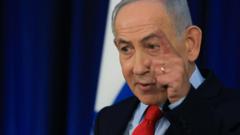
Netanyahu says Israel 'acted alone' in attack on Iranian gas field
#Israel #Iran #gas field #military strike #Netanyahu #Middle East #regional tensions
📌 Key Takeaways
- Israel conducted a military strike on an Iranian gas field without external assistance.
- Prime Minister Netanyahu explicitly stated Israel acted independently in the operation.
- The attack targeted Iranian infrastructure, escalating regional tensions.
- The statement reinforces Israel's unilateral military posture toward Iran.
📖 Full Retelling
🏷️ Themes
Geopolitical Conflict, Military Operations
📚 Related People & Topics

Iran
Country in West Asia
# Iran **Iran**, officially the **Islamic Republic of Iran** and historically known as **Persia**, is a sovereign country situated in West Asia. It is a major regional power, ranking as the 17th-largest country in the world by both land area and population. Combining a rich historical legacy with a...

Middle East
Transcontinental geopolitical region
The Middle East is a geopolitical region encompassing the Arabian Peninsula, Egypt, Iran, Iraq, the Levant, and Turkey. The term came into widespread usage by Western European nations in the early 20th century as a replacement of the term Near East (both were in contrast to the Far East). The term ...
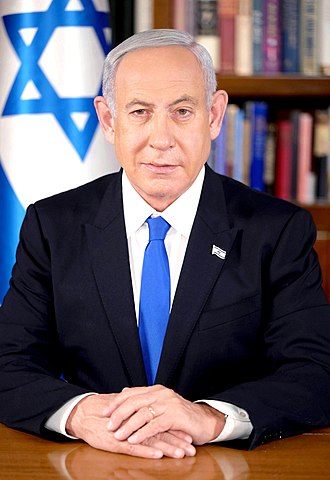
Benjamin Netanyahu
Prime Minister of Israel (1996–1999; 2009–2021; since 2022)
Benjamin "Bibi" Netanyahu (born 21 October 1949) is an Israeli politician and diplomat who has served as Prime Minister of Israel since 2022. Having previously held office from 1996 to 1999 and from 2009 to 2021, Netanyahu is Israel's longest-serving prime minister. Born in Tel Aviv, Netanyahu was r...

Israel
Country in West Asia
Israel, officially the State of Israel, is a country in the Southern Levant region of West Asia. It is bordered by Lebanon to the north, Syria to the northeast, Jordan to the east, and Egypt to the southwest. Israel occupies the West Bank and the Gaza Strip of the Palestinian territories, as well as...
Entity Intersection Graph
Connections for Iran:
Mentioned Entities
Deep Analysis
Why It Matters
This statement matters because it clarifies Israel's operational independence in a sensitive military action against Iran, potentially reducing regional escalation risks by avoiding perceptions of broader coalition involvement. It affects Israel-Iran relations directly, while also impacting U.S. and regional allies who might be concerned about being drawn into conflict. The declaration reinforces Israel's willingness to conduct unilateral strikes against Iranian assets, which could influence future deterrence calculations and diplomatic efforts in the Middle East.
Context & Background
- Israel and Iran have engaged in a long-running shadow war involving covert operations, cyberattacks, and targeted strikes across the region.
- Iranian gas fields and energy infrastructure have previously been targets in suspected Israeli attacks, part of efforts to counter Iran's economic and strategic influence.
- The U.S. and Israel maintain close security cooperation, but Israel has historically reserved the right to act independently against threats it perceives as existential.
- Regional tensions have been high since Iran's nuclear program advances and its support for proxy groups like Hezbollah and Hamas.
What Happens Next
Iran will likely issue a formal response, possibly through diplomatic channels or asymmetric retaliation via proxy forces. Regional actors may seek clarifications from Israel and the U.S. regarding the strike's implications. Monitoring will focus on whether this leads to escalated tit-for-tat attacks or remains an isolated incident.
Frequently Asked Questions
Israel likely targeted the gas field to disrupt Iran's energy revenue and infrastructure, which funds regional activities Israel views as threatening. Such strikes are part of a broader strategy to pressure Iran economically and militarily without triggering full-scale war.
Netanyahu's statement indicates Israel conducted the operation without coordination or assistance from allies like the U.S. or regional partners. This emphasizes Israel's autonomous defense policy and may aim to shield others from diplomatic fallout or retaliation.
Iran could respond through diplomatic protests, cyberattacks, or covert operations against Israeli interests. Alternatively, it might leverage proxy groups in Syria, Lebanon, or Yemen to strike Israeli targets, avoiding direct confrontation.
Yes, such attacks could harden Iran's position in nuclear talks, as they may view Israel's actions as undermining diplomacy. It also complicates U.S. efforts to balance support for Israel with engaging Iran on nuclear issues.