
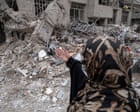
‘No clear goal’: lack of Iran war plan has unleashed chaos and could stymie US military for decades, say critics
#Iran #US military #war plan #strategic goal #regional chaos #long-term consequences #military critics
📌 Key Takeaways
- Critics argue the U.S. lacks a clear strategic goal for potential conflict with Iran.
- This absence of a plan has already contributed to regional chaos and instability.
- The situation risks entangling the U.S. military in a prolonged, resource-draining commitment.
- Analysts warn the strategic misstep could hamper U.S. military effectiveness for decades.
📖 Full Retelling
🏷️ Themes
Military Strategy, Geopolitical Risk
📚 Related People & Topics
United States Armed Forces
Combined military forces of the United States
The United States Armed Forces are the military forces of the United States. U.S. federal law names six armed forces: the Army, Marine Corps, Navy, Air Force, Space Force, and Coast Guard, each assigned their role and domain. From their inception during the American Revolutionary War, the Army and...

Iran
Country in West Asia
# Iran **Iran**, officially the **Islamic Republic of Iran** and historically known as **Persia**, is a sovereign country situated in West Asia. It is a major regional power, ranking as the 17th-largest country in the world by both land area and population. Combining a rich historical legacy with a...
Entity Intersection Graph
Connections for United States Armed Forces:
Mentioned Entities
Deep Analysis
Why It Matters
This news is important because it highlights a critical failure in U.S. military strategy that could have long-term consequences for national security and global stability. It affects U.S. military personnel, policymakers, and allies in the Middle East, as well as the broader international community concerned with regional conflicts. The lack of a clear plan risks prolonged chaos, increased casualties, and a drain on military resources, potentially undermining America's ability to address other global threats for decades.
Context & Background
- The U.S. and Iran have had tense relations since the 1979 Iranian Revolution and the subsequent hostage crisis.
- Recent years have seen escalating tensions, including the U.S. withdrawal from the Iran nuclear deal in 2018 and targeted strikes, such as the 2020 killing of Iranian General Qasem Soleimani.
- The U.S. military has been involved in the Middle East for decades, with conflicts in Iraq and Afghanistan raising questions about strategic planning and exit strategies.
- Iran supports proxy groups across the region, complicating U.S. efforts to contain its influence without direct confrontation.
- Historical U.S. military interventions, like in Vietnam and Iraq, have shown that unclear objectives can lead to protracted conflicts and strategic setbacks.
What Happens Next
In the short term, expect increased scrutiny from Congress and defense analysts on U.S. military planning, with potential hearings or reports. Over the next few months, the U.S. may reassess its strategy toward Iran, possibly leading to policy shifts or diplomatic efforts. Long-term, if unaddressed, this could result in continued regional instability, more frequent proxy conflicts, and a strained U.S. military facing budget and readiness challenges for years to come.
Frequently Asked Questions
It refers to the absence of a well-defined, achievable objective for U.S. military actions related to Iran, such as regime change or specific security outcomes, which can lead to mission creep and ineffective strategies.
Without a clear plan, the U.S. might engage in prolonged, resource-draining conflicts in the Middle East, diverting funds and attention from other priorities like cybersecurity or great-power competition with China or Russia.
Critics likely include military analysts, former officials, and policymakers who argue that poor strategic planning risks repeating past mistakes, such as those in Iraq and Afghanistan, with lasting consequences.
The chaos may involve increased regional violence, such as attacks by Iranian proxies, destabilization of allied governments, and humanitarian crises, all exacerbated by unclear U.S. objectives.
While possible, experts suggest that without a clear goal, the U.S. is more likely to engage in limited strikes or proxy conflicts, but miscalculations could escalate tensions into a broader war.