
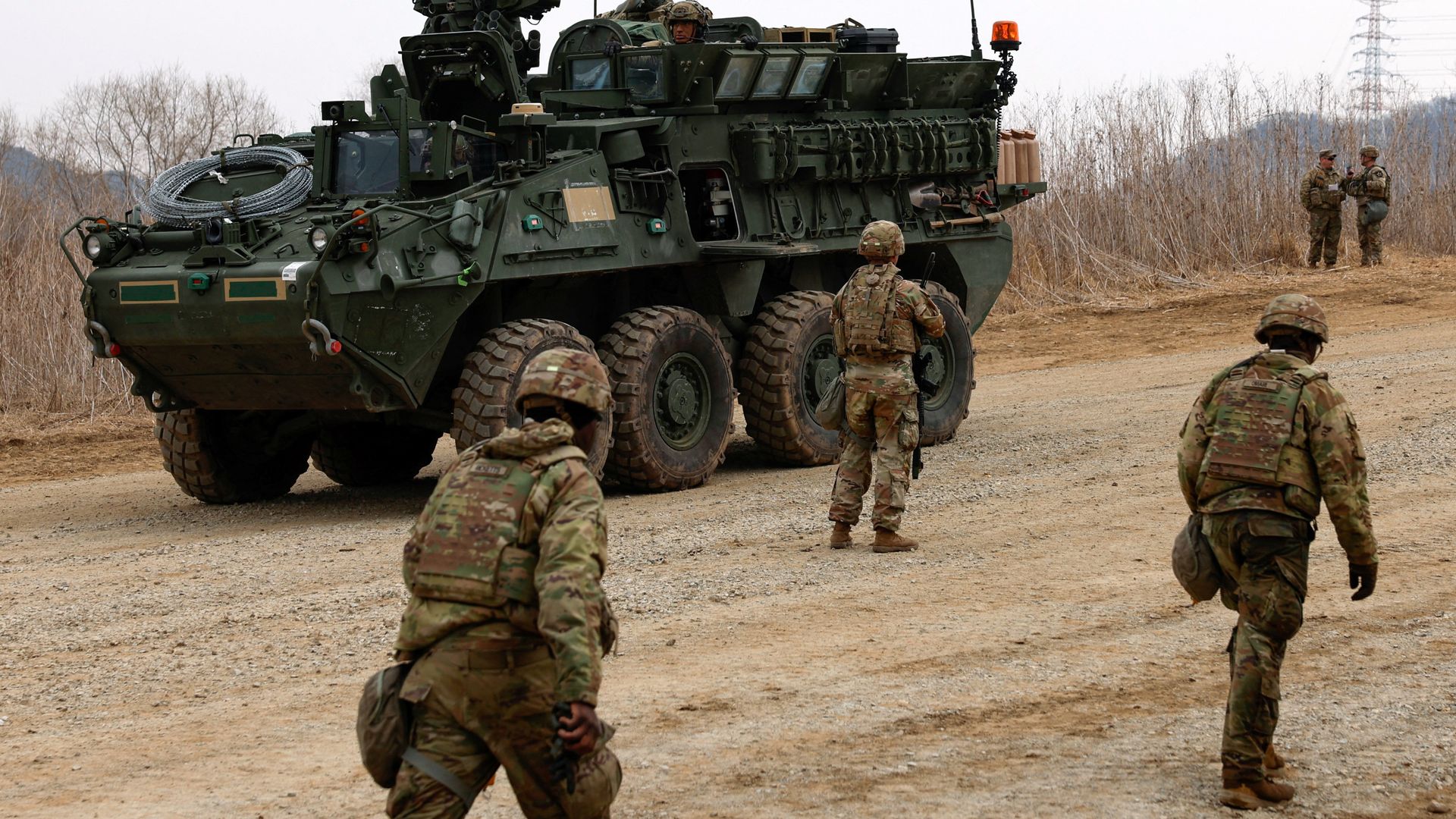
North Korea fires missiles in response to US military exercise
#North Korea #missile launch #US military exercise #Korean Peninsula #regional security
📌 Key Takeaways
- North Korea launched missiles in a direct response to a US military exercise
- The missile firing is part of escalating tensions on the Korean Peninsula
- The action highlights North Korea's opposition to US-South Korea military cooperation
- The incident underscores ongoing regional security challenges
🏷️ Themes
Military Tensions, International Relations
📚 Related People & Topics

North Korea
Country in East Asia
North Korea, officially the Democratic People's Republic of Korea (DPRK), is a country in East Asia. It constitutes the northern half of the Korean Peninsula and borders China and Russia to the north at the Yalu (Amnok) and Tumen rivers, and South Korea to the south at the Korean Demilitarized Zone ...
Entity Intersection Graph
Connections for North Korea:
Mentioned Entities
Deep Analysis
Why It Matters
This missile launch demonstrates North Korea's continued defiance of international sanctions and willingness to escalate tensions in the region. It directly affects South Korea and Japan's security, potentially triggering military responses and destabilizing Northeast Asia. The action also complicates US diplomatic efforts and could derail any potential future negotiations with Pyongyang.
Context & Background
- North Korea has conducted over 100 missile tests since 2022, including multiple intercontinental ballistic missiles (ICBMs) capable of reaching the US mainland
- The US and South Korea regularly conduct joint military exercises, which North Korea consistently condemns as rehearsals for invasion
- North Korea's weapons program has advanced significantly under Kim Jong-un, with recent tests including solid-fuel missiles and hypersonic technology
- UN Security Council resolutions have banned North Korea's ballistic missile and nuclear tests since 2006, though enforcement has been inconsistent
What Happens Next
The US and South Korea will likely condemn the launch at the UN Security Council and may conduct additional military exercises in response. North Korea may follow with more missile tests or other provocations in coming weeks. Diplomatic channels between the US and North Korea remain frozen, making immediate de-escalation unlikely.
Frequently Asked Questions
Missile development serves as both a deterrent against perceived US threats and a tool for domestic propaganda, helping the regime maintain control despite economic hardships. The military-first policy prioritizes security over civilian needs.
UN Security Council resolutions explicitly prohibit North Korea from developing ballistic missile technology. Each test violates these resolutions and triggers automatic condemnation from the international community.
The US and South Korea regularly conduct joint drills like Ulchi Freedom Shield and Foal Eagle, which North Korea views as invasion rehearsals. These exercises typically involve thousands of troops and advanced military equipment.
North Korea's ICBMs like the Hwasong-17 theoretically have the range to strike the US mainland, though their reliability and accuracy remain uncertain. Shorter-range missiles primarily threaten South Korea, Japan, and US bases in the region.
South Korea and Japan typically activate missile defense systems and condemn the tests, while China and Russia often block stronger UN responses. The US usually reinforces military presence in the region through additional deployments.