
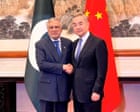
Pakistan and China propose five-part peace plan for Middle East
📖 Full Retelling
📚 Related People & Topics

China
Country in East Asia
China, officially the People's Republic of China (PRC), is a country in East Asia. It is the second-most populous country after India, with a population exceeding 1.4 billion, representing 17% of the world's population. China borders fourteen countries by land across an area of 9.6 million square ki...

Middle East
Transcontinental geopolitical region
The Middle East is a geopolitical region encompassing the Arabian Peninsula, Egypt, Iran, Iraq, the Levant, and Turkey. The term came into widespread usage by Western European nations in the early 20th century as a replacement of the term Near East (both were in contrast to the Far East). The term ...

Pakistan
Country in South Asia
Pakistan, officially the Islamic Republic of Pakistan, is a country in South Asia. It is the fifth-most populous country, with a population of over 241.5 million, having the second-largest Muslim population as of 2023. Islamabad is the nation's capital, while Karachi is its largest city and financia...
Entity Intersection Graph
Connections for China:
Mentioned Entities
Deep Analysis
Why It Matters
This proposal matters because it represents a significant diplomatic initiative from two major Asian powers seeking to influence Middle Eastern geopolitics. It affects regional stability, international relations between major powers, and potentially millions of people living in conflict zones. The plan could shift diplomatic dynamics by offering an alternative to Western-led peace initiatives, particularly important given China's growing economic interests in the region and Pakistan's historical ties to Middle Eastern nations.
Context & Background
- China has been expanding its Middle East diplomatic role through initiatives like the 2023 Saudi-Iran reconciliation deal brokered in Beijing
- Pakistan maintains close military and economic ties with both Arab Gulf states and Iran, positioning it as a potential neutral mediator
- The Middle East has seen numerous failed peace initiatives over decades from various international actors including the US, EU, and UN
- China's Belt and Road Initiative includes significant Middle Eastern infrastructure projects worth hundreds of billions of dollars
- Pakistan has historically maintained a delicate balance in Middle East conflicts, supporting Palestinian rights while maintaining relations with Israel through backchannels
What Happens Next
Regional powers including Saudi Arabia, Iran, Israel, and Palestinian authorities will likely issue initial responses within weeks. The UN Security Council may discuss the proposal formally within the next month. Implementation will depend on whether key regional actors agree to participate in negotiations based on this framework, with potential preliminary talks occurring within 2-3 months if sufficient support emerges.
Frequently Asked Questions
While specifics aren't provided, similar proposals typically include ceasefire mechanisms, economic development packages, political settlement frameworks, security guarantees, and regional cooperation agreements. Based on China and Pakistan's previous positions, it likely emphasizes sovereignty, non-interference, and economic integration.
This proposal differs by coming from Asian rather than Western powers, potentially offering different diplomatic approaches less tied to historical colonial relationships. It likely emphasizes economic development and infrastructure investment as peacebuilding tools, reflecting China's development-focused foreign policy model.
Iran and Syria may welcome alternatives to Western proposals, while Israel and some Gulf states may be cautious about shifting alliances. The US and European powers will likely analyze how this affects their regional influence before taking formal positions.
China brings economic leverage through Belt and Road investments and recent diplomatic successes like the Saudi-Iran deal. Pakistan offers historical ties to both Arab and Persian worlds, Muslim majority credibility, and experience with regional conflict resolution in Afghanistan.
This represents growing diplomatic competition, potentially creating parallel peace processes. It could lead to either constructive coordination or conflicting initiatives, depending on whether major powers choose to collaborate or compete in mediation efforts.