
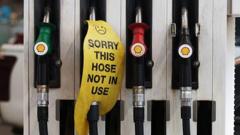
Panic buying prompts PM to reassure Australians over fuel supply
📚 Related People & Topics

Australia
Country in Oceania
Australia, officially the Commonwealth of Australia, is a country comprising the mainland of the Australian continent, the island of Tasmania and numerous smaller islands. It has a total area of 7,688,287 km2 (2,968,464 sq mi), making it the sixth-largest country in the world and the largest in Ocea...

Prime minister
Top minister of cabinet and government
A prime minister, also known as a chief of cabinet, chief minister, first minister, minister-president or premier, is the head of the cabinet and the leader of the ministers in the executive branch of government, often in a parliamentary or semi-presidential system. A prime minister is not the head ...
Entity Intersection Graph
Connections for Australia:
Mentioned Entities
Deep Analysis
Why It Matters
This news matters because it highlights how public anxiety can disrupt essential supply chains, potentially causing economic ripple effects and affecting daily life for millions of Australians. It affects commuters, businesses relying on transportation, and emergency services that depend on consistent fuel availability. The government's need to intervene demonstrates how quickly consumer behavior can escalate into a national concern requiring leadership reassurance.
Context & Background
- Australia has experienced previous fuel supply disruptions due to international conflicts, refinery closures, and natural disasters affecting distribution networks
- The country maintains strategic fuel reserves, but relies heavily on imports for approximately 90% of its liquid fuel needs
- Panic buying behavior has become more frequent in recent years, notably during COVID-19 pandemic for essentials like toilet paper and groceries
What Happens Next
Government monitoring of fuel distribution networks will likely intensify, with possible consideration of temporary purchase limits if panic buying continues. Fuel companies may implement allocation systems to retailers. The situation's resolution depends on whether public confidence is restored quickly or if shortages become self-fulfilling through sustained panic purchasing.
Frequently Asked Questions
Fuel panic buying usually follows international supply concerns, geopolitical tensions affecting oil prices, or domestic distribution problems. These events trigger public fear of shortages, leading to excessive purchasing that actually creates the shortage people feared.
Panic buying creates artificial demand spikes that overwhelm normal supply chains. When consumers fill tanks prematurely and store extra fuel, distribution systems can't replenish stations quickly enough, creating actual shortages where none originally existed.
Clear government communication about actual supply levels, potential purchase limits, and reassurance about strategic reserves can help. Fuel retailers sometimes implement purchase restrictions during crises to ensure equitable distribution.
Most fuel disruptions resolve within days to weeks once panic buying subsides and normal consumption patterns resume. However, if the underlying cause is international supply chain issues, disruptions can persist longer.
Australia maintains both government and industry-held fuel reserves, though these are below International Energy Agency requirements. The country has been working to increase reserve levels to meet 90 days of net import coverage.