
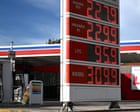
Petrol and diesel prices fall across Australia as Labor’s fuel excise cut takes effect
#fuel excise #petrol prices #diesel prices #Labor government #cost of living #inflation #Australia
📌 Key Takeaways
- Fuel excise cut by Labor government reduces petrol and diesel prices nationwide.
- Price drop is immediate and affects all regions across Australia.
- Policy aims to provide cost-of-living relief amid rising inflation.
- Changes reflect government intervention in energy market dynamics.
📖 Full Retelling
🏷️ Themes
Energy Policy, Economic Relief
📚 Related People & Topics

Australia
Country in Oceania
Australia, officially the Commonwealth of Australia, is a country comprising the mainland of the Australian continent, the island of Tasmania and numerous smaller islands. It has a total area of 7,688,287 km2 (2,968,464 sq mi), making it the sixth-largest country in the world and the largest in Ocea...
Labour government
Topics referred to by the same term
Labour government or Labor government may refer to:
Entity Intersection Graph
Connections for Australia:
Mentioned Entities
Deep Analysis
Why It Matters
This fuel excise cut directly impacts household budgets and business operating costs across Australia, providing immediate financial relief amid rising inflation. It affects every Australian who drives or relies on transportation, from commuters to logistics companies and farmers. The policy represents significant government intervention in the economy during a cost-of-living crisis, with political implications for the Labor government's popularity. Lower fuel prices could help moderate broader inflationary pressures but also reduce government revenue that funds road infrastructure.
Context & Background
- Australia's fuel excise is a per-liter tax on petrol and diesel that hasn't been cut in over 20 years prior to this temporary reduction
- The previous Coalition government implemented a similar temporary fuel excise cut in March 2022 that expired in September 2022
- Fuel prices in Australia reached record highs earlier this year due to global oil market volatility and the war in Ukraine
- The fuel excise typically contributes approximately $11 billion annually to government revenue for road infrastructure projects
- Australia's fuel excise system includes automatic twice-yearly indexation to inflation, which was paused during previous temporary cuts
What Happens Next
Consumers will see immediate price reductions at pumps, with the full 22.1 cent per liter cut expected to flow through within 1-2 weeks. The temporary nature of the cut (scheduled for six months) means prices will likely rise again in early 2024 unless extended. The Australian Competition and Consumer Commission will monitor fuel retailers to ensure they pass on the full reduction. Future parliamentary debates may focus on whether to make the cut permanent or develop alternative cost-of-living relief measures.
Frequently Asked Questions
Prices should drop by approximately 22.1 cents per liter for both petrol and diesel, though the exact reduction may vary slightly by location and retailer. Combined with existing state fuel subsidies in some areas, some drivers could see reductions of 25-30 cents per liter. The full reduction should be visible at most service stations within two weeks.
The cut is legislated as a temporary six-month measure. Unless Parliament votes to extend it, the full excise will be reinstated in early 2024. The government has indicated this is a targeted, temporary response to current cost-of-living pressures rather than permanent policy change.
Yes, the excise cut will reduce government revenue that normally funds road infrastructure by approximately $3 billion over six months. The government has committed to maintaining road funding from other budget sources during this period. Long-term infrastructure planning may need adjustment if the cut becomes permanent.
The cut responds to persistent cost-of-living pressures and high inflation affecting Australian households. With fuel prices contributing significantly to transportation and goods costs, this measure aims to provide broad economic relief. The timing also relates to political pressure ahead of potential state elections and ongoing economic challenges.
Australia's approach is similar to temporary fuel tax cuts implemented in Germany, Italy, and the UK earlier in 2022. Unlike some European countries that targeted relief to specific groups, Australia's cut applies universally. The six-month duration is shorter than some European measures but follows Australia's previous temporary cut pattern.