
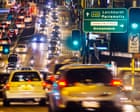
Petrol prices are rising, but Australians don’t appear to be driving less or taking public transport more – yet
📖 Full Retelling
📚 Related People & Topics

Australia
Country in Oceania
Australia, officially the Commonwealth of Australia, is a country comprising the mainland of the Australian continent, the island of Tasmania and numerous smaller islands. It has a total area of 7,688,287 km2 (2,968,464 sq mi), making it the sixth-largest country in the world and the largest in Ocea...
Entity Intersection Graph
Connections for Australia:
Mentioned Entities
Deep Analysis
Why It Matters
This news matters because rising petrol prices directly impact household budgets and inflation, affecting nearly all Australians who rely on personal vehicles for transportation. It reveals consumer behavior patterns during economic pressure, showing that immediate behavioral changes don't always follow price signals. The situation has implications for transportation policy, environmental goals, and economic forecasting as policymakers monitor how long current consumption patterns can be sustained before behavioral shifts occur.
Context & Background
- Australia has historically had high car ownership rates with approximately 90% of households owning at least one vehicle
- Previous fuel price spikes in 2008 and 2011-2014 led to measurable reductions in driving and increased public transport usage
- Australia imports about 90% of its refined petroleum products, making prices vulnerable to global oil markets and currency fluctuations
What Happens Next
If petrol prices continue rising for several more weeks, transport analysts expect to see measurable reductions in discretionary driving and increased public transport ridership. The next quarterly inflation data will likely show continued pressure from transport costs. Government responses may include renewed discussions about fuel excise policies or accelerated electric vehicle adoption incentives.
Frequently Asked Questions
Behavioral economists suggest there's typically a lag between price increases and consumption changes as people adjust budgets and habits gradually. Many Australians may be absorbing initial increases through reduced spending in other areas before altering transportation patterns.
Petrol prices directly contribute to transportation costs in the Consumer Price Index, affecting overall inflation. Higher fuel costs also increase prices for goods transported by road, creating secondary inflationary effects throughout the economy.
Historical patterns show that sustained high prices lead to reduced vehicle kilometers traveled, increased public transport usage, and accelerated shifts toward more fuel-efficient vehicles. These behavioral changes usually become measurable after 2-3 months of sustained price pressure.
Persistently high petrol prices could accelerate the transition to electric vehicles and reduce transportation emissions if maintained. However, the current lack of behavioral response suggests price signals alone may be insufficient without complementary policies and infrastructure improvements.