
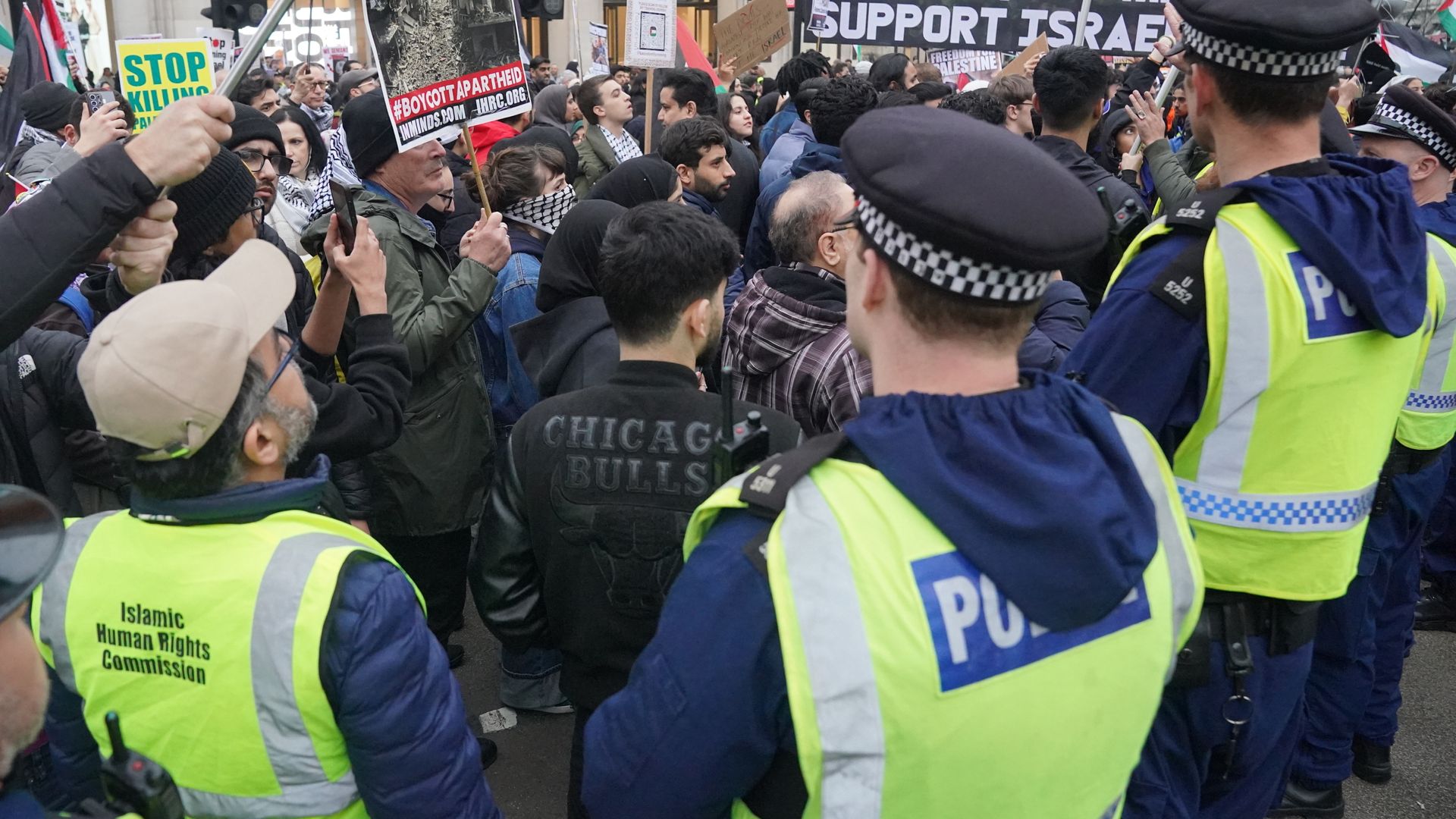
Police to use Thames to separate protesters at Al Quds protest
#Al Quds protest #Thames #police strategy #crowd control #protest separation #public order #London
📌 Key Takeaways
- Police plan to use the River Thames as a physical barrier to separate opposing groups at the Al Quds protest.
- The strategy aims to prevent direct clashes between protesters by leveraging the river's geography.
- The Al Quds protest is a demonstration related to solidarity with Palestine, often involving counter-protesters.
- Authorities are implementing crowd control measures to maintain public order during the event.
📖 Full Retelling
🏷️ Themes
Public Safety, Protest Management
📚 Related People & Topics

River Thames
River in southern England
The River Thames ( TEMZ), known alternatively in parts as the River Isis, is a river that flows through southern England including London. At 215 miles (346 km), it is the longest river entirely in England and the second-longest in the United Kingdom, after the River Severn. The river rises at Tham...

Jerusalem
City in the Southern Levant
Jerusalem is a city in the Southern Levant, on a plateau in the Judaean Mountains between the Mediterranean and the Dead Sea. It is one of the oldest cities in the world and is considered holy to the three major Abrahamic religions: Judaism, Christianity and Islam. Both Israel and Palestine claim Je...
London
Capital of England and the United Kingdom
London is the capital and largest city of both England and the United Kingdom, with a population of 9.1 million people in 2024. Its wider metropolitan area is the largest in Western Europe, with a population of 15.1 million. London stands on the River Thames in southeast England, at the head of a 50...
Entity Intersection Graph
No entity connections available yet for this article.
Mentioned Entities
Deep Analysis
Why It Matters
This news matters because it reveals an unusual policing strategy that could set precedents for protest management in major cities. It affects protest participants, local residents, and businesses along the Thames, potentially restricting movement and access. The approach raises questions about civil liberties and police powers during demonstrations, particularly regarding containment tactics in urban environments.
Context & Background
- The Al Quds Day protest is an annual event originating in Iran that expresses solidarity with Palestinians and opposition to Israeli control of Jerusalem
- London has a history of managing large-scale protests including previous Al Quds Day demonstrations that have drawn thousands of participants
- The Thames has historically served as a natural barrier in London's geography and urban planning
- UK police have increasingly used containment and separation tactics for opposing protest groups following incidents of clashes at previous demonstrations
What Happens Next
Police will implement the Thames separation strategy during the upcoming Al Quds Day protest, likely monitoring its effectiveness for future protest management. Legal challenges may emerge if the tactic is perceived to unfairly restrict protest rights. The Metropolitan Police will probably issue a post-event assessment of the strategy's success in maintaining public order.
Frequently Asked Questions
Al Quds Day is an annual international event expressing solidarity with Palestinians and protesting Israeli control of Jerusalem. The demonstrations typically involve marches, speeches, and symbolic actions supporting Palestinian rights.
Police are using the Thames as a natural barrier to prevent potential clashes between opposing protest groups. This geographical separation tactic aims to maintain public order while allowing both sides to demonstrate.
While police have used various separation tactics for protests, using the Thames as a deliberate barrier for protest management appears to be a novel approach. Police have previously used physical barriers and designated protest zones in central London.
Legal concerns may include whether the tactic disproportionately restricts freedom of assembly or movement. There could be challenges regarding equal access to protest spaces and whether the separation constitutes reasonable police action.
Residents and businesses near the Thames may experience restricted access during the protest. River traffic could be affected, and areas near separation points might see increased police presence and potential disruption to normal activities.