
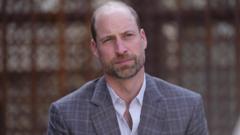
Prince William keen to build 'strong and meaningful' bond with Church
#Prince William #Church of England #royal duties #faith #monarchy #future king #religious bond
📌 Key Takeaways
- Prince William expresses desire to strengthen his relationship with the Church of England
- He aims for a 'strong and meaningful' bond, indicating a personal commitment
- This reflects his evolving role as the future head of the Church
- The statement highlights continuity in royal duties amid modern challenges
📖 Full Retelling
🏷️ Themes
Royalty, Religion
📚 Related People & Topics

William, Prince of Wales
Heir apparent to the British throne (born 1982)
# William, Prince of Wales **William, Prince of Wales** (William Arthur Philip Louis; born 21 June 1982) is the heir apparent to the British throne. As the eldest son of **King Charles III** and **Diana, Princess of Wales**, he occupies the first longitudinal position in the line of succession. --...

Church of England
Anglican church in England
The Church of England (C of E) is the established Christian church in England and the Crown Dependencies. It was the initial church of the Anglican tradition. The church traces its history to the Christian hierarchy recorded as existing in the Roman province of Britain by the 3rd century and to the ...
Entity Intersection Graph
Connections for William, Prince of Wales:
Mentioned Entities
Deep Analysis
Why It Matters
This news matters because Prince William, as the future King of England, will become Supreme Governor of the Church of England upon his accession to the throne. His relationship with the Church affects the monarchy's constitutional role, religious leadership in a secularizing society, and the Church's future direction. This impacts Anglican communities worldwide, British constitutional arrangements, and interfaith relations in a multicultural United Kingdom.
Context & Background
- The British monarch has been Supreme Governor of the Church of England since the 1534 Act of Supremacy under Henry VIII
- Prince William's grandmother Queen Elizabeth II maintained a deeply personal Christian faith throughout her 70-year reign
- Recent surveys show declining religious affiliation in the UK, with less than half of Britons identifying as Christian for the first time in 2021
- The Church of England faces internal divisions over issues including same-sex marriage and women bishops
- Prince William has previously described himself as a 'spiritual person' rather than specifically religious
What Happens Next
Prince William will likely increase his public engagements with Church leaders and participate more visibly in religious ceremonies. The Archbishop of Canterbury may work more closely with the Prince on shared charitable initiatives. Observers will watch for any statements from William about modernizing the monarchy's religious role. Formal changes to the relationship would require parliamentary action and could emerge during future constitutional discussions.
Frequently Asked Questions
The Supreme Governor is the monarch's constitutional title as head of the Church of England. This position gives the monarch authority over church appointments and governance, though day-to-day leadership falls to the Archbishop of Canterbury.
Prince Charles famously suggested he would prefer to be 'Defender of Faith' rather than 'Defender of the Faith,' indicating a more interfaith approach. William appears focused on strengthening ties specifically with the established Church while acknowledging Britain's religious diversity.
The religious dimension connects the monarchy to British history and constitutional arrangements. As society becomes more secular and diverse, the future monarch's approach to this role will influence both the Church's relevance and the monarchy's public perception.
As Prince of Wales, William can influence perceptions through his actions and statements. As King, he could advocate for reforms, but significant constitutional changes would require parliamentary approval and potentially involve disestablishment debates.
William's emphasis on the Church of England could concern minority faith leaders who seek equal recognition. However, his previous interfaith work suggests he may balance strengthening Anglican ties with maintaining dialogue with other religions.