
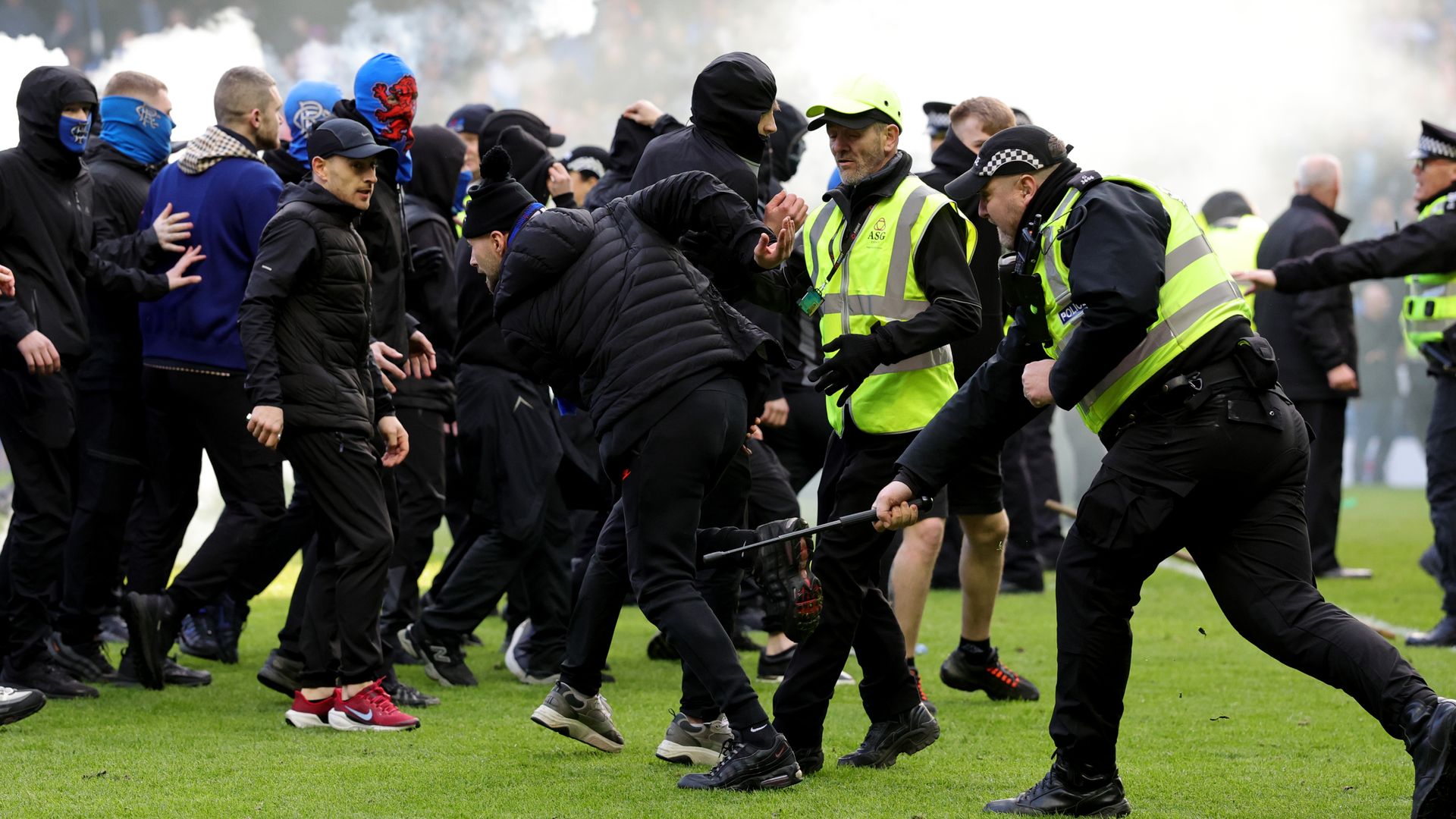
Rangers and Celtic fans in 'shameful' clashes on pitch after cup tie
#Rangers #Celtic #cup tie #pitch invasion #fan clashes #disorder #Scottish football
📌 Key Takeaways
- Rangers and Celtic fans clashed on the pitch after a cup match, described as 'shameful'
- The incident involved physical confrontations between rival supporters
- The clashes occurred post-match, escalating tensions from the game
- Authorities are likely to investigate the disorder and potential sanctions
📖 Full Retelling
🏷️ Themes
Football Violence, Fan Disorder
📚 Related People & Topics
Ranger
Topics referred to by the same term
A ranger is typically someone in a law enforcement or military/paramilitary role specializing in patrolling a given territory, called "ranging" or "scouting". The term most often refers to: Park ranger or forest ranger, a person charged with protecting and preserving protected parklands and forests...

Football in Scotland
Association football is one of the national sports of Scotland and the most popular sport in the country. There is a long tradition of "football" games in Orkney, Lewis and southern Scotland, especially the Scottish Borders, although many of these include carrying the ball and passing by hand, and d...
Entity Intersection Graph
Connections for Ranger:
View full profileMentioned Entities
Deep Analysis
Why It Matters
This incident matters because it represents a serious breakdown of public order at a major sporting event, endangering players, officials, and fans. It damages the reputation of Scottish football internationally and could lead to significant financial penalties for both clubs from governing bodies. The violence reinforces negative stereotypes about football culture and requires immediate action from police, clubs, and football authorities to prevent escalation.
Context & Background
- The Rangers-Celtic rivalry, known as the 'Old Firm', is one of football's most intense derbies with historical roots in religious and political divisions in Glasgow.
- Previous incidents of fan violence between these clubs have led to strict security measures, including segregated seating and early kick-offs to minimize alcohol-related trouble.
- Scottish football has worked to improve its image in recent years, with both clubs investing in community outreach programs to address sectarian issues among supporters.
- The Scottish Cup is the country's premier knockout competition, and matches between these two teams typically draw massive television audiences and heightened security presence.
What Happens Next
Police will conduct investigations to identify and prosecute individuals involved in the pitch invasions and clashes. Both clubs will likely face disciplinary hearings from the Scottish FA, potentially resulting in fines, stadium closures, or points deductions. Security protocols for future matches will be reviewed and strengthened, possibly including increased stewarding, earlier match kick-offs, or reduced ticket allocations for away fans.
Frequently Asked Questions
Tensions stem from deep-seated historical, religious, and political divisions between the clubs' supporter bases, often exacerbated by alcohol consumption and high-stakes competition. These factors can transform sporting rivalry into dangerous confrontation when not properly managed.
Measures include segregated seating, alcohol bans in stadiums, early afternoon kick-offs to reduce drinking time, and extensive police operations. Both clubs also run educational programs against sectarianism, though their effectiveness is periodically tested by events like this.
The Scottish FA could impose substantial fines, force matches to be played behind closed doors, or deduct league points. UEFA might also intervene if the incident affects European competitions, potentially imposing stadium bans or financial penalties.
Law-abiding supporters face increased security restrictions, potential travel disruptions, and damage to their clubs' reputations. Families may feel unsafe attending future matches, while community relations in Glasgow could suffer from renewed negative associations.