
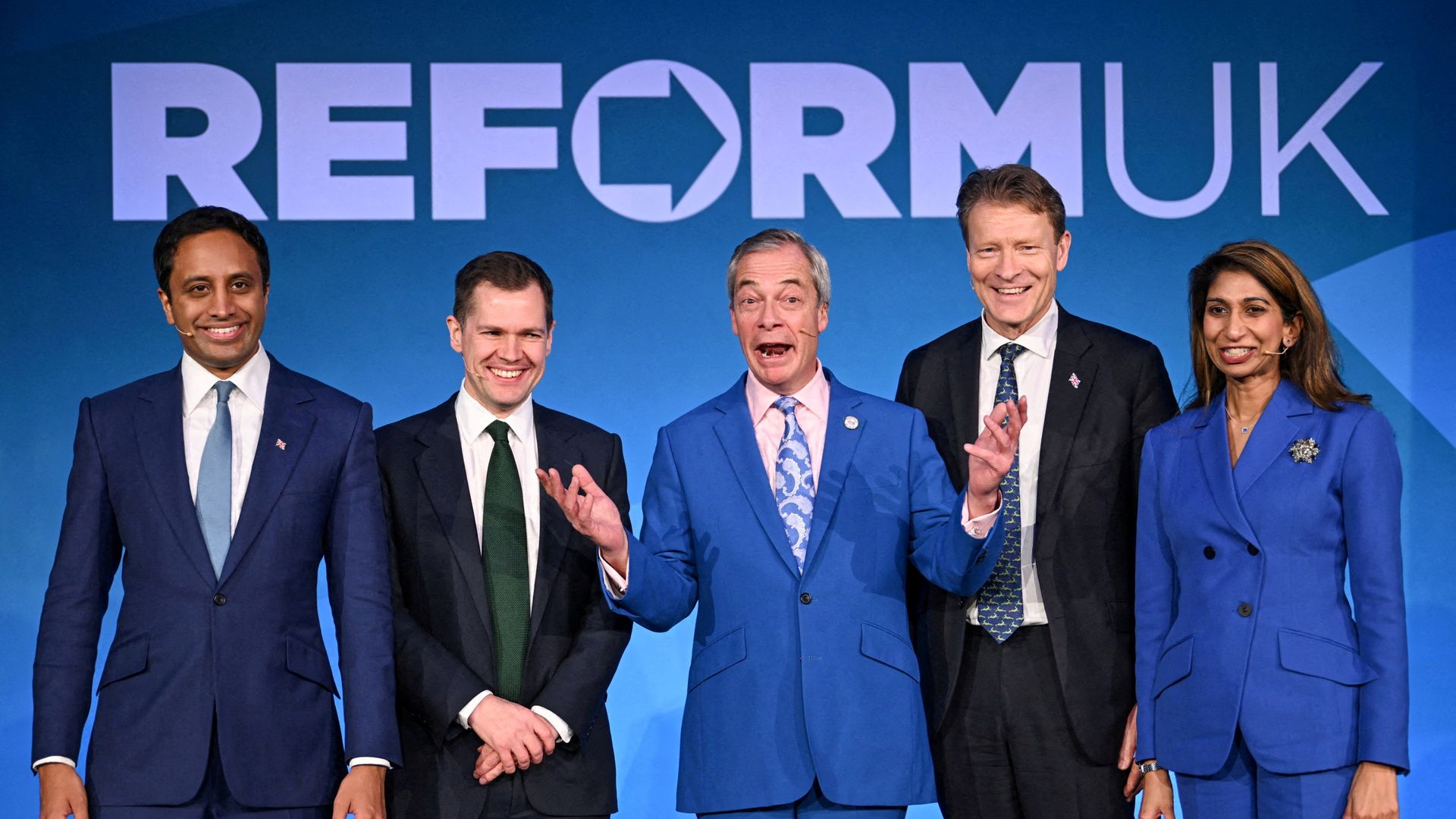
Reform UK maintain poll lead after row with YouGov
#Reform UK #poll lead #YouGov #row #controversy #public support #political polling
📌 Key Takeaways
- Reform UK retains its lead in polls despite a dispute with YouGov
- The party's polling numbers remain unaffected by the controversy
- The row with YouGov did not impact public support for Reform UK
- Reform UK continues to hold a competitive position in current polling data
🏷️ Themes
Politics, Polling
📚 Related People & Topics

Reform UK
Right-wing populist political party in the United Kingdom
Reform UK, often known simply as Reform, is a right-wing populist political party in the United Kingdom. It has eight members of Parliament in the House of Commons, two members of the London Assembly, one member of the Senedd, one member of the Scottish Parliament, one police and crime commissioner,...
YouGov
Multinational market research company
YouGov plc is an international Internet-based market research and data analytics firm headquartered in the UK with operations in Europe, North America, the Middle East, and Asia–Pacific.
Entity Intersection Graph
Connections for Reform UK:
Mentioned Entities
Deep Analysis
Why It Matters
This news matters because it demonstrates Reform UK's resilience in maintaining public support despite controversy, suggesting their messaging may be resonating with a significant portion of voters. It affects British politics by potentially disrupting traditional party dynamics and could influence upcoming election strategies. Polling organizations like YouGov also face scrutiny about their methodologies and potential biases, which impacts public trust in political forecasting.
Context & Background
- Reform UK (formerly the Brexit Party) was founded by Nigel Farage in 2018 and has positioned itself as a right-wing populist alternative to the Conservative Party
- YouGov is one of Britain's most prominent polling companies, frequently cited by media outlets and political analysts for election predictions
- British political polling has faced criticism in recent years after failing to accurately predict outcomes like the 2015 general election and 2016 Brexit referendum
- The UK's first-past-the-post electoral system makes it difficult for smaller parties to translate polling support into parliamentary seats
What Happens Next
Political analysts will monitor whether Reform UK can sustain this polling lead through the next election cycle. The controversy may prompt reviews of polling methodologies at YouGov and other firms. Upcoming local elections and potential by-elections will provide real-world tests of Reform UK's actual voter support versus polling numbers.
Frequently Asked Questions
The article doesn't specify the exact nature of the controversy, but typically such disputes involve disagreements over polling methodology, sample selection, or interpretation of data that one party believes disadvantages them politically.
While significant for demonstrating public sentiment, poll leads don't always translate to electoral success under the UK's first-past-the-post system. Reform UK would need to convert broad support into concentrated constituency victories to win parliamentary seats.
Polling controversies matter because they can influence public perception of which parties are viable, potentially creating bandwagon effects or discouraging tactical voting. Accurate polling is crucial for democratic transparency and informed voter decision-making.
Reform UK's continued polling strength could further split the right-wing vote, making it harder for Conservatives to win marginal seats. This pressure might push the Conservative Party to adopt more Reform-friendly policies or risk losing voters to their right.