
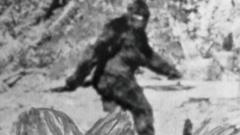
Researchers spent years interviewing 160 Bigfoot hunters - this is what they learnt
📚 Related People & Topics

Bigfoot
Mythical creature
Bigfoot (), also commonly referred to as Sasquatch (, SASS-kwotch; , SASS-kwahtch), is a large, hairy, mythical creature said to inhabit forests in North America, particularly in the Pacific Northwest. Bigfoot is featured in both American and Canadian folklore, and since the mid-20th century has bec...
Entity Intersection Graph
Connections for Bigfoot:
Mentioned Entities
Deep Analysis
Why It Matters
This research matters because it provides insight into subcultures that exist outside mainstream science, revealing how belief systems persist despite lack of empirical evidence. It affects cryptozoology enthusiasts, anthropologists studying contemporary folklore, and communities where Bigfoot tourism has economic impacts. The findings also contribute to understanding why people invest significant time and resources in pursuits that mainstream science dismisses, touching on psychology, sociology, and cultural studies.
Context & Background
- Bigfoot (also known as Sasquatch) is a legendary ape-like creature purported to inhabit forests of North America, with reported sightings dating back to indigenous oral traditions
- Organized Bigfoot hunting gained popularity in the mid-20th century following the 1967 Patterson-Gimlin film that allegedly showed the creature
- Cryptozoology - the study of creatures whose existence has not been proven scientifically - emerged as a field in the 1950s and includes searches for other legendary animals like the Loch Ness Monster
- Previous academic studies have examined Bigfoot belief as part of American folklore, paranormal subcultures, and the psychology of anomalous experiences
- The economic impact of Bigfoot tourism is significant in some regions, with festivals, museums, and guided expeditions generating local revenue
What Happens Next
The research findings will likely be published in academic journals in anthropology or sociology within the next 6-12 months. Cryptozoology conferences may feature presentations of these results in the coming year. The study could inspire follow-up research comparing Bigfoot hunters with other cryptid enthusiast groups. Media documentaries may incorporate these interview insights in future programming about paranormal subcultures.
Frequently Asked Questions
Researchers conducted in-depth interviews with 160 active Bigfoot hunters over multiple years, using qualitative analysis to identify patterns in motivations, experiences, and belief systems. This ethnographic approach allowed them to understand the subculture from participants' own perspectives.
The research likely found that hunters are motivated by personal experiences, community belonging, and the thrill of exploration rather than scientific validation. Many see themselves as amateur researchers contributing to a potential future discovery, similar to historical cases where legendary creatures were later proven real.
Most use a combination of field expeditions with night vision equipment, audio recorders, and camera traps, along with analyzing reported sighting locations. Many also engage in online communities to share evidence and coordinate search efforts across different regions.
Serious hunters typically invest substantial time and resources in systematic fieldwork, maintain detailed records, and follow specific methodologies. They often participate in organized groups and conferences, while casual enthusiasts might occasionally join expeditions or follow developments without regular active involvement.
No conclusive scientific evidence has been verified despite decades of searching. Hair samples attributed to Bigfoot have typically been identified as known animals, footprints lack consistent anatomical features, and no physical specimens or clear photographic evidence have withstood scientific scrutiny.