
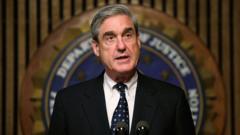
Robert Mueller, ex-FBI chief who led Trump-Russia investigation, dies at 81
#Robert Mueller #FBI #Trump-Russia investigation #2016 election #Russian interference #obituary
📌 Key Takeaways
- Robert Mueller, former FBI director, has died at age 81.
- He led the investigation into Russian interference in the 2016 U.S. election.
- The probe examined potential links between the Trump campaign and Russia.
- Mueller served as FBI director from 2001 to 2013 under two presidents.
📖 Full Retelling
🏷️ Themes
Politics, Law enforcement, Investigation
📚 Related People & Topics

Cyberwarfare by Russia
Cyberwarfare by Russia comprises denial-of-service campaigns, hacking operations, disinformation programs, and state-directed online repression, including participation of state-sponsored teams in political blogs, internet surveillance using SORM technology, and other active measures, executed by Ru...

Federal Bureau of Investigation
U.S. federal law enforcement agency
The Federal Bureau of Investigation (FBI) is the domestic intelligence and security service of the United States and its principal federal law enforcement agency. An agency of the United States Department of Justice, the FBI is a member of the U.S. Intelligence Community and reports to both the atto...

Robert Mueller
American attorney (1944–2026)
Robert Swan Mueller III (; August 7, 1944 – March 20, 2026) was an American lawyer who served as the sixth director of the Federal Bureau of Investigation (FBI) from 2001 to 2013. A graduate of Princeton University and New York University, Mueller served as a Marine Corps officer during the Vietnam ...
Entity Intersection Graph
Connections for Cyberwarfare by Russia:
Mentioned Entities
Deep Analysis
Why It Matters
Robert Mueller's death marks the passing of a central figure in one of the most politically charged investigations in modern U.S. history. His investigation into Russian interference in the 2016 election and potential Trump campaign collusion dominated American politics for years and led to multiple convictions. This matters to political observers, legal experts, and anyone concerned with election integrity and presidential accountability. His legacy will continue to influence debates about special counsel investigations and executive branch oversight.
Context & Background
- Robert Mueller served as FBI Director from 2001-2013, appointed by President George W. Bush and serving under President Barack Obama
- The Mueller investigation (2017-2019) resulted in 34 indictments and 7 convictions, though it did not establish criminal conspiracy between Trump campaign and Russia
- Mueller previously served as U.S. Attorney and Department of Justice official, earning bipartisan respect throughout his career
- The investigation's conclusions about potential obstruction of justice remain politically contested to this day
What Happens Next
Historical assessments of Mueller's investigation will likely intensify, with renewed debate about its findings and legacy. Political figures from both parties will issue statements reflecting their perspectives on his work. Documentaries and biographies may be accelerated, and legal scholars will re-examine the special counsel framework he operated under.
Frequently Asked Questions
The investigation found extensive Russian interference in the 2016 election but did not establish criminal conspiracy between Trump campaign and Russia. It identified multiple contacts between Trump associates and Russians but concluded these didn't constitute criminal coordination. The report outlined potential obstruction of justice but left Congress to determine appropriate response.
Mueller became controversial because his investigation became intensely politicized, with Republicans criticizing it as a 'witch hunt' and Democrats viewing it as essential accountability. His prosecutorial decisions and public testimony were scrutinized by both sides. His traditional law enforcement approach clashed with highly partisan environment.
Mueller had a distinguished career as Marine Corps officer, federal prosecutor, and longest-serving FBI director since J. Edgar Hoover. He led the FBI through 9/11 aftermath and oversaw transformation of counterterrorism efforts. He was known for integrity and was appointed special counsel due to his reputation for impartiality.
His death refocuses attention on the investigation's legacy during an election year. It may influence how future special counsels are perceived and appointed. The timing ensures his work remains part of contemporary political discourse about election integrity and presidential accountability.