
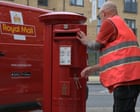
Royal Mail criticised as first-class stamp price rises to £1.80 despite ‘failing service’
#Royal Mail #stamp price #first-class #service failure #price hike #consumer criticism #postal regulation
📌 Key Takeaways
- Royal Mail increased first-class stamp price to £1.80, drawing criticism.
- Critics argue the price hike is unjustified due to declining service quality.
- The rise reflects ongoing financial pressures and operational challenges at Royal Mail.
- Public and regulatory scrutiny intensifies over service standards versus cost increases.
📖 Full Retelling
🏷️ Themes
Postal Service, Consumer Criticism
📚 Related People & Topics
Royal Mail
Postal service company in the United Kingdom
Royal Mail Group Limited, trading as Royal Mail, is a British postal service and courier company. It is owned by International Distribution Services. It operates the brands Royal Mail (letters and parcels) and Parcelforce Worldwide (parcels).
Entity Intersection Graph
Connections for Royal Mail:
Mentioned Entities
Deep Analysis
Why It Matters
This price increase directly impacts millions of UK consumers and businesses who rely on postal services for personal correspondence, bill payments, and commercial operations. It raises concerns about affordability and accessibility of essential mail services, particularly for vulnerable populations and small businesses operating on tight margins. The criticism highlights growing public frustration with declining service quality despite rising costs, potentially accelerating the shift toward digital alternatives and further eroding Royal Mail's traditional revenue streams.
Context & Background
- Royal Mail was privatized in 2013 after nearly 500 years as a state-owned service, with the government retaining a minority stake until 2015
- The Universal Service Obligation requires Royal Mail to deliver letters six days a week to all UK addresses at uniform prices, creating significant financial pressures
- First-class stamp prices have increased from 60p in 2010 to £1.80 in 2025, far outpacing inflation during this period
- Royal Mail faces intense competition from digital communication and private parcel delivery services while maintaining costly legacy infrastructure
- The company reported significant financial losses in recent years despite previous price increases and operational restructuring efforts
What Happens Next
Regulator Ofcom will likely face increased pressure to review Royal Mail's pricing authority and service standards, potentially leading to formal investigations in Q2 2025. Consumer advocacy groups may organize campaigns or legal challenges against the price hike, while Parliament could summon Royal Mail executives for questioning. The price increase may accelerate the decline in letter volumes as more users switch to digital alternatives, potentially forcing Royal Mail to seek further regulatory relief or additional price increases within 12-18 months.
Frequently Asked Questions
Royal Mail cites rising operational costs, inflation, and declining letter volumes as primary reasons for the increase. The company claims it needs additional revenue to maintain the universal service obligation while addressing significant financial losses reported in recent years.
At £1.80 (£1.35 for second-class), UK first-class stamps remain among the most expensive in Europe, though some countries like Germany and France have similar pricing. The increase continues a trend where UK postal prices have risen faster than in many comparable developed economies over the past decade.
Digital alternatives like email and online billing continue to replace traditional mail for many purposes. For physical items, private courier services offer competitive parcel rates but don't provide universal letter delivery. Some businesses use franking machines for bulk mail, which can offer modest savings compared to individual stamps.
Ofcom regulates Royal Mail's pricing but allows considerable flexibility for market-determined rates. The regulator primarily ensures Royal Mail doesn't abuse its dominant position and continues meeting universal service obligations, though it has faced criticism for being too permissive with price increases.
Elderly, disabled, and low-income individuals who rely more heavily on postal services for essential communications and bill payments will be disproportionately affected. While some social tariff programs exist, critics argue they're insufficient to address the accessibility challenges created by repeated price increases.