
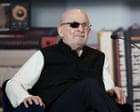
Salman Rushdie says he is tired of being ‘free speech Barbie’ after 2022 attack
#Salman Rushdie #free speech #2022 attack #public figure #symbolism #safety #advocacy
📌 Key Takeaways
- Salman Rushdie expresses fatigue with being labeled 'free speech Barbie' following the 2022 attack.
- The 2022 attack on Rushdie was a significant event that impacted his public identity.
- Rushdie's comments highlight the personal toll of being a symbol for free speech advocacy.
- The article underscores ongoing discussions about free speech and safety for public figures.
📖 Full Retelling
🏷️ Themes
Free Speech, Personal Safety
📚 Related People & Topics

Salman Rushdie
Indian-British-American novelist (born 1947)
Sir Ahmed Salman Rushdie (born 19 June 1947) is an Indian-born British and American novelist. His work often combines magical realism with historical fiction and primarily deals with connections, disruptions, and migrations between Eastern and Western civilizations, typically set on the Indian subco...
Entity Intersection Graph
No entity connections available yet for this article.
Mentioned Entities
Deep Analysis
Why It Matters
This news matters because it highlights the personal toll on public figures who become symbols for political causes, particularly regarding free speech debates. Rushdie's experience demonstrates how survivors of violence can become trapped in public narratives that overshadow their personal recovery and identity. It affects not only Rushdie himself but also broader discussions about how society processes trauma, the ethics of using individuals as political symbols, and the ongoing global tensions around artistic expression and religious sensitivities. The statement reveals the complex relationship between personal healing and public responsibility for those who survive high-profile attacks.
Context & Background
- Salman Rushdie has lived under threat since 1989 when Iran's Ayatollah Khomeini issued a fatwa calling for his death over his novel 'The Satanic Verses'
- In August 2022, Rushdie was brutally attacked on stage at a literary event in New York, suffering multiple stab wounds and losing vision in one eye
- Rushdie has spent decades as an international symbol of free speech, particularly regarding conflicts between artistic expression and religious sensitivities
- The term 'Barbie' in his statement references how public figures can become commodified as symbols, stripped of their personal complexity
What Happens Next
Rushdie will likely continue his recovery while navigating his public role more selectively, possibly writing about his experience in future works. The statement may prompt reevaluation of how media and activists use trauma survivors as symbols. Ongoing security concerns will continue to shape his public appearances and literary engagements. The broader conversation about balancing free speech with personal trauma will persist in literary and human rights circles.
Frequently Asked Questions
Rushdie uses 'free speech Barbie' as a metaphor for how he feels reduced to a simplistic symbol - like a doll representing free speech - rather than being seen as a complex human being with his own trauma and personal journey. The term suggests he feels commodified and stripped of his individuality after decades as an international symbol for free expression.
Rushdie became a global free speech symbol after Iran's Ayatollah Khomeini issued a 1989 fatwa calling for his death over 'The Satanic Verses,' making him the most famous case of artistic expression clashing with religious extremism. His continued writing and public presence despite decades of threats, culminating in the 2022 attack, has cemented his status as a living symbol of artistic courage.
The 2022 attack left Rushdie with permanent physical injuries including blindness in one eye and nerve damage in his hand, fundamentally altering his daily life and writing process. Beyond physical trauma, the experience has intensified his complex relationship with being a public symbol while dealing with personal recovery, as expressed in his statement about being tired of being 'free speech Barbie.'
This statement highlights the tension between public symbolism and personal trauma, questioning how society uses survivors as political symbols. It raises ethical questions about whether expecting continued advocacy from trauma victims constitutes a form of exploitation, and examines the psychological burden of being reduced to a single-dimensional public identity.
Rushdie's statement may encourage more nuanced approaches to free speech advocacy that respect survivors' personal boundaries and trauma. It could prompt organizations to consider whether constantly featuring attack survivors reinforces their trauma or supports their healing, potentially leading to more thoughtful representation of individuals in human rights campaigns.