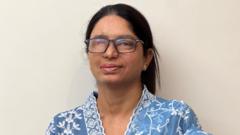
Shaheen Malik has petitioned the Indian Supreme Court to expand the legal definition of disability to include internal acid injuries.
Current Indian law primarily recognizes survivors with external scarring, excluding those forced to ingest corrosive substances.
The petition seeks to grant internal organ damage survivors access to government healthcare, pensions, and job quotas.
Malik’s Brave Souls Foundation aims to close legal loopholes that ignore the chronic health struggles of victims with 'invisible' injuries.
📖 Full Retelling
Indian activist and acid attack survivor Shaheen Malik filed a landmark petition with the Supreme Court of India in New Delhi this week to demand the formal legal recognition of victims forced to ingest corrosive substances under the Rights of Persons with Disabilities Act. Malik, who founded the NGO Brave Souls Foundation, initiated the legal challenge to address a critical loophole in current legislation that currently only grants disability status to those with external physical scarring. By expanding these protections, the petition seeks to ensure that survivors suffering from severe internal organ damage receive the same government benefits, healthcare, and employment quotas as those with visible injuries.
The core of the legal argument rests on the invisible but devastating trauma experienced by victims of "forced ingestion," a common method of gender-based violence where attackers coerce victims into drinking acid. Unlike external attacks that result in visible disfigurement, internal damage to the esophagus, stomach, and respiratory system often leaves survivors with lifelong chronic illnesses and the inability to eat or breathe properly. Malik argues that the oversight in the 2016 Act prevents these individuals from accessing crucial state-sponsored rehabilitation and financial support, effectively making their suffering invisible to the law.
Shaheen Malik’s own history as a survivor informs her advocacy; she has spent years navigating the complex Indian judicial system following her own attack in 2014. Through her foundation, she has documented numerous cases where women were denied government compensation because their injuries did not meet the specific "disfigurement" criteria required by current disability certifications. The Supreme Court's response to this petition is seen as a potential turning point for disability rights in India, as it could force a redefinition of how the state perceives and classifies long-term trauma and physical impairment.
As the petition moves forward, it highlights the broader societal challenges regarding acid violence in India, which continues to report hundreds of cases annually despite restricted sales of corrosive chemicals. Beyond legal recognition, Malik and her legal team are calling for a more holistic approach to survivor care that includes specialized medical facilities and guaranteed monthly pensions. The outcome of this case will likely set a precedent for how intersectional vulnerabilities are managed within India’s evolving human rights framework.
🏷️ Themes
Human Rights, Legal Reform, Social Justice
📚 Related People & Topics
Disability rights movement
Social movement seeking equal rights for disabled people
The disability rights movement is a global social movement, which seeks to secure equal opportunities and equal rights for all disabled people. It is made up of organizations of disability activists, also known as disability advocates, around the world working together with similar goals and demands...
An acid attack, also called acid throwing, vitriol attack, or vitriolage, is a form of violent assault involving the act of throwing acid or a similarly corrosive substance onto the body of another "with the intention to disfigure, maim, torture, or kill". Perpetrators of these attacks throw corrosi...
The Supreme Court of India is the supreme judicial authority and the highest court in India. It is the highest appellate court for all civil and criminal cases in India. The court is led by the Chief Justice of India and has a maximum sanctioned strength of 33 judges excluding the chief justice.