
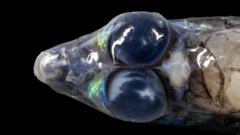
Spectacular images reveal unique sea creatures and corals off Caribbean islands
📖 Full Retelling
Scientists discover underwater mountain ranges, golden towers of coral, and never-before-seen sea creatures.
Entity Intersection Graph
No entity connections available yet for this article.
Original Source
Spectacular images reveal unique sea creatures and corals off Caribbean islands 1 hour ago Share Save Georgina Rannard Science reporter Share Save The waters off the glittering coastlines of Britain's Caribbean territories have long been a mystery. But now scientists on the first expedition beyond the islands' shallows have discovered an underwater mountain range, a massive "blue hole", coral reefs apparently untouched by climate change and never-before-seen sea creatures. Operating 24 hours a day for the last six weeks, researchers subjected cameras and other equipment to extreme water pressure, recording as deep as 6,000m (19,700ft). To navigate the Cayman Islands, Anguilla and Turks and Caicos, they were forced to rely on decades-old maps with serious errors and whole areas missing. The UK Centre for Environment, Fisheries and Aquaculture Science has shared their footage and discoveries exclusively with BBC News. The UK government shares responsibility for protecting the islands' nature and up to 90% of Britain's unique species are found around these and other British Overseas Territories. Now scientists say the race is on to protect this "relatively pristine" environment from the threats of climate change and pollution. "This is the first step into environments people have never seen, and in some cases didn't know existed," says Prof James Bell, leading the expedition on the British research ship RSS James Cook with scientists from the three islands. "Just yesterday we found a kind of type of swimming sea cucumber, and we still don't know what it is," he added, calling the diversity he's seen "really, really astonishing". The Cayman Islands, Anguilla and Turks and Caicos are home to 146 species that only live in those territories, and this research expedition should add even more to the list. The team documented nearly 14,000 individual specimens and 290 different types of marine creatures, although more scientific work is needed to confirm their findings. They ...
Read full article at source