
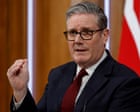
Starmer distances UK from Iran war as EU leaders rule out sending warships
#Keir Starmer #Iran #EU #warships #Middle East #de-escalation #foreign policy
📌 Key Takeaways
- UK Prime Minister Keir Starmer is distancing the UK from potential military conflict with Iran.
- EU leaders have collectively ruled out sending warships to the region.
- The stance marks a shift in Western policy towards de-escalation in the Middle East.
- The decisions follow heightened tensions between Iran and Western nations.
📖 Full Retelling
🏷️ Themes
Foreign Policy, De-escalation
📚 Related People & Topics

Iran
Country in West Asia
# Iran **Iran**, officially the **Islamic Republic of Iran** and historically known as **Persia**, is a sovereign country situated in West Asia. It is a major regional power, ranking as the 17th-largest country in the world by both land area and population. Combining a rich historical legacy with a...

Middle East
Transcontinental geopolitical region
The Middle East is a geopolitical region encompassing the Arabian Peninsula, Egypt, Iran, Iraq, the Levant, and Turkey. The term came into widespread usage by Western European nations in the early 20th century as a replacement of the term Near East (both were in contrast to the Far East). The term ...

European Union
Supranational political and economic union
The European Union (EU) is a supranational political and economic union of 27 member states that are located primarily in Europe. The union has a total area of 4,233,255 km2 (1,634,469 sq mi) and an estimated population of more than 450 million as of 2025. The EU is often described as a sui generis ...

Keir Starmer
Prime Minister of the United Kingdom since 2024
# Sir Keir Starmer **Sir Keir Rodney Starmer** (born 2 September 1962) is a British politician and lawyer serving as Prime Minister of the United Kingdom since July 2024. A member of the Labour Party, he has served as Leader of the Labour Party since 2020 and has been the Member of Parliament (MP) ...
Entity Intersection Graph
Connections for Iran:
Mentioned Entities
Deep Analysis
Why It Matters
This news matters because it signals a significant shift in UK foreign policy under the new Labour government, potentially reducing Western military involvement in Middle Eastern conflicts. It affects UK-Iran relations, European security coordination, and global stability in a volatile region. The decision impacts diplomatic efforts to contain Iran's regional activities and could influence how other Western nations approach Middle Eastern security challenges.
Context & Background
- The UK has historically maintained close military and intelligence cooperation with the US in Middle Eastern conflicts, including recent operations against Iranian-backed groups.
- Iran has been engaged in regional proxy conflicts and nuclear program development, leading to tensions with Western powers over several decades.
- The European Union has maintained a more cautious military approach in the Middle East compared to the US, focusing on diplomatic and economic measures.
- Previous UK governments under Conservative leadership had taken more hawkish stances toward Iran, including participating in maritime security operations in the Persian Gulf.
What Happens Next
Expect increased diplomatic engagement between UK/EU and Iran in coming months, with potential for renewed nuclear talks. The US may seek alternative European partners for regional security operations. Watch for UK parliamentary debates on Middle East policy in autumn 2024 and potential adjustments to Royal Navy deployments in the Persian Gulf region.
Frequently Asked Questions
Starmer's Labour government is implementing its foreign policy platform emphasizing diplomatic solutions over military intervention, reflecting both campaign promises and a strategic calculation that European military involvement could escalate regional tensions unnecessarily.
This creates potential friction in the 'special relationship' as the US has consistently sought European military support for Middle Eastern security operations. The UK will need to balance its new diplomatic approach with maintaining intelligence and security cooperation with Washington.
With EU nations also ruling out warship deployments, responsibility for protecting commercial shipping may fall more heavily on the US Navy and regional partners. This could lead to new multilateral security arrangements or increased reliance on diplomatic assurances from Iran.
Yes, this coordinated position suggests European powers are aligning around a more cautious military approach to the Middle East, potentially marking a departure from previous ad-hoc responses to regional crises and reflecting wariness about entanglement in complex conflicts.