
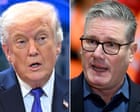
Starmer speaks with Trump after president criticises lack of UK support for Iran strikes
#Keir Starmer #Donald Trump #Iran strikes #UK-US relations #diplomatic call #international security #military support
📌 Key Takeaways
- Keir Starmer spoke with Donald Trump following Trump's criticism of the UK's lack of support for strikes against Iran.
- The conversation addressed international security and the UK-US alliance.
- Trump had publicly expressed dissatisfaction with the UK's stance on military action in Iran.
- The discussion aimed to manage diplomatic relations and clarify positions between the two nations.
📖 Full Retelling
🏷️ Themes
Diplomacy, International Security
📚 Related People & Topics

Donald Trump
President of the United States (2017–2021; since 2025)
Donald John Trump (born June 14, 1946) is an American politician, media personality, and businessman who is the 47th president of the United States. A member of the Republican Party, he served as the 45th president from 2017 to 2021. Born into a wealthy New York City family, Trump graduated from the...

Keir Starmer
Prime Minister of the United Kingdom since 2024
# Sir Keir Starmer **Sir Keir Rodney Starmer** (born 2 September 1962) is a British politician and lawyer serving as Prime Minister of the United Kingdom since July 2024. A member of the Labour Party, he has served as Leader of the Labour Party since 2020 and has been the Member of Parliament (MP) ...
Entity Intersection Graph
Connections for Donald Trump:
Mentioned Entities
Deep Analysis
Why It Matters
This news matters because it reveals diplomatic tensions between the UK and US regarding military action against Iran, potentially affecting the special relationship between the two allies. It impacts UK-US relations, international security dynamics in the Middle East, and could influence future NATO cooperation. The conversation between Starmer and Trump demonstrates how leadership changes in the UK (with Starmer as new Prime Minister) are reshaping foreign policy approaches, which affects global diplomatic alignments and military strategies.
Context & Background
- The UK and US have maintained a 'special relationship' since WWII, with close military and intelligence cooperation including in Iraq and Afghanistan conflicts.
- Iran has been a longstanding regional adversary of Western powers due to its nuclear program, support for militant groups, and tensions with Israel and Gulf states.
- The UK under previous Conservative governments typically aligned closely with US foreign policy, particularly regarding Middle Eastern security matters.
- Keir Starmer's Labour government represents a significant political shift in the UK after 14 years of Conservative rule, potentially bringing different foreign policy priorities.
- The US has conducted military strikes against Iranian-backed forces in the past, particularly in Iraq and Syria, often with varying levels of allied support.
What Happens Next
We can expect continued diplomatic discussions between UK and US officials to clarify positions on Iran policy, potential adjustments to UK's Middle East strategy under Starmer's government, and possible parliamentary debates in the UK about military engagement authorizations. The situation may affect upcoming NATO summit discussions about collective security approaches, and could influence how other European allies coordinate with US foreign policy initiatives in the region.
Frequently Asked Questions
Trump likely criticized the UK because he expected traditional allied military support for US actions against Iranian targets, viewing the UK's hesitation as a break from historical cooperation patterns. This reflects his transactional approach to alliances where he expects immediate reciprocal support for US initiatives.
The conversation suggests Starmer is establishing a more independent UK foreign policy that doesn't automatically align with US military actions, potentially reflecting Labour's different priorities regarding Middle East engagement. It shows he's willing to engage diplomatically with US leadership while maintaining distinct policy positions.
This could lead to more formalized consultation processes before joint military actions and potentially more conditional UK support for US initiatives. However, the fundamental intelligence-sharing and defense technology partnerships are likely to continue given their strategic importance to both nations.
The UK's more cautious approach could encourage other European allies to similarly distance themselves from US military actions, potentially reducing multilateral pressure on Iran. However, it might also create opportunities for more diplomatic solutions if European powers pursue different engagement strategies with Tehran.
This incident provides early indications that Labour may prioritize diplomatic solutions over military interventions and seek to rebuild relationships with European allies while maintaining but recalibrating the US partnership. It suggests a potential shift toward more multilateral, UN-centered approaches to international conflicts.