
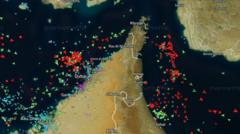
Strait of Hormuz timelapse shows fall in shipping traffic
#Strait of Hormuz #shipping traffic #timelapse #maritime trade #oil transit #geopolitics #trade decline
📌 Key Takeaways
- Shipping traffic through the Strait of Hormuz has significantly decreased recently.
- A timelapse visualization highlights the decline in vessel movements.
- The strait is a critical global oil and gas transit chokepoint.
- The drop may reflect regional tensions or economic factors affecting trade.
📖 Full Retelling
🏷️ Themes
Maritime Traffic, Geopolitical Tensions
📚 Related People & Topics

Strait of Hormuz
Strait between the Gulf of Oman and the Persian Gulf
The Strait of Hormuz ( Persian: تنگهٔ هُرمُز Tangeh-ye Hormoz , Arabic: مَضيق هُرمُز Maḍīq Hurmuz) is a strait between the Persian Gulf and the Gulf of Oman. It provides the only sea passage from the Persian Gulf to the open ocean and is one of the world's most strategically important choke points. ...
Entity Intersection Graph
Connections for Strait of Hormuz:
Mentioned Entities
Deep Analysis
Why It Matters
This news matters because the Strait of Hormuz is the world's most critical oil transit chokepoint, handling about 21% of global petroleum consumption. A decline in shipping traffic directly impacts global energy prices, supply chains, and economic stability. This affects consumers worldwide through fuel costs, shipping companies through route disruptions, and oil-dependent economies like those in the Gulf region. Reduced traffic may signal geopolitical tensions, insurance premium increases, or alternative routing decisions that reshape global trade patterns.
Context & Background
- The Strait of Hormuz is a narrow waterway between Oman and Iran, only 21 miles wide at its narrowest point, making it highly vulnerable to disruption.
- Approximately one-fifth of the world's oil passes through this strait daily, along with significant volumes of liquefied natural gas (LNG).
- The region has experienced multiple crises including tanker attacks (2019), seizures (2023), and the US-Iran tensions that nearly led to conflict in 2020.
- Major oil producers like Saudi Arabia, Iraq, UAE, Kuwait, and Qatar depend on this route for exports, with limited practical alternatives for large tankers.
- The US Fifth Fleet is based in Bahrain specifically to patrol this waterway, reflecting its strategic military importance since the 1980s Tanker War.
What Happens Next
Shipping companies will likely increase insurance premiums for vessels transiting the strait, potentially making alternative routes more economically viable. Oil prices may experience volatility as markets assess whether this represents a temporary dip or sustained trend. Regional powers may hold emergency meetings through organizations like OPEC+ or GCC to coordinate responses. If the decline continues beyond 2-3 weeks, we may see increased diplomatic activity between Gulf states, Western powers, and China to ensure energy security.
Frequently Asked Questions
Primary reasons include increased geopolitical tensions between Iran and Western powers, rising insurance costs making the route less economical, or preemptive rerouting by shipping companies anticipating conflict. Environmental factors like weather rarely cause sustained decreases in this region.
Oil markets could react within hours through price spikes, but physical supply disruptions would take 2-3 weeks to significantly impact inventories. The strategic petroleum reserves of major consumers like the US and China provide some buffer against immediate shortages.
Limited alternatives include the SUMED pipeline in Egypt (bypassing the Suez Canal), expanded pipeline capacity through Saudi Arabia to the Red Sea, or longer routes around Africa adding 15-20 days to voyages. None can fully replace Hormuz's capacity.
Japan and South Korea are most vulnerable as they import over 70% of their oil through Hormuz with limited storage. Gulf states like Qatar and UAE face economic collapse risks, while China and India have diversified sources but would still face major economic impacts.
Consumers would see higher gasoline and heating costs within weeks, increased prices for goods transported by sea, and potential economic slowdowns affecting employment. The impact magnitude depends on duration and severity of traffic reduction.