
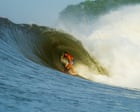
Surfing’s big break: how climate crisis insurance may save El Salvador’s waves
#El Salvador #surfing #climate insurance #coastal protection #tourism #environmental restoration #climate crisis
📌 Key Takeaways
- El Salvador is using climate crisis insurance to protect its surfing waves from environmental threats.
- The initiative aims to safeguard coastal ecosystems that support tourism and local economies.
- Insurance payouts would fund restoration projects after climate-related damage to surf breaks.
- This approach could serve as a model for other coastal regions facing similar climate risks.
📖 Full Retelling
🏷️ Themes
Climate Adaptation, Tourism Sustainability
📚 Related People & Topics

El Salvador
Country in Central America
El Salvador, officially the Republic of El Salvador, is a country in Central America. It is bordered on the northeast by Honduras, on the northwest by Guatemala, and on the south by the Pacific Ocean. El Salvador's capital and largest city is San Salvador.
Entity Intersection Graph
Connections for El Salvador:
View full profileMentioned Entities
Deep Analysis
Why It Matters
This news matters because it represents a novel approach to climate adaptation that protects both natural ecosystems and local economies. It directly affects El Salvador's coastal communities who depend on surfing tourism for their livelihoods, as well as the global surfing community and conservationists. The insurance model could serve as a blueprint for other coastal regions facing similar climate threats, making it significant for climate finance and environmental policy worldwide.
Context & Background
- El Salvador has become a major surfing destination with world-class waves that attract international tourists and generate significant revenue.
- Climate change threatens coastal areas through sea-level rise, increased storm intensity, and coastal erosion that can alter or destroy surf breaks.
- Parametric insurance pays out based on predefined triggers (like wave height or storm intensity) rather than traditional damage assessments, allowing faster response.
- Many developing nations like El Salvador face disproportionate climate impacts despite contributing minimally to global emissions, creating adaptation funding challenges.
- Surf tourism represents a growing economic sector in Central America, with environmental conservation becoming increasingly linked to economic sustainability.
What Happens Next
The insurance program will likely undergo implementation and monitoring phases to assess its effectiveness in protecting surf breaks. Other coastal nations with surf-based tourism may explore similar insurance models, potentially leading to regional climate adaptation networks. The success or failure of this initiative will influence future climate finance mechanisms for ecosystem protection in vulnerable regions.
Frequently Asked Questions
Parametric insurance uses specific environmental triggers like wave measurements or storm data to automatically issue payouts when conditions threaten surf breaks. This allows rapid funding for protective measures without lengthy damage assessments, helping communities implement immediate conservation actions.
Surf breaks represent both economic assets through tourism revenue and natural ecosystems that support biodiversity. Protecting them serves dual purposes: preserving livelihoods in coastal communities while maintaining coastal environments that provide broader ecological benefits like erosion control.
Funding typically comes from combinations of government resources, international climate funds, private insurers, and sometimes tourism industry contributions. In developing nations, climate adaptation financing often involves partnerships between local governments and international organizations.
Yes, similar parametric insurance approaches are being explored for coral reefs, mangrove forests, and other ecosystems. The key is identifying measurable environmental indicators that can trigger payouts when ecosystems face climate-related threats.
Payouts fund immediate protective measures like artificial reef construction, sand replenishment, or vegetation planting. While not guaranteeing complete preservation, these interventions aim to mitigate damage and support natural recovery processes, with effectiveness monitored over time.