
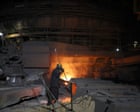
Taxpayer bill for saving Scunthorpe steel furnaces could top £1.5bn by 2028, auditor says
#Scunthorpe #steel furnaces #taxpayer bill #auditor #government support #industrial jobs #public investment
📌 Key Takeaways
- The UK government's financial support for Scunthorpe steel furnaces may exceed £1.5 billion by 2028.
- An auditor has raised concerns about the escalating costs to taxpayers.
- The funding aims to preserve steel production and jobs in Scunthorpe.
- The projected cost highlights significant public investment in industrial support.
📖 Full Retelling
🏷️ Themes
Government Funding, Industrial Policy
📚 Related People & Topics

Scunthorpe
Industrial town in Lincolnshire, England
Scunthorpe () is an industrial town in Lincolnshire, England, and the county's third most populous settlement after Lincoln and Grimsby, with a population of 81,286 in 2021. It is the administrative centre and largest settlement of the North Lincolnshire district. Scunthorpe lies north of Lincoln an...
Entity Intersection Graph
No entity connections available yet for this article.
Mentioned Entities
Deep Analysis
Why It Matters
This news is important because it reveals the substantial and growing financial burden on UK taxpayers to maintain a critical domestic steel production facility. It affects taxpayers who are funding this support, steel industry workers whose jobs depend on the plant's survival, and the government's industrial policy credibility. The escalating costs raise questions about long-term viability versus strategic national interest in maintaining domestic steelmaking capacity.
Context & Background
- British Steel's Scunthorpe plant has faced repeated financial crises and ownership changes since its privatization from British Steel Corporation in 1988.
- The UK government previously provided a £300 million loan in 2020 to support the plant during the pandemic and transition to greener production.
- Steel production is considered strategically important for national security and infrastructure, with the UK producing about 7 million tonnes annually compared to China's 1 billion tonnes.
- The plant employs approximately 4,000 people directly and supports thousands more in supply chains in a region with limited alternative employment opportunities.
What Happens Next
The National Audit Office will likely publish a full report with detailed recommendations in early 2025. Government will face pressure to renegotiate support terms with British Steel's Chinese owners, Jingye Group. Decisions about additional funding will coincide with the 2025 general election campaign, making this a politically sensitive industrial policy issue.
Frequently Asked Questions
The Scunthorpe plant produces virgin steel essential for UK infrastructure and defense, and its closure would make Britain dependent on imports. Maintaining domestic steelmaking capacity is considered a national security priority, especially after supply chain disruptions during the pandemic.
British Steel is owned by China's Jingye Group, which purchased it out of insolvency in 2020. The company argues that high energy costs and global competition make UK steel production unprofitable without government support for transitioning to greener technologies.
Without continued support, the plant would likely close, resulting in approximately 4,000 direct job losses and devastating the local economy in northern Lincolnshire. The UK would lose its ability to produce certain steel types needed for railways and construction.
Many European governments provide substantial subsidies to their steel industries, particularly for decarbonization. Germany's government committed €2.75 billion to help ThyssenKrupp transition to green steel, while the US Inflation Reduction Act includes billions for industrial decarbonization.
The plant is a major carbon emitter, but government funding is partly intended to help transition to electric arc furnaces that use recycled steel. Without investment, the plant would continue using coal-intensive blast furnaces, conflicting with UK net-zero commitments.