
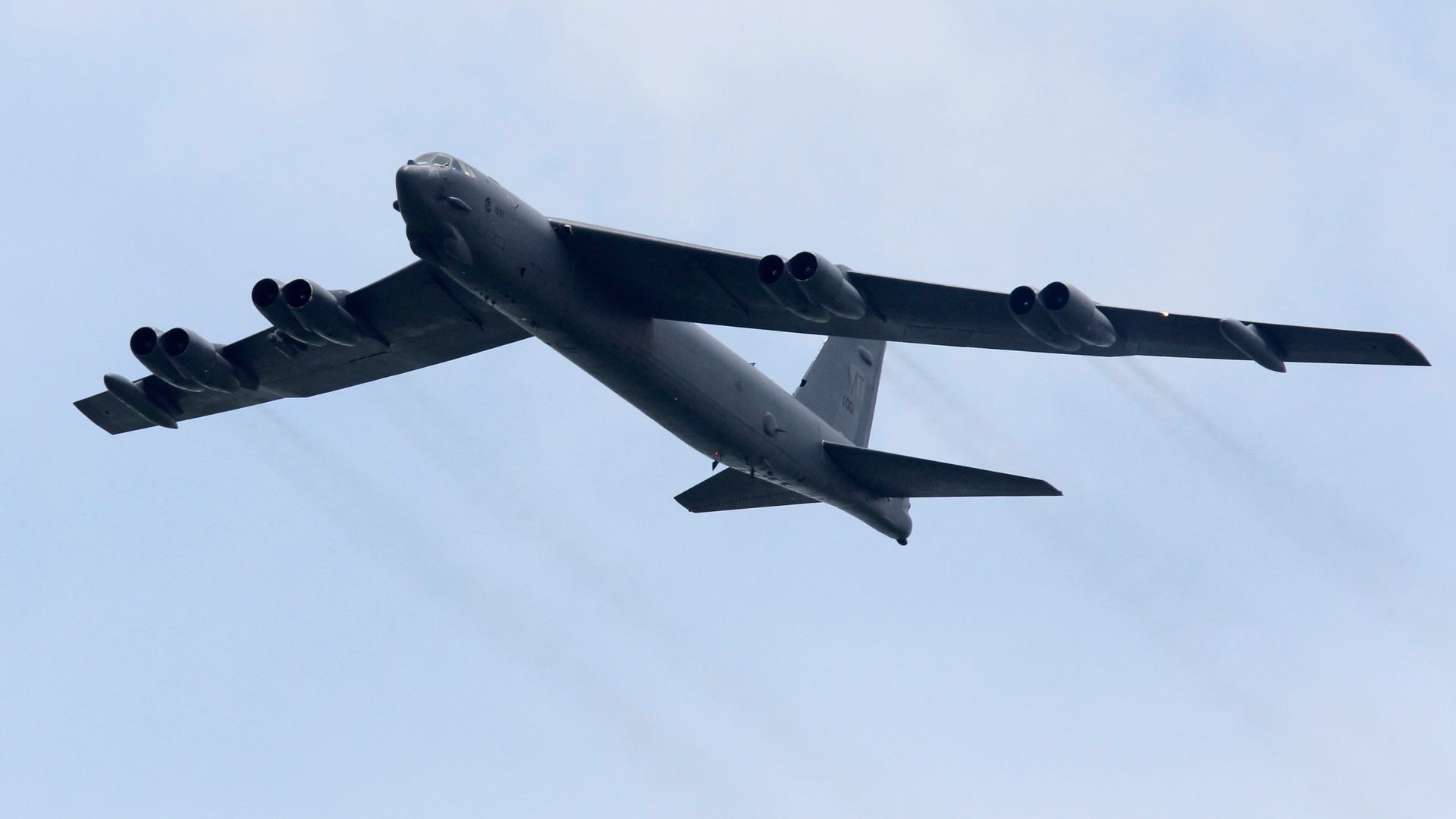
The B-52: Why the US still uses a plane from the 1960s to bomb its enemies
#B-52 #bomber #US military #aircraft modernization #strategic asset
📌 Key Takeaways
- The B-52 bomber remains in active US military service despite its 1960s origins.
- Its longevity is attributed to continuous upgrades and modernization efforts.
- The aircraft is valued for its high payload capacity and long-range capabilities.
- It serves as a strategic asset in modern conflicts and deterrence operations.
📖 Full Retelling
🏷️ Themes
Military Technology, Aircraft Longevity
📚 Related People & Topics
United States Armed Forces
Combined military forces of the United States
The United States Armed Forces are the military forces of the United States. U.S. federal law names six armed forces: the Army, Marine Corps, Navy, Air Force, Space Force, and Coast Guard, each assigned their role and domain. From their inception during the American Revolutionary War, the Army and...
Entity Intersection Graph
Connections for United States Armed Forces:
Mentioned Entities
Deep Analysis
Why It Matters
The continued use of B-52 bombers demonstrates how military platforms can evolve through upgrades rather than replacement, affecting defense budgeting and strategic planning. This matters for taxpayers funding military modernization and for adversaries who face a persistent, upgraded threat capability. The aircraft's longevity also impacts defense contractors, military personnel training, and geopolitical deterrence strategies.
Context & Background
- The B-52 Stratofortress first entered service with the U.S. Air Force in 1955 during the Cold War era
- Originally designed as a high-altitude nuclear bomber, the aircraft has been adapted for conventional bombing missions in conflicts from Vietnam to Afghanistan
- The B-52 has undergone multiple upgrade programs including new avionics, weapons systems, and engine replacements while maintaining its basic airframe
- The aircraft's large payload capacity (70,000 pounds) and long range (8,800 miles unrefueled) make it uniquely valuable for power projection
- The U.S. Air Force plans to keep B-52s in service until at least 2050, giving the aircraft a potential 100-year service life
What Happens Next
The U.S. Air Force will continue the B-52 Commercial Engine Replacement Program (CERP) to install new fuel-efficient engines by 2030. Further avionics and weapons integration upgrades are planned through the 2030s. The aircraft will likely see continued deployment in global operations while serving as a bridge until next-generation bombers like the B-21 Raider reach full operational capacity.
Frequently Asked Questions
The B-52 combines unique capabilities including massive payload capacity, extreme range, and proven reliability that newer bombers don't match at similar cost. Continuous upgrades have kept its systems modern while maintaining the airframe's fundamental advantages.
Modernizations include advanced radar, digital cockpits, precision-guided munitions integration, satellite communications, and electronic warfare systems. The upcoming engine replacement will improve fuel efficiency by 30% and reduce maintenance requirements.
While lacking stealth capabilities of B-2 or upcoming B-21 aircraft, the B-52 operates in different mission profiles with heavier payloads at lower cost per flight hour. It often works in conjunction with stealth aircraft in complementary roles.
The airframe requires significant maintenance due to age, and the aircraft lacks stealth capabilities making it vulnerable in contested airspace. However, it operates effectively in permissive environments and with standoff weapons.
Russia maintains Tu-95 Bears (1950s) and Tu-160 Blackjacks (1980s), while China operates H-6 bombers (based on 1950s Soviet designs). Several nations maintain upgraded legacy aircraft when replacement costs are prohibitive.