
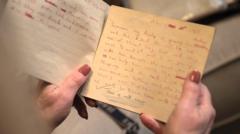
The little girl's belongings that tell the story of the Aberfan disaster
📖 Full Retelling
📚 Related People & Topics

Wales
Country within the United Kingdom
Wales (Welsh: Cymru [ˈkəmrɨ] ) is a country that is part of the United Kingdom. Located on the island of Great Britain, it is bordered by the Irish Sea to the north and west, England to the east, the Bristol Channel to the south, and the Celtic Sea to the south-west. As of 2021, it had a population ...

Aberfan
Human settlement in Wales
Aberfan (Welsh pronunciation: [ˌabɛrˈvan]) is a former coal mining village in the Taff Valley 4 mi (6 km) south of the town of Merthyr Tydfil, Wales. On 21 October 1966, in the Aberfan disaster, a colliery spoil tip collapsed into homes and a school, killing 116 children and 28 adults.
Entity Intersection Graph
Connections for Wales:
View full profileMentioned Entities
Deep Analysis
Why It Matters
This news matters because it preserves the human dimension of the Aberfan disaster, ensuring that individual stories aren't lost within historical statistics. It affects survivors, families of victims, historians studying industrial disasters, and communities grappling with collective trauma. The personal artifacts serve as tangible connections to the 144 lives lost, particularly the 116 children, making the tragedy more relatable to current and future generations. This approach to memorialization influences how societies remember industrial accidents and corporate negligence.
Context & Background
- The Aberfan disaster occurred on October 21, 1966 when a colliery spoil tip collapsed onto the village school in Wales
- The disaster killed 144 people, including 116 children aged 7-10 who were at Pantglas Junior School
- The tip had been improperly positioned on a mountain spring, with multiple warnings about its instability ignored
- The subsequent tribunal found the National Coal Board 'entirely to blame' for the disaster due to negligence
- The disaster led to major changes in UK legislation regarding mine safety and tip management
- Aberfan became a symbol of corporate negligence and working-class community suffering in post-industrial Britain
What Happens Next
The preservation and exhibition of these artifacts will likely continue as part of ongoing memorial efforts, with potential museum displays or digital archives being developed. Annual commemorations on October 21st will incorporate these personal stories into remembrance ceremonies. Historians and researchers may use these belongings for further study of disaster memorialization practices. There may be renewed calls for corporate accountability in current industrial safety contexts, using Aberfan as a historical reference point.
Frequently Asked Questions
The Aberfan disaster was a catastrophic collapse of a coal mining waste tip that buried a primary school and nearby houses in Wales on October 21, 1966. It resulted in 144 deaths, mostly children, and became one of Britain's worst industrial disasters.
Personal belongings transform statistical victims into identifiable individuals with unique lives and stories. They create emotional connections that help people understand the human cost of disasters beyond numbers, making historical events more relatable and memorable.
The disaster led to the Mines and Quarries (Tips) Act 1969, which established new safety regulations for mine waste tips. It also prompted reforms in how corporations are held accountable for negligence and improved emergency response protocols for industrial accidents.
Aberfan remains a defining trauma for survivors and descendants, with ongoing psychological impacts across generations. The community maintains strong memorial traditions while advocating for continued recognition of the disaster's significance in industrial safety history.
Aberfan exposed systemic corporate negligence and class disparities in industrial Britain, becoming a watershed moment for worker safety regulations. The loss of so many children in a preventable disaster created lasting national trauma and changed public attitudes toward corporate accountability.