
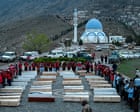
‘This is the saddest moment’: families search for loved ones on Eid after Kabul hospital strike
#Kabul #hospital strike #Eid #families #casualties #search #violence #Afghanistan
📌 Key Takeaways
- A hospital in Kabul was struck, causing casualties and missing persons.
- Families are searching for loved ones during the Eid holiday, a normally festive time.
- The attack has turned a celebration into a period of mourning and distress.
- The incident highlights ongoing violence and instability in the region.
📖 Full Retelling
🏷️ Themes
Conflict, Humanitarian Crisis
📚 Related People & Topics

Kabul
Capital and the largest city of Afghanistan
Kabul is the capital and largest city of Afghanistan. It is within the jurisdiction of Kabul District and has an estimated population of 5,333,284 people. Located in the eastern half of the country, forming part of the Kabul Province, the city is administratively divided into five zones and 22 munic...

Afghanistan
Country in Central and South Asia
Afghanistan, officially the Islamic Emirate of Afghanistan, is a landlocked country located at the crossroads of Central and South Asia. It is bordered by Pakistan to the east and south, Iran to the west, Turkmenistan to the northwest, Uzbekistan to the north, Tajikistan to the northeast, and China ...
Entity Intersection Graph
Connections for Kabul:
View full profileMentioned Entities
Deep Analysis
Why It Matters
This news matters because it highlights the human cost of ongoing conflict in Afghanistan during what should be a sacred celebration, affecting families who are searching for missing loved ones instead of observing Eid. It reveals the continued vulnerability of civilian infrastructure like hospitals in conflict zones, which violates international humanitarian law. The timing during Eid al-Adha—one of Islam's holiest festivals—adds profound cultural and religious trauma to the physical violence, impacting community morale and trust in security institutions.
Context & Background
- Afghanistan has experienced decades of conflict involving Soviet occupation, civil war, Taliban rule, and US-led intervention since 2001
- Hospitals and medical facilities have repeatedly been targeted in Afghan conflicts, with both Taliban and international forces accused of strikes in recent years
- Eid al-Adha is one of two major Islamic festivals marking the end of Hajj pilgrimage, traditionally celebrated with family gatherings, prayers, and feasts
- The Taliban regained control of Afghanistan in August 2021 following US withdrawal, but armed resistance and sporadic violence continue in some regions
- International humanitarian law specifically protects medical facilities and personnel during armed conflicts under Geneva Convention protocols
What Happens Next
Local authorities will likely face pressure to investigate the strike and provide casualty figures, while humanitarian organizations may increase warnings about medical facility protections. Families will continue identification processes through overwhelmed local hospitals, with some victims potentially never being recovered or identified. The incident may prompt renewed international diplomatic statements about civilian protection, though substantive action remains unlikely given current global focus on other conflicts.
Frequently Asked Questions
Hospitals are sometimes mistakenly targeted due to faulty intelligence or proximity to military activity, though intentional attacks constitute war crimes. Various conflict parties have accused each other of using medical facilities for military purposes, which doesn't justify attacks but sometimes provides pretext.
Eid al-Adha emphasizes family unity, sacrifice, and gratitude—families searching for missing relatives instead of celebrating represents a profound contradiction of the holiday's meaning. The festival's focus on Abraham's willingness to sacrifice his son makes actual violent deaths particularly symbolically resonant.
Medical facility attacks have been recurrent throughout Afghanistan's conflicts, with WHO documenting over 100 incidents against health care in 2021 alone. The Taliban previously criticized such strikes when they were insurgents but have been accused of similar actions since taking power.
Limited local hospital resources and humanitarian organizations provide some assistance, but Afghanistan's collapsed economy and international aid reductions severely limit support systems. Many families must rely on community networks and religious institutions for practical and emotional support.
The Geneva Conventions explicitly protect medical facilities, personnel, and patients, making deliberate attacks war crimes. However, enforcement mechanisms are weak, especially in conflicts where perpetrators hold power, and investigations often face political obstacles.