
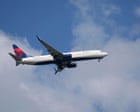
Three flight attendants taken to hospital after Delta flight hits severe turbulence on descent into Sydney
#Delta Airlines #turbulence #flight attendants #Sydney #hospital #aviation #safety
📌 Key Takeaways
- Three Delta flight attendants hospitalized after severe turbulence
- Incident occurred during descent into Sydney airport
- No passengers reported injured in the turbulence event
- Flight was a Delta Airlines service experiencing unexpected rough air
📖 Full Retelling
🏷️ Themes
Aviation Safety, Weather Incident
📚 Related People & Topics

Delta Air Lines
Airline of the United States
Delta Air Lines, Inc. is a major airline in the United States headquartered in Atlanta, Georgia, operating nine hubs, with Hartsfield–Jackson Atlanta International Airport being its largest in terms of total passengers and number of departures. With its regional subsidiaries and contractors operatin...

Sydney
Capital city of New South Wales, Australia
Sydney is the capital city of the state of New South Wales, and is the most populous city in Australia. Located on Australia's east coast, the metropolis surrounds Sydney Harbour and extends about 80 kilometres (50 mi) from the Pacific Ocean in the east to the Blue Mountains in the west, and about 8...
Entity Intersection Graph
Connections for Delta Air Lines:
Mentioned Entities
Deep Analysis
Why It Matters
This incident highlights the ongoing risks of severe turbulence in aviation, which can cause serious injuries and disrupt air travel. It affects flight crews who are most vulnerable during such events, as well as passengers and airlines dealing with safety concerns and operational impacts. The news underscores the importance of turbulence forecasting and in-flight safety protocols to protect those onboard.
Context & Background
- Severe turbulence is a common aviation hazard, often caused by atmospheric conditions like jet streams, thunderstorms, or mountain waves, and can occur unexpectedly even in clear air.
- Flight attendants are particularly at risk during turbulence as they may be standing or moving in the cabin to perform duties, unlike passengers who are typically seated with seatbelts fastened.
- Delta Air Lines, a major U.S. carrier, operates numerous international flights, including routes to Australia, where turbulence over the Pacific Ocean is not uncommon due to weather patterns.
- Previous incidents, such as a 2023 Singapore Airlines flight that encountered severe turbulence resulting in injuries, have raised global awareness about the dangers and prompted reviews of safety measures.
What Happens Next
Delta and aviation authorities will likely investigate the incident to determine the cause of the turbulence and assess safety procedures. The flight attendants' conditions will be monitored, and there may be updates on their recovery. Airlines might review or reinforce turbulence-related training and protocols, with potential regulatory discussions on improving forecasting technology or seatbelt policies.
Frequently Asked Questions
Severe turbulence is often caused by atmospheric disturbances such as jet streams, thunderstorms, or wind shear, and can occur in clear air without visible warning. It results from sudden changes in air movement that affect the aircraft's stability.
Flight attendants are more vulnerable because they are frequently moving through the cabin to assist passengers or perform duties, while passengers are usually seated with seatbelts on. This lack of restraint increases their risk of falls or impacts during sudden turbulence.
Turbulence-related injuries are relatively rare but not uncommon, with most being minor; however, severe cases can occur, especially on long-haul flights over turbulent regions. Airlines report such incidents to authorities, and safety measures aim to reduce risks.
Passengers should keep their seatbelts fastened whenever seated, even if the seatbelt sign is off, as turbulence can strike unexpectedly. They should also follow crew instructions and avoid moving around the cabin during rough air to minimize injury risks.
It is unlikely to significantly disrupt Delta's operations, as airlines typically continue flights after safety reviews. However, it may lead to brief inspections or procedural checks, with no major schedule changes expected unless further issues arise.