
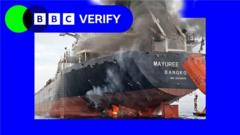
Tracking the wave of ship attacks that has choked off Strait of Hormuz
#ship attacks #Strait of Hormuz #maritime traffic #oil transit #security concerns
📌 Key Takeaways
- A series of ship attacks has disrupted maritime traffic through the Strait of Hormuz.
- The attacks have significantly reduced the flow of vessels in this critical waterway.
- The Strait of Hormuz is a vital global oil transit route, impacting energy markets.
- The incidents raise security concerns and potential geopolitical tensions in the region.
📖 Full Retelling
🏷️ Themes
Maritime Security, Global Trade
📚 Related People & Topics

Strait of Hormuz
Strait between the Gulf of Oman and the Persian Gulf
The Strait of Hormuz ( Persian: تنگهٔ هُرمُز Tangeh-ye Hormoz , Arabic: مَضيق هُرمُز Maḍīq Hurmuz) is a strait between the Persian Gulf and the Gulf of Oman. It provides the only sea passage from the Persian Gulf to the open ocean and is one of the world's most strategically important choke points. ...
Entity Intersection Graph
Connections for Strait of Hormuz:
Mentioned Entities
Deep Analysis
Why It Matters
The wave of ship attacks in the Strait of Hormuz threatens global energy security and economic stability, as approximately 20% of the world's oil passes through this narrow waterway. This directly impacts oil prices, shipping costs, and supply chains worldwide, affecting consumers, industries, and governments. The situation also raises risks of regional military escalation involving Iran, the U.S., and Gulf states, potentially disrupting international trade routes and diplomatic relations.
Context & Background
- The Strait of Hormuz is a 21-mile wide chokepoint between Oman and Iran, connecting the Persian Gulf with the Gulf of Oman and Arabian Sea.
- Iran has historically threatened to close the strait during tensions with Western powers, leveraging its strategic position to exert geopolitical pressure.
- Previous attacks on shipping in the region have been linked to Iran's Islamic Revolutionary Guard Corps and proxy groups, often in response to sanctions or perceived threats.
- The U.S. Fifth Fleet is based in Bahrain and regularly patrols the area to ensure freedom of navigation, creating potential for direct confrontation.
- Major global economies including China, Japan, India, and South Korea rely heavily on oil imports transiting through the strait.
What Happens Next
Expect increased naval patrols by U.S. and allied forces in coming weeks, with possible deployment of additional assets to the region. Shipping companies may announce surcharges for vessels transiting the area, likely within 30 days. Diplomatic efforts through UN channels or direct negotiations may attempt to de-escalate tensions in the next 2-3 months. Further attacks could trigger retaliatory strikes or expanded sanctions against Iran, potentially by late 2024.
Frequently Asked Questions
The Strait of Hormuz is the world's most important oil transit chokepoint, with about 20-21 million barrels of oil passing through daily. This represents roughly 20% of global petroleum consumption and 30% of all seaborne traded oil. Its closure would severely disrupt global energy markets and trigger economic crises worldwide.
While no group has claimed responsibility, most attacks are attributed to Iran or Iranian-backed proxy groups. These actions are often seen as retaliation against Western sanctions or as leverage in regional power struggles. The U.S. and allies typically present intelligence linking the attacks to Iranian forces.
Shipping companies are implementing additional security measures including armed guards, enhanced monitoring, and adjusted routes. Many are purchasing additional war risk insurance, significantly increasing operating costs. Some may temporarily avoid the area, opting for longer alternative routes around Africa.
Complete closure would cause immediate global oil price spikes of 50-100% or more, triggering worldwide economic recession. Alternative shipping routes around Africa would add 15-20 days to transit times and significantly increase costs. Strategic petroleum reserves would be tapped, but insufficient to prevent major supply disruptions.
Consumers face higher gasoline and energy prices as shipping risks and insurance costs are passed through supply chains. Increased transportation costs will raise prices for imported goods and commodities. Economic uncertainty may affect stock markets and employment in energy-dependent industries.