
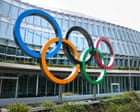
Transgender women athletes banned from female events at Olympics by IOC
📖 Full Retelling
📚 Related People & Topics

Olympic Games
Major international multi-sport event
The modern Olympic Games (Olympics; French: Jeux olympiques) are the world's preeminent international sporting events. They feature summer and winter sports events in which thousands of athletes from around the world participate in a variety of athletic competitions. The Olympic Games, open to both ...

International Olympic Committee
Governing body of Olympic sports
The International Olympic Committee (IOC) is the international, non-governmental, sports governing body of the modern Olympic Games. Founded in 1894 by Pierre de Coubertin and Demetrios Vikelas, it is based in Lausanne, Switzerland. The IOC is the authority responsible for organising the Summer, Win...
Entity Intersection Graph
Connections for Olympic Games:
Mentioned Entities
Deep Analysis
Why It Matters
This decision fundamentally alters the landscape of elite sports participation, directly affecting transgender women athletes who will now be excluded from competing in female categories at the highest level of international competition. It impacts Olympic federations, national teams, and sporting bodies worldwide who must implement these guidelines. The ruling also has significant implications for ongoing debates about fairness, inclusion, and the definition of biological sex in sports, potentially influencing policies at collegiate, professional, and amateur levels globally.
Context & Background
- The International Olympic Committee first allowed transgender athletes to compete in 2004 with requirements including hormone therapy and legal recognition of gender
- Previous IOC guidelines (2015) required transgender women to maintain testosterone levels below 10 nmol/L for at least 12 months before competition
- Several sports federations including World Athletics, FINA (swimming), and World Rugby had already implemented stricter policies restricting transgender women's participation
- The debate intensified after transgender athletes like Lia Thomas (swimming) and Laurel Hubbard (weightlifting) gained prominence in women's competitions
What Happens Next
Individual international sports federations will need to develop and implement their own specific eligibility regulations aligned with the IOC framework by the 2024 Paris Olympics. Legal challenges are expected from affected athletes and advocacy groups, potentially reaching the Court of Arbitration for Sport. National Olympic committees will need to adjust selection criteria, and the decision may influence similar policy changes in collegiate and professional sports organizations worldwide over the next 12-24 months.
Frequently Asked Questions
The previous 2015 guidelines allowed transgender women to compete in female categories if they maintained testosterone levels below 10 nmol/L for at least 12 months before competition and provided legal recognition of their gender. This new policy represents a significant reversal of that inclusive approach.
Under this new policy, transgender women would be excluded from female categories but might potentially compete in male categories or newly created open categories if individual sports federations establish them. Their participation options will depend on each sport's specific implementation of the IOC framework.
Current elite transgender women athletes who were training for or competing in female events will be immediately affected, potentially ending their Olympic aspirations in those categories. They may need to reconsider their competitive futures, explore alternative categories, or pursue legal challenges to the policy.
The policy primarily addresses transgender women in female categories. Transgender men (female-to-male) would typically compete in male categories, though specific regulations may vary by sport. The impact on transgender men is less clear and will depend on individual federation implementations.
No, the IOC framework provides guidelines that each international sports federation must interpret and implement for their specific sport. This means policies may vary between sports like swimming, athletics, and weightlifting, potentially creating inconsistency across the Olympic program.