
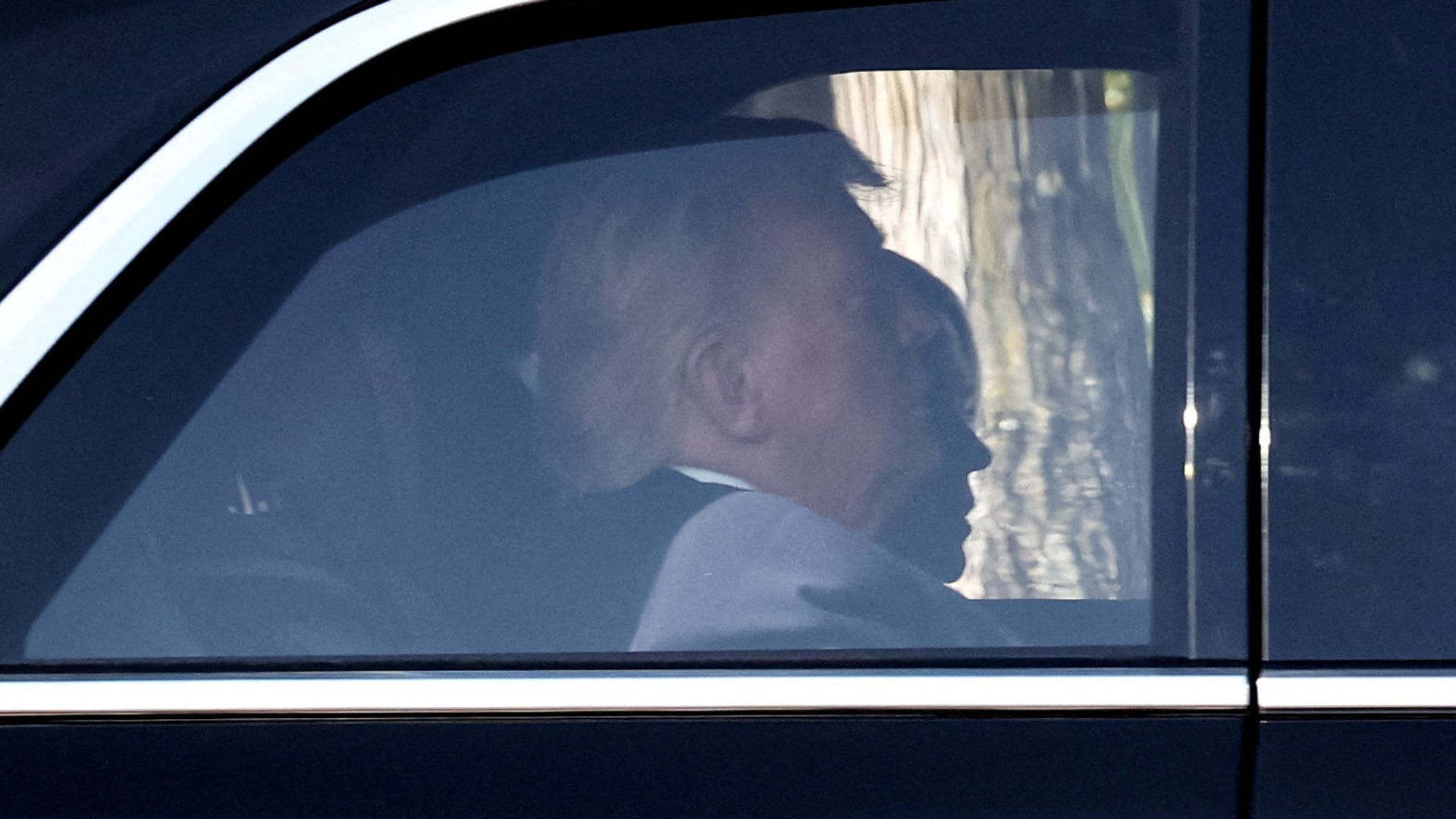
Trump attends Supreme Court hearing on birthright citizenship in historic first
📖 Full Retelling
📚 Related People & Topics
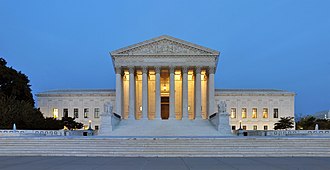
Supreme court
Highest court in a jurisdiction
In most legal jurisdictions, a supreme court, also known as a court of last resort, apex court, high (or final) court of appeal, and court of final appeal, is the highest court within the hierarchy of courts. Broadly speaking, the decisions of a supreme court are binding on all other courts in a nat...

Donald Trump
President of the United States (2017–2021; since 2025)
Donald John Trump (born June 14, 1946) is an American politician, media personality, and businessman who is the 47th president of the United States. A member of the Republican Party, he served as the 45th president from 2017 to 2021. Born into a wealthy New York City family, Trump graduated from the...
Entity Intersection Graph
Connections for Supreme court:
Mentioned Entities
Deep Analysis
Why It Matters
This event matters because it represents a significant intersection of presidential politics and judicial proceedings, potentially influencing immigration policy debates. It affects millions of immigrants and their U.S.-born children whose citizenship status could be challenged. The president's presence at a Supreme Court hearing could be seen as political pressure on the judiciary, raising separation of powers concerns. This also signals the administration's continued focus on immigration reform through judicial channels rather than legislative ones.
Context & Background
- Birthright citizenship originates from the 14th Amendment's Citizenship Clause ratified in 1868, which states 'all persons born or naturalized in the United States...are citizens.'
- Previous challenges to birthright citizenship have been rejected by courts, including the Supreme Court's 1898 United States v. Wong Kim Ark decision affirming birthright citizenship.
- The Trump administration has previously suggested ending birthright citizenship through executive order, though legal scholars widely consider this unconstitutional without a constitutional amendment.
- Approximately 300,000-400,000 children are born annually to undocumented immigrants in the U.S., according to Pew Research Center estimates.
What Happens Next
The Supreme Court will likely issue its ruling within 3-6 months, potentially during the 2024 election season. If the Court rules against birthright citizenship, immediate legal challenges and congressional responses are expected. Regardless of the outcome, the issue will remain politically contentious through the 2024 presidential campaign, with candidates taking definitive positions.
Frequently Asked Questions
Most constitutional scholars believe changing birthright citizenship requires a constitutional amendment, not executive action or legislation. The 14th Amendment's language is generally interpreted as granting automatic citizenship to those born on U.S. soil, regardless of parents' status.
Millions of U.S.-born children of undocumented immigrants could potentially lose citizenship status, though implementation would be complex. Future children born to undocumented immigrants would not receive automatic citizenship, creating a permanent underclass without clear legal status.
Sitting presidents rarely attend Supreme Court hearings, as it can be seen as inappropriate political pressure on the judiciary. This breaks with longstanding norms of separation between executive and judicial branches, particularly on such a politically charged issue.
The United States is one of approximately 30 countries with unconditional birthright citizenship, including Canada and Mexico. Most developed nations, including European countries, have more restrictive citizenship policies requiring at least one parent to be a citizen or legal resident.