
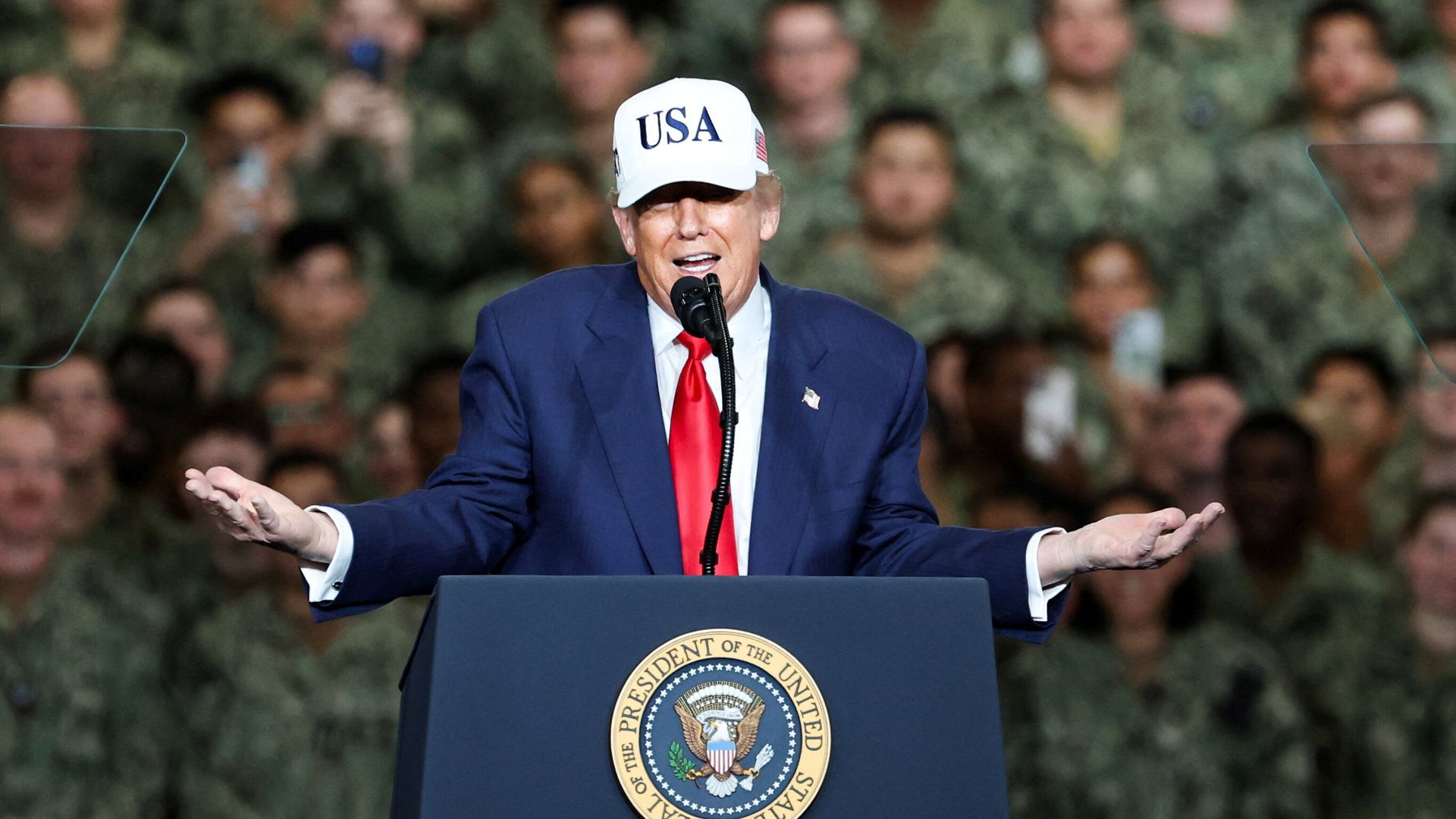
Trump proposes 'historic' $1.5trn defence budget
📖 Full Retelling
📚 Related People & Topics

Donald Trump
President of the United States (2017–2021; since 2025)
Donald John Trump (born June 14, 1946) is an American politician, media personality, and businessman who is the 47th president of the United States. A member of the Republican Party, he served as the 45th president from 2017 to 2021. Born into a wealthy New York City family, Trump graduated from the...
Entity Intersection Graph
Connections for Donald Trump:
Mentioned Entities
Deep Analysis
Why It Matters
This proposed $1.5 trillion defense budget represents a significant increase in military spending that would reshape U.S. fiscal priorities and global military posture. It directly affects taxpayers through potential budget reallocations, impacts defense contractors and military personnel through funding changes, and signals America's strategic priorities to allies and adversaries worldwide. The scale of this proposal could trigger debates about domestic spending trade-offs and influence global arms race dynamics.
Context & Background
- The U.S. defense budget has consistently been the world's largest, exceeding the combined military spending of the next several countries
- Previous administrations have faced ongoing debates about balancing military readiness with other national priorities like infrastructure and social programs
- The proposed $1.5 trillion figure represents a substantial increase from recent defense budgets, which were approximately $700-800 billion annually
- Defense spending often becomes a partisan issue, with Republicans typically advocating for increases and Democrats emphasizing domestic needs
- The U.S. maintains military commitments to NATO and other alliances that influence budget requirements
What Happens Next
Congress will review and negotiate the proposed budget, with debates likely focusing on funding sources and spending priorities. Defense committees will hold hearings in the coming months to examine specific allocations. Final budget approval may involve significant modifications, with a target implementation date for the next fiscal year. International reactions and market responses to defense contractors will develop as the proposal moves through legislative processes.
Frequently Asked Questions
The funding would likely come from a combination of increased government borrowing, reallocation from other federal programs, and potentially tax adjustments. Budget negotiations will determine specific sources, which may include reductions in non-defense discretionary spending.
At $1.5 trillion, this proposal represents nearly double recent annual defense budgets. It would be the largest nominal defense budget in U.S. history, exceeding even peak spending during major conflicts when adjusted for inflation.
While details require congressional review, such budgets typically prioritize modernization of nuclear forces, cyber warfare capabilities, naval expansion, and advanced weapons systems. Specific allocations would be determined through defense authorization processes.
Allied nations may pressure for increased burden-sharing, while adversaries could respond with their own military buildups. The budget signals U.S. commitment to global military dominance but may strain diplomatic relations with countries advocating for different priorities.
Proponents argue it's necessary for maintaining military superiority against China and Russia, while opponents contend it diverts resources from domestic needs and could escalate global tensions. The debate centers on security needs versus opportunity costs for other national priorities.