
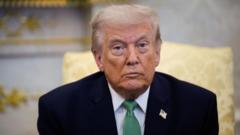
Trump says Nato making 'foolish mistake' over Iran
#Trump #NATO #Iran #diplomacy #security #alliance #tensions
📌 Key Takeaways
- Trump criticizes NATO's approach to Iran as a 'foolish mistake'.
- The statement highlights tensions between the U.S. and NATO over Iran policy.
- It reflects ongoing disagreements on international diplomacy and security strategies.
- The remark may impact NATO unity and U.S.-alliance relations.
🏷️ Themes
International Relations, Security Policy
📚 Related People & Topics

Iran
Country in West Asia
# Iran **Iran**, officially the **Islamic Republic of Iran** and historically known as **Persia**, is a sovereign country situated in West Asia. It is a major regional power, ranking as the 17th-largest country in the world by both land area and population. Combining a rich historical legacy with a...

NATO
Intergovernmental military alliance
# North Atlantic Treaty Organization (NATO) The **North Atlantic Treaty Organization (NATO)** is a prominent intergovernmental military alliance consisting of 32 member states across Europe and North America. Established as a cornerstone of post-World War II international relations, the organizatio...

Donald Trump
President of the United States (2017–2021; since 2025)
Donald John Trump (born June 14, 1946) is an American politician, media personality, and businessman who is the 47th president of the United States. A member of the Republican Party, he served as the 45th president from 2017 to 2021. Born into a wealthy New York City family, Trump graduated from the...
Entity Intersection Graph
Connections for Iran:
Mentioned Entities
Deep Analysis
Why It Matters
This statement matters because it represents a significant public disagreement between the U.S. and NATO allies over Iran policy, potentially undermining alliance cohesion. It affects NATO member states who must navigate conflicting positions between their traditional security partner (the U.S.) and their commitment to the Iran nuclear deal. The criticism could weaken NATO's unified stance on security matters and create diplomatic tensions during a period when Western unity is crucial for addressing Middle Eastern security challenges.
Context & Background
- NATO has maintained a cautious approach toward Iran since the 2015 Joint Comprehensive Plan of Action (JCPOA) nuclear agreement
- The U.S. withdrew from the Iran nuclear deal in 2018 under the Trump administration and reimposed sanctions
- European NATO members have generally supported maintaining the nuclear agreement while expressing concerns about Iran's regional activities
- NATO has conducted limited training missions with Middle Eastern partners but maintains no formal military presence in Iran
What Happens Next
NATO will likely issue a diplomatic response clarifying its position on Iran while attempting to maintain alliance unity. Member states may hold emergency consultations to address the public criticism. The incident could influence upcoming NATO ministerial meetings and potentially affect coordination on Middle East security policy. European allies may seek to mediate between U.S. and Iranian positions to prevent further escalation.
Frequently Asked Questions
While the article doesn't specify, Trump likely refers to NATO's continued diplomatic engagement with Iran or insufficient pressure on Tehran regarding its nuclear program or regional activities. This reflects his administration's 'maximum pressure' policy contrasting with European allies' more nuanced approach.
Public criticism from a major member state undermines NATO's appearance of unity, which is central to its deterrent value. It creates perception of division that adversaries might exploit, though NATO has weathered previous policy disagreements among members.
NATO recognizes Iran's nuclear program as a proliferation challenge but has focused on diplomatic solutions. The alliance has expressed concerns about Iran's missile development and regional proxy activities while supporting the JCPOA framework maintained by European members.
European allies have typically emphasized diplomatic engagement while acknowledging security concerns. They've attempted to balance maintaining the nuclear agreement with addressing U.S. security objections, often through multilateral diplomacy and limited sanctions.